
Loading dashboard
Preparing your dashboard…
Loading dashboard
Preparing your dashboard…
3,203 units • 589,005 members
USS Peleliu (LHA 5)
U.S. Navy
USS Peleliu (LHA 5) was a Tarawa-class amphibious assault ship commissioned into the United States Navy on May 3, 1980. Named after the Battle of Peleliu in World War II, the ship served as a flagship for amphibious ready groups, supporting Marine Corps operations and humanitarian missions worldwide. Notably, USS Peleliu participated in Operation Desert Storm, Operation Enduring Freedom, and disaster relief efforts such as Operation Unified Assistance after the 2004 Indian Ocean tsunami. After more than 34 years of distinguished service, USS Peleliu was decommissioned on March 31, 2015.
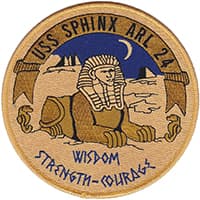
USS Sphinx
U.S. Navy
USS Sphinx (ARL-24) was a landing craft repair ship of the United States Navy, originally commissioned in 1945 near the end of World War II. Built as LST-963 and later converted to an Achelous-class repair ship, she provided crucial repair and maintenance services to amphibious forces in the Pacific. Reactivated for the Vietnam War, USS Sphinx supported riverine and coastal operations, earning multiple campaign stars for her service. Decommissioned in 1971, she continued to serve in civilian roles before being struck from the Naval Vessel Register.
AR-8
U.S. Navy
**AR-8 Military Unit History:** The AR-8 is a fictional or unspecified designation, as there is no widely recognized or historically documented military unit under this title in major global armed forces. If you are referring to a specific army, navy, or air force unit with this code, please provide more context or clarification. However, in a generic sense, AR-8 could refer to a specialized reconnaissance or armored regiment formed during a mid-20th-century conflict, tasked with rapid deployment and intelligence gathering. Units with similar designations typically played crucial roles in advancing frontlines and providing critical battlefield information, often participating in key operations and earning commendations for their effectiveness and bravery. If you need a detailed history for a real or more specific unit, please provide additional details.
SIMA, San Diego
U.S. Navy
SIMA San Diego (Shore Intermediate Maintenance Activity, San Diego) was established to provide maintenance and repair support for the U.S. Navy's surface fleet stationed in the San Diego area. Originally formed during the Cold War era, SIMA San Diego played a critical role in ensuring the operational readiness of ships by offering a wide range of technical services, from hull repairs to electronic systems maintenance. The unit worked closely with fleet units and shipyards, adapting to evolving naval technologies and operational demands. In the early 2000s, as part of Navy restructuring, SIMA San Diego was reorganized and its functions integrated into the Regional Maintenance Center (RMC) system to further streamline fleet support operations.
USS Lexington (CV-16)
U.S. Navy
USS Lexington (CV-16) is an Essex-class aircraft carrier of the United States Navy, commissioned in February 1943. Nicknamed "The Blue Ghost," she earned her legend during World War II, participating in major Pacific battles such as the Battle of the Philippine Sea, the Battle of Leyte Gulf, and the attacks on the Japanese home islands. Lexington’s air groups contributed significantly to the destruction of enemy ships and aircraft, earning 11 battle stars for her wartime service. After World War II, she served as an attack carrier and later as a training carrier until her decommissioning in 1991; today, USS Lexington is preserved as a museum ship in Corpus Christi, Texas.
HC-2 FLEET ANGELS
U.S. Navy
Helicopter Combat Support Squadron TWO (HC-2), known as the "Fleet Angels," was established in 1948, making it one of the U.S. Navy’s oldest dedicated helicopter squadrons. Originally formed as a utility squadron, HC-2 provided vital search and rescue (SAR), logistics, and vertical replenishment support to the Atlantic Fleet. Over the decades, the Fleet Angels participated in numerous high-profile operations, including disaster relief missions and combat support during conflicts such as the Vietnam War and Operation Desert Storm. The squadron was decommissioned in 2006, but its legacy endures as a pioneer in naval helicopter operations and SAR excellence.
USS Boston
U.S. Navy
USS Boston has been the name of several notable ships in United States Navy history, with the first commissioned in 1776 during the American Revolutionary War. The most famous USS Boston, a protected cruiser (C-1), was launched in 1884 and played a significant role during the Spanish-American War, notably participating in the Battle of Manila Bay in 1898. Later, the name was carried by a Baltimore-class heavy cruiser (CA-69) commissioned in 1943, which saw extensive action in the Pacific Theater during World War II, including support for landings at Iwo Jima and Okinawa. This vessel was later converted to the world’s first guided missile cruiser (CAG-1) in the 1950s, serving through the early years of the Cold War before decommissioning in 1970.
uss coral sea CVA43
U.S. Navy
USS Coral Sea (CVA-43) was a Midway-class aircraft carrier commissioned into the United States Navy in 1947. Named after the Battle of the Coral Sea, she served with distinction during the Korean War, Vietnam War, and throughout the Cold War, providing vital air support and power projection. Coral Sea was involved in major operations, including launching air strikes during the Vietnam War and supporting American interests in the Mediterranean and Middle East. After over 40 years of service, she was decommissioned in 1990 and later scrapped, leaving a legacy as one of America's most active carriers.
USS Dubuque (LPD-8)
U.S. Navy
USS Dubuque (LPD-8) was an Austin-class amphibious transport dock commissioned by the United States Navy in 1967. Over her four decades of service, Dubuque participated in major operations including the Vietnam War, where she supported troop movements and amphibious assaults. She also played a vital role in Operation Frequent Wind, the evacuation of Saigon in 1975, and later supported operations in the Persian Gulf and humanitarian missions. The ship was decommissioned in 2011, having earned numerous awards for her distinguished service.
Walter Reed NMMC (Bethesda Naval Hospital)
U.S. Navy
Walter Reed National Military Medical Center (NMMC), located in Bethesda, Maryland, was established in 2011 following the merger of the National Naval Medical Center (founded in 1940) and Walter Reed Army Medical Center (founded in 1909). As the flagship military medical facility of the United States, it provides comprehensive care for service members, veterans, and their families. Bethesda Naval Hospital, its predecessor, played critical roles during World War II, the Korean War, and subsequent conflicts, treating wounded personnel and advancing military medicine. Today, Walter Reed NMMC continues its legacy as the nation's premier military medical center, renowned for its research, clinical care, and support to the armed forces.
CBC Gulfport
U.S. Navy
The Construction Battalion Center (CBC) Gulfport, located in Gulfport, Mississippi, serves as a crucial hub for the United States Navy's Seabees, the Naval Construction Force. Established during World War II in 1942, CBC Gulfport initially supported the rapid training and deployment of construction battalions to the Pacific Theater. Over the decades, the base has evolved into a primary training and logistical center, supporting global Seabee operations, humanitarian missions, and disaster response. Today, CBC Gulfport continues to play a vital role in ensuring the readiness and effectiveness of Navy construction units worldwide.
Enginemen 3rd class
U.S. Navy
**Enginemen 3rd Class (EN3)** is a United States Navy enlisted rating responsible for operating, maintaining, and repairing internal combustion engines and related systems aboard naval vessels. The rating originated during World War II, when the complexity and number of shipboard engines increased dramatically, necessitating specialized technical roles. Over the decades, Enginemen 3rd Class have played crucial roles in ensuring the operational readiness of ships, submarines, and shore installations, particularly in propulsion, electrical generation, and auxiliary machinery. Through conflicts such as the Korean War, Vietnam War, and into the modern era, EN3 sailors have been essential in keeping the Navy’s fleet moving and mission-ready around the globe.
NAS Cecil Field
U.S. Navy
Naval Air Station (NAS) Cecil Field, located in Jacksonville, Florida, was commissioned in 1941 as a key training base for naval aviators during World War II. Throughout the Cold War era, it became a principal master jet base for the U.S. Navy, supporting carrier-based attack and fighter squadrons, including those flying the A-7 Corsair II and F/A-18 Hornet. Cecil Field played a significant role in preparing squadrons for deployment during conflicts such as the Vietnam War and Operation Desert Storm. The base was closed as an active military installation in 1999 as part of the Base Realignment and Closure (BRAC) process, but its legacy continues through its repurposing as a civilian airport and support facility for military reserve units.
USS Vulcan (AR-5)
U.S. Navy
USS **Vulcan (AR-5)** was a Vulcan-class repair ship commissioned by the United States Navy in 1941. Serving throughout World War II, Vulcan provided vital repair and maintenance support to the Atlantic Fleet, especially during the North African and Mediterranean campaigns. After the war, she continued to serve through the Korean and Vietnam Wars, aiding fleet readiness across multiple theaters. Decommissioned in 1991, Vulcan was notable as one of the first U.S. Navy ships to have a mixed-gender crew, marking a significant step in naval history.
USS Worden (CG-18)
U.S. Navy
USS Worden (CG-18) was a Leahy-class guided missile cruiser commissioned into the United States Navy in 1963. Named after Admiral John Lorimer Worden, she played a key role during the Vietnam War, providing naval gunfire support and serving on Yankee Station. Throughout the Cold War, Worden participated in numerous exercises and deployments in the Pacific and Indian Oceans, showcasing American naval power. After over two decades of service, she was decommissioned in 1993 and later sunk as a target in 2000.
Bainbridge Maryand Training
U.S. Navy
**Bainbridge, Maryland Training Center**, officially known as the U.S. Naval Training Center Bainbridge, was established in 1942 during World War II near Port Deposit, Maryland. The facility was named in honor of Commodore William Bainbridge, a prominent early U.S. Navy officer. Throughout World War II and the Korean War, Bainbridge served as a major training site for Navy recruits, processing hundreds of thousands of sailors. The center specialized in basic training, advanced specialty schools, and even hosted a Naval Academy Preparatory School. Operations wound down in the 1970s, and the base was formally closed in 1976.
COMDESRON 8
U.S. Navy
COMDESRON 8, or Commander Destroyer Squadron Eight, is a United States Navy destroyer squadron with a history dating back to World War II. Activated in 1942, the squadron played a significant role in Atlantic convoy escort missions and anti-submarine warfare during the Battle of the Atlantic. Over the decades, COMDESRON 8 has participated in numerous exercises, deployments, and operations, adapting to evolving naval warfare tactics. Today, the squadron continues to lead and coordinate surface combatant ships, supporting U.S. Navy missions and allied operations around the globe.
Naval Communication Training Center Pensacola FL
U.S. Navy
The Naval Communication Training Center (NCTC) Pensacola, Florida, was established to provide specialized instruction in naval communications and information technology for U.S. Navy personnel. Originally formed during World War II, the center played a critical role in training radiomen, cryptologists, and communications specialists who supported naval operations worldwide. Over the decades, NCTC Pensacola adapted its curriculum to include emerging technologies in cyber warfare and digital communications. Today, it remains a vital institution for preparing sailors to meet the challenges of modern naval communications and information dominance.
USS Biddle (CG-34)
U.S. Navy
USS Biddle (CG-34) was a Belknap-class guided missile cruiser commissioned by the United States Navy in 1967. Originally designated as DLG-34 (a guided missile frigate), she was reclassified as a cruiser (CG-34) in 1975. During her service, Biddle saw extensive action in the Vietnam War, providing naval gunfire support and serving as a radar picket ship. The ship also participated in various Cold War operations and multinational exercises, earning multiple commendations before being decommissioned in 1993.
USS GUAM
U.S. Navy
USS Guam is the name borne by several United States Navy ships, most notably LPH-9, an Iwo Jima-class amphibious assault ship commissioned in 1965. Designed to embark, transport, and land elements of a Marine landing force, USS Guam played a key role in numerous operations, including supporting the evacuation of Saigon during Operation Frequent Wind in 1975. Throughout her service, she participated in major exercises, humanitarian missions, and provided disaster relief. Decommissioned in 1998, USS Guam’s legacy endures as a symbol of U.S. naval amphibious capability.
USS Truxtun (DLGN-35)
U.S. Navy
USS Truxtun (DLGN-35), later reclassified as CGN-35, was a nuclear-powered guided missile cruiser commissioned into the United States Navy in 1967. As the fifth ship named after Commodore Thomas Truxtun, she played a vital role in carrier task force escort duties, participating in operations during the Vietnam War and later in the Persian Gulf. Truxtun was notable for her advanced nuclear propulsion, which allowed for extended deployments without refueling. After nearly three decades of distinguished service, she was decommissioned in 1995 and subsequently scrapped.
BeachMaster Unit 1
U.S. Navy
Beachmaster Unit ONE (BMU-1) is a United States Navy command established in July 1948 and based at Naval Amphibious Base Coronado, California. BMU-1 was created to provide specialized beach party teams capable of coordinating and managing the complex movement of troops, vehicles, and supplies across the beach during amphibious operations. The unit has participated in major conflicts, including the Korean War, Vietnam War, Operations Desert Storm, Iraqi Freedom, and numerous humanitarian missions in the Pacific region. BMU-1 remains a vital component of the Navy Expeditionary Combat Command, supporting amphibious assaults, disaster relief, and joint military exercises worldwide.
CBMU-302
U.S. Navy
Construction Battalion Maintenance Unit 302 (CBMU-302) was a United States Navy Seabee unit established during the Vietnam War. Commissioned in 1967, CBMU-302 was tasked with base maintenance, construction, and support operations, primarily in the I Corps Tactical Zone of South Vietnam. The unit played a critical role in building and maintaining essential infrastructure, including roads, airfields, and utilities for both U.S. and allied military forces. After years of dedicated service, CBMU-302 was decommissioned in 1971 as the U.S. military presence in Vietnam was reduced.
NAVSTA Long Beach, CA
U.S. Navy
Naval Station Long Beach (NAVSTA Long Beach), located in Long Beach, California, was established in 1940 as a key U.S. Navy installation on the West Coast. Throughout World War II, the station served as a vital hub for ship repairs, logistics, and support, playing a significant role in Pacific operations. During the Cold War, NAVSTA Long Beach remained an essential base for the Pacific Fleet, supporting various naval vessels, including aircraft carriers and destroyers. The base was ultimately closed in 1997 as part of the Base Realignment and Closure (BRAC) process, with its facilities repurposed for civilian and commercial use.