
Loading dashboard
Preparing your dashboard…
Loading dashboard
Preparing your dashboard…
3,203 units • 589,043 members
Oak Knoll Naval Hospital
U.S. Navy
Oak Knoll Naval Hospital, located in Oakland, California, was commissioned in 1942 to provide medical care for Navy personnel during World War II. Throughout the war, and later during the Korean and Vietnam Wars, the hospital played a crucial role in treating wounded servicemembers returning from the Pacific theater and Asia. The facility expanded over the decades, becoming a major center for medical research and rehabilitation within the U.S. Navy. Oak Knoll was officially closed in 1996 under the Base Realignment and Closure (BRAC) program, ending over 50 years of military medical service.
Sixth Fleet COM
U.S. Navy
The United States Sixth Fleet, under the command of Commander, U.S. Sixth Fleet (COMSIXTHFLT or Sixth Fleet COM), has served as a principal naval force in the Mediterranean Sea since its establishment in 1950. The fleet played a crucial role during the Cold War, maintaining a forward naval presence to deter Soviet influence and support NATO allies. Over the decades, Sixth Fleet has participated in numerous operations, including peacekeeping in Lebanon, intervention in the Balkans, and ongoing counterterrorism missions. Today, Sixth Fleet continues to provide maritime security, crisis response, and partnership building in Europe and Africa, operating from its headquarters in Naples, Italy.
USS Hector (AR-7)
U.S. Navy
USS Hector (AR-7) was a repair ship of the United States Navy commissioned in February 1944. Serving throughout World War II, Hector provided vital repair and maintenance services to the Pacific Fleet, supporting operations in the Marshall Islands, Marianas, and the Philippines. After the war, she continued her service during the Korean and Vietnam Wars, often operating in forward areas to keep U.S. naval forces operational. Decommissioned in 1987, USS Hector earned numerous battle stars for her decades of dedicated support to American naval operations.
USS Inchon (LPH-12)
U.S. Navy
USS Inchon (LPH-12) was an Iwo Jima-class amphibious assault ship commissioned by the United States Navy in 1970. Named after the pivotal Battle of Inchon during the Korean War, the vessel served as a platform for helicopter operations, enabling rapid deployment of Marine forces. Throughout its service, USS Inchon participated in numerous exercises, humanitarian missions, and operations, including support during the Gulf War and mine countermeasure operations. The ship was decommissioned in 2002 after over three decades of distinguished service.
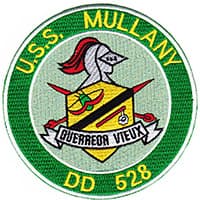
USS Mullany
U.S. Navy
USS Mullany (DD-528) was a Fletcher-class destroyer commissioned by the United States Navy in 1943. Named after Rear Admiral James Robert Madison Mullany, she served with distinction in the Pacific Theater during World War II, participating in major operations including the Battle of Leyte Gulf and the Okinawa campaign. On April 6, 1945, Mullany survived a devastating kamikaze attack off Okinawa, managing to contain fires and prevent a catastrophic magazine explosion despite severe damage and casualties. After the war, she continued service until 1971, when she was transferred to the Republic of China Navy, where she was renamed Chiang Yang and served until 1999.
VR-24
U.S. Navy
Fleet Logistics Support Squadron 24 (VR-24), known as the "Lifting Eagles," was a United States Navy squadron established in 1949. Initially based in the Mediterranean, VR-24 provided vital air logistics and cargo transport services across Europe, Africa, and the Middle East. The squadron operated a variety of aircraft, including the C-130 Hercules and C-2 Greyhound, supporting both routine military operations and urgent missions such as humanitarian relief and crisis response. VR-24 was disestablished in 1991 after decades of distinguished service supporting U.S. and NATO forces.
HC-3
U.S. Navy
Helicopter Combat Support Squadron THREE (HC-3), nicknamed the "Merlins," was established by the U.S. Navy on September 1, 1967, at Naval Air Station Imperial Beach, California. Its primary mission was to provide vertical replenishment (VERTREP) and logistics support to the Pacific Fleet using CH-46 Sea Knight helicopters. Over the years, HC-3 became a major fleet replacement squadron, training pilots and aircrew for helicopter combat support operations. In 2005, reflecting changes in mission and aircraft, HC-3 was redesignated as Helicopter Sea Combat Squadron THREE (HSC-3), transitioning to the MH-60S Seahawk platform.
USS Ajax (AR-6)
U.S. Navy
USS Ajax (AR-6) was a Vulcan-class repair ship commissioned by the United States Navy in October 1943. During World War II, she provided vital repair and maintenance services to the Pacific Fleet, supporting operations in locations such as Eniwetok, Ulithi, and Okinawa. Ajax continued her service through the Korean War and the Vietnam War, ensuring fleet readiness by repairing and refitting ships close to combat zones. After decades of service, she was decommissioned in 1986, marking the end of a distinguished career supporting U.S. naval operations across three major conflicts.
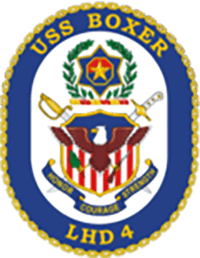
USS BOXER
U.S. Navy
The USS Boxer is the name given to several ships in the United States Navy, most notably a series of aircraft carriers and amphibious assault ships. The first USS Boxer was a brig captured from the British during the War of 1812. The most famous, USS Boxer (CV-21), was an Essex-class aircraft carrier commissioned in 1945, which served in the closing months of World War II and saw extensive action during the Korean War, earning eight battle stars. Later, the USS Boxer (LHD-4), a Wasp-class amphibious assault ship, was commissioned in 1995 and continues to serve as a key element of the U.S. Navy’s expeditionary forces, participating in humanitarian missions, combat operations, and multinational exercises around the globe. Throughout their service, ships bearing the name USS Boxer have established a legacy of versatility and distinguished service in the U.S. Navy.
USS New Orleans (LPH-11)
U.S. Navy
USS New Orleans (LPH-11) was an Iwo Jima-class amphibious assault ship commissioned by the United States Navy in 1968. Throughout her service, she played a significant role in the Vietnam War, supporting amphibious operations and serving as a command ship. Notably, USS New Orleans participated in the recovery missions for the Apollo 14 and Apollo 17 space missions, retrieving astronauts and spacecraft from the Pacific Ocean. After decades of service, she was decommissioned in 1997, leaving a distinguished legacy in both combat operations and space exploration support.
USS Ronald Reagan (CVN76)
U.S. Navy
USS Ronald Reagan (CVN-76) is a Nimitz-class nuclear-powered aircraft carrier commissioned into the United States Navy on July 12, 2003. Named after the 40th U.S. President, the ship has served as a centerpiece of American naval power in both the Atlantic and Pacific Oceans. Since joining the fleet, Ronald Reagan has participated in numerous operations, including humanitarian missions, joint exercises, and combat deployments in support of the Global War on Terrorism. In 2015, the carrier was forward-deployed to Yokosuka, Japan, where it continues to serve as the flagship of Carrier Strike Group Five, reinforcing U.S. presence and alliances in the Indo-Pacific region.
USS Trenton (LPD-14)
U.S. Navy
USS Trenton (LPD-14) was an Austin-class amphibious transport dock commissioned by the United States Navy in 1971. Designed to support amphibious assault operations, she played a vital role in transporting Marines, vehicles, and equipment to shore using landing craft and helicopters. Throughout her service, Trenton participated in numerous exercises and operations, including peacekeeping efforts in Lebanon and humanitarian missions. After more than 35 years of service, she was decommissioned in 2007 and transferred to the Indian Navy, where she was renamed INS Jalashwa.
VF-41
U.S. Navy
Strike Fighter Squadron 41 (VF-41), also known as the "Black Aces," was established on September 1, 1950. Originally equipped with the F2H Banshee, the squadron later transitioned to various aircraft, including the F-4 Phantom II and the F-14 Tomcat, playing key roles in conflicts such as the Vietnam War and Operation El Dorado Canyon. VF-41 gained worldwide fame in 1981 when its F-14 Tomcats shot down two Libyan Su-22s over the Gulf of Sidra. The squadron was redesignated as VFA-41 in 1995 and currently operates the F/A-18F Super Hornet, continuing its legacy as an elite U.S. Navy fighter squadron.
ACB-1
U.S. Navy
Amphibious Construction Battalion ONE (ACB-1) was commissioned on July 16, 1943, at Camp Peary, Virginia, as part of the U.S. Navy’s effort to support amphibious operations during World War II. The unit played a vital role in constructing and operating pontoon causeways, beachhead facilities, and support installations during major Pacific campaigns, including the invasions of Iwo Jima and Okinawa. In the decades following World War II, ACB-1 continued to support U.S. Navy and Marine Corps missions in Korea, Vietnam, and more recent operations, providing essential logistical and engineering capabilities. Today, ACB-1 remains based at Naval Amphibious Base Coronado, California, standing ready to deliver specialized amphibious construction and support wherever needed.
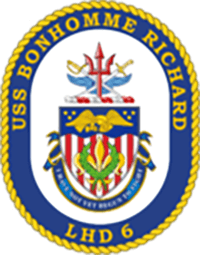
USS BONHOMME RICHARD
U.S. Navy
The USS Bonhomme Richard has been the namesake of several notable vessels in U.S. naval history. The first, commanded by John Paul Jones, was a former French merchant ship gifted to the United States during the Revolutionary War, famously defeating HMS Serapis in 1779 before sinking. Later ships bearing the name included aircraft carriers and amphibious assault ships, most recently LHD-6, commissioned in 1998. The LHD-6 served in numerous operations across the Pacific and Middle East until a devastating fire in 2020 led to its decommissioning. The legacy of Bonhomme Richard symbolizes resilience and valor in American naval tradition.
USS Duluth (LPD-6)
U.S. Navy
USS Duluth (LPD-6) was an Austin-class amphibious transport dock commissioned by the United States Navy in 1966. Throughout her service, Duluth participated in numerous major operations, including troop and equipment landings during the Vietnam War and support missions during Operation Frequent Wind, the evacuation of Saigon in 1975. In subsequent decades, she provided critical support for humanitarian missions and military exercises around the globe, including deployments to the Persian Gulf during Operation Desert Storm. After nearly four decades of service, USS Duluth was decommissioned in 2005, leaving a legacy of versatility and dedication to amphibious operations.
VQ-4
U.S. Navy
Fleet Air Reconnaissance Squadron FOUR (VQ-4), also known as the "Shadows," was established in July 1968 to provide strategic airborne communications for the U.S. Navy’s TACAMO ("Take Charge and Move Out") mission. Originally flying EC-130G aircraft, the squadron transitioned to the EC-130Q, and later to the Boeing E-6A Mercury in the 1990s, enhancing its capability to relay messages from national command authorities to U.S. nuclear forces. VQ-4 played a vital role during the Cold War, maintaining continuous airborne alert and readiness. Based at Tinker Air Force Base, Oklahoma, VQ-4 continues to support national strategic deterrence and global communications as a key component of the Navy’s airborne command and control structure.
ACU-1
U.S. Navy
Assault Craft Unit ONE (ACU-1) is a United States Navy unit established in 1959 and based at Naval Amphibious Base Coronado, California. ACU-1 specializes in operating and maintaining Landing Craft Utility (LCU), providing essential ship-to-shore movement of troops, equipment, and supplies during amphibious operations. The unit has supported numerous major military exercises and real-world contingencies, including deployments to the Persian Gulf and humanitarian missions worldwide. ACU-1 continues to play a vital role in enabling the Navy and Marine Corps team to conduct expeditionary and amphibious warfare operations.
Commander, Pacific Fleet
U.S. Navy
Commander, Pacific Fleet (COMPACFLT) is a major command of the United States Navy, responsible for naval operations in the vast Pacific Ocean region. Established in 1907 as the U.S. Pacific Fleet, the command gained prominence during World War II, particularly after the attack on Pearl Harbor in 1941, leading the U.S. naval campaign across the Pacific against Japan. Throughout the Cold War, COMPACFLT played a vital role in containing Soviet influence in Asia and maintaining maritime security. Today, the Commander, Pacific Fleet oversees the largest fleet command in the U.S. Navy, ensuring readiness and stability across the Indo-Pacific.
NAS Whiting Field
U.S. Navy
Naval Air Station (NAS) Whiting Field, located near Milton, Florida, was commissioned in July 1943 during World War II to support the rapidly expanding need for naval aviators. Initially serving as a training base for primary and advanced flight instruction, the station played a crucial role in preparing pilots for carrier operations throughout the war and into the postwar era. Over the decades, NAS Whiting Field has become one of the Navy’s busiest aviation training facilities, responsible for training thousands of Navy, Marine Corps, Coast Guard, and allied student aviators annually. Today, it continues to serve as the backbone of undergraduate rotary and fixed-wing pilot training for the U.S. Navy, ensuring operational readiness for current and future generations of military aviators.
Naval Hospital Pensacola
U.S. Navy
Naval Hospital Pensacola was established in 1826, making it one of the oldest medical facilities in the U.S. Navy. Originally built to support the Pensacola Navy Yard, it served sailors and Marines throughout numerous conflicts, including the Civil War, when it was occupied by both Confederate and Union forces at different times. The hospital expanded significantly during World War II, playing a vital role in treating wounded service members and supporting the growth of Naval Air Station Pensacola. Today, Naval Hospital Pensacola continues its legacy by providing comprehensive medical care to active-duty personnel, retirees, and their families along the Gulf Coast.
NRS, San Diego
U.S. Navy
**Navy Recruiting Station (NRS), San Diego** has played a crucial role in supporting the United States Navy’s recruiting efforts for decades. Established to serve the greater San Diego area—a major naval hub—NRS San Diego has consistently attracted and processed thousands of recruits, helping to fulfill the Navy’s manpower requirements. The unit works closely with local schools, communities, and Navy commands, providing outreach and guidance to prospective sailors. Over the years, NRS San Diego has adapted to changing recruitment needs and technologies, maintaining its reputation as a vital component of the Navy’s overall force generation mission.
USS Austin (LPD-4)
U.S. Navy
USS Austin (LPD-4) was a Raleigh-class amphibious transport dock commissioned into the United States Navy in 1965. Throughout her service, she played a key role in amphibious operations, including deployments during the Vietnam War, the Lebanese Civil War, and peacekeeping missions in the Mediterranean. Austin participated in numerous joint exercises and humanitarian missions, showcasing her versatility as a platform for transporting Marines, equipment, and landing craft. After over 40 years of active duty, USS Austin was decommissioned in 2006, leaving a legacy of distinguished service in support of U.S. naval operations worldwide.
USS CLEVELAND (LPD-7)
U.S. Navy
USS Cleveland (LPD-7) was an Austin-class amphibious transport dock commissioned into the United States Navy on April 21, 1967. Throughout her service, she participated in key operations, including troop and equipment transport during the Vietnam War and humanitarian missions such as Operation Frequent Wind, the evacuation of Saigon in 1975. USS Cleveland also took part in numerous training exercises, joint operations, and disaster relief efforts across the Pacific and Indian Oceans. After over four decades of distinguished service, she was decommissioned on September 30, 2011.