
Loading dashboard
Preparing your dashboard…
Loading dashboard
Preparing your dashboard…
3,203 units • 589,048 members
USS Denver (LPD-9)
U.S. Navy
USS Denver (LPD-9) was an Austin-class amphibious transport dock commissioned into the United States Navy in 1968. Throughout her service, she participated in numerous operations, including troop deployments during the Vietnam War and humanitarian missions such as Operation Fiery Vigil in the Philippines. USS Denver also supported peacekeeping and disaster relief efforts in the Asia-Pacific region, showcasing her versatility as an amphibious platform. After more than four decades of active duty, she was decommissioned in 2014, marking the end of a distinguished naval career.
USS Howard W. Gilmore (AS-16)
U.S. Navy
USS Howard W. Gilmore (AS-16) was a Fulton-class submarine tender commissioned by the United States Navy in 1944. Named after Medal of Honor recipient Commander Howard W. Gilmore, the ship provided vital repair, supply, and logistical support to submarines operating in the Pacific Theater during World War II. After the war, the Gilmore continued servicing submarines during the Cold War era, including deployments to the Atlantic and Mediterranean fleets. Decommissioned in 1980, the vessel played a crucial role in maintaining the operational readiness of the U.S. submarine force for over three decades.
VA-176
U.S. Navy
Attack Squadron 176 (VA-176), also known as the "Thunderbolts," was a United States Navy attack squadron established on 1 May 1955. The squadron gained distinction during the Vietnam War, notably on 19 October 1966, when one of its A-1 Skyraider pilots, LTJG William T. Patton, shot down a North Vietnamese MiG-17 with Zuni rockets—one of the few piston-engine victories against a jet in history. VA-176 operated from carriers such as USS Intrepid (CVS-11) and participated in numerous combat operations and support missions. The squadron was disestablished on 1 February 1972, after nearly 17 years of service.
Combat Systems Technical Schools Command - Mare Island
U.S. Navy
The Combat Systems Technical Schools Command at Mare Island was a pivotal United States Navy training facility established during the Cold War era. Located at Mare Island Naval Shipyard in Vallejo, California, the command specialized in advanced technical training for sailors in combat systems, including electronics, weapons, and fire control. Its graduates played crucial roles in the operation and maintenance of sophisticated naval technologies aboard U.S. warships. The school supported fleet readiness until the base's closure in the mid-1990s, after which its mission was transferred to other Navy training centers.
USS Bennington (CV-20)
U.S. Navy
USS Bennington (CV-20) was an Essex-class aircraft carrier commissioned by the United States Navy in August 1944. She played a significant role in the Pacific Theater during World War II, participating in major operations such as the Battle of Okinawa and air strikes against the Japanese home islands. After the war, Bennington was decommissioned, but later modernized and recommissioned for service during the Korean War and the Cold War, including anti-submarine warfare duties. The ship was finally decommissioned in 1970, earning numerous battle stars for her distinguished service.
USS FOX CG-33
U.S. Navy
USS Fox (CG-33) was a Belknap-class guided missile cruiser commissioned by the United States Navy on May 28, 1966. Originally designated DLG-33 (guided missile frigate), she was reclassified as a cruiser in 1975. Throughout her service, Fox operated extensively in the Pacific and Indian Oceans, including multiple deployments to the Vietnam War, where she provided naval gunfire support and served as a radar picket ship. The ship also played a role in Cold War operations, conducting surveillance and exercises with allied navies until her decommissioning on April 15, 1994.
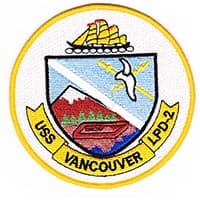
USS Vancouver
U.S. Navy
USS Vancouver (LPD-2) was an Austin-class amphibious transport dock commissioned by the United States Navy in 1963. During the Vietnam War, she played a vital role in amphibious operations, troop transport, and support missions, participating in multiple campaigns and earning several battle stars. Throughout the 1970s and 1980s, USS Vancouver continued to serve in the Pacific, taking part in exercises, humanitarian missions, and deployments that reinforced U.S. presence in the region. She was decommissioned in 1992, having served nearly three decades as a key asset in the Navy's amphibious fleet.
CVN-72
U.S. Navy
USS Abraham Lincoln (CVN-72) is a Nimitz-class nuclear-powered aircraft carrier commissioned into the United States Navy in November 1989. Throughout its service, the ship has participated in major operations, including Operation Desert Storm in 1991 and Operation Iraqi Freedom in 2003, providing critical air support and power projection. The carrier has undergone several deployments to the Western Pacific, Indian Ocean, and Persian Gulf, showcasing American naval presence and deterrence. After a four-year Refueling and Complex Overhaul (RCOH) completed in 2019, USS Abraham Lincoln remains an integral part of U.S. naval operations worldwide.
NAS Quonset Point, RI
U.S. Navy
Naval Air Station (NAS) Quonset Point, located in North Kingstown, Rhode Island, was commissioned in 1941 as a key naval aviation facility during World War II. Throughout the war, it served as a major training and operational base for carrier aircraft, anti-submarine patrols, and the assembly and repair of aircraft. NAS Quonset Point remained active during the Cold War, supporting fleet air operations and housing various squadrons, including those flying the S-2 Tracker and E-1 Tracer. The base was decommissioned in 1974, but its legacy continues through the Quonset Air Museum and the Rhode Island Air National Guard, which still operates at the site.
Naval Hospital Yokosuka
U.S. Navy
Naval Hospital Yokosuka was established in 1950 to serve the United States Navy and allied forces in the Western Pacific region. Located at Fleet Activities Yokosuka, Japan, it played a critical role in providing medical care during the Korean and Vietnam Wars, treating both combat casualties and military families. Over the decades, the hospital expanded its capabilities, supporting humanitarian missions and joint exercises with Japanese and allied forces. Today, Naval Hospital Yokosuka remains a key medical facility for U.S. forces in the Indo-Pacific, offering advanced healthcare and supporting regional security and readiness.
US Naval Base Subic Bay
U.S. Navy
US Naval Base Subic Bay, located in the Philippines, served as one of the United States Navy’s largest overseas military installations from 1901 to 1992. Originally established after the Spanish-American War, the base played a crucial role as a ship repair, supply, and logistics hub, particularly during World War II, the Korean War, and the Vietnam War. Throughout the Cold War, Subic Bay was a strategic anchor for U.S. naval operations in the Pacific, supporting fleet movements and regional security efforts. The base was closed and turned over to the Philippine government in 1992 following the expiration of the U.S.-Philippines Military Bases Agreement and the eruption of Mount Pinatubo.
USS Chicago (CG-11)
U.S. Navy
USS Chicago (CG-11) was a Baltimore-class heavy cruiser originally commissioned in 1945 as CA-136. After serving briefly at the end of World War II, she was decommissioned, then extensively modernized and recommissioned in 1964 as a guided missile cruiser. As CG-11, USS Chicago served prominently during the Vietnam War, providing naval gunfire support, conducting air defense operations, and serving as a flagship for various task forces. She continued her service in the Pacific Fleet until her decommissioning in 1980.
VP-19
U.S. Navy
Patrol Squadron 19 (VP-19), nicknamed the "Big Red," was a U.S. Navy maritime patrol squadron established in 1946. Throughout the Cold War, VP-19 operated various patrol aircraft, including the P-2 Neptune and P-3 Orion, conducting anti-submarine warfare, reconnaissance, and surveillance missions in the Pacific and around the world. The squadron played significant roles in the Korean and Vietnam Wars, providing vital maritime patrol and intelligence support. VP-19 was decommissioned in 1991 after decades of distinguished service.
VP-31
U.S. Navy
Patrol Squadron 31 (VP-31) was a U.S. Navy Fleet Replacement Squadron established on 30 June 1960 at Naval Air Station (NAS) North Island, California. Its primary mission was to train crews and maintenance personnel for patrol squadrons operating the P-2 Neptune, P-3 Orion, and other maritime patrol aircraft. VP-31 played a crucial role in preparing new aircrews for anti-submarine warfare (ASW) and maritime reconnaissance missions throughout the Cold War and beyond. The squadron was disestablished on 1 November 1993 as part of Navy post-Cold War drawdowns.
Naval Communications Station, Honolulu Hawaii
U.S. Navy
Naval Communications Station, Honolulu, Hawaii, was established during World War II to support the expanding communications needs of the U.S. Navy in the Pacific Theater. Serving as a vital hub, the station managed secure radio and telegraph traffic between fleets, commands, and allied forces, playing a crucial role during major operations such as the Battle of Midway and the island-hopping campaigns. After the war, the station continued to evolve, adopting new technologies to support Cold War naval operations and Pacific defense initiatives. Today, its legacy endures as part of the broader communications infrastructure underpinning U.S. military readiness in the Indo-Pacific region.
NUCLEAR POWER TRAINING UNIT (NPTU) NRF IDAHO FALLS ID
U.S. Navy
The Nuclear Power Training Unit (NPTU) NRF Idaho Falls, Idaho, has played a critical role in the training of U.S. Navy nuclear propulsion personnel since its establishment in the 1950s. Located at the Naval Reactors Facility (NRF) within the Idaho National Laboratory, NPTU Idaho Falls provided hands-on training using land-based prototypes of naval nuclear reactors, including models based on submarine and aircraft carrier reactor designs. Thousands of officers and enlisted personnel underwent rigorous instruction and practical experience at the site, ensuring a highly skilled workforce for the Navy's nuclear-powered fleet. The NPTU at Idaho Falls was instrumental in supporting the Navy’s nuclear program for decades, until the decommissioning of its training prototypes, with training now consolidated at other NPTU locations.
USS Bataan (LHD 5)
U.S. Navy
USS Bataan (LHD 5) is a Wasp-class amphibious assault ship commissioned into the United States Navy on September 20, 1997. Named in honor of the heroic defense of the Bataan Peninsula during World War II, the ship has played a pivotal role in numerous military and humanitarian operations worldwide. Over its service, USS Bataan has participated in major deployments, including Operation Enduring Freedom, Operation Iraqi Freedom, and disaster relief efforts such as Hurricane Katrina and the 2010 Haiti earthquake. The ship continues to serve as a versatile platform for Marine Corps and joint force operations, exemplifying the Navy’s expeditionary capabilities.
USS Guadalcanal (LPH-7)
U.S. Navy
USS Guadalcanal (LPH-7) was an Iwo Jima-class amphibious assault ship commissioned into the United States Navy in 1963. Named after the pivotal World War II battle, she served as a platform for helicopter-borne Marine assaults, participating in numerous exercises and deployments, including operations in the Mediterranean and Caribbean. Notably, she was involved in the recovery of the Apollo 9 space capsule in 1969. After three decades of service, USS Guadalcanal was decommissioned in 1994, leaving a legacy of support for both military and humanitarian missions.
USS Okinawa (LPH-3)
U.S. Navy
USS Okinawa (LPH-3) was an Iwo Jima-class amphibious assault ship commissioned by the United States Navy in 1962. Named after the pivotal World War II Battle of Okinawa, she served as a helicopter carrier, supporting amphibious operations and rapid troop deployment. Throughout her career, USS Okinawa participated in the Vietnam War, the recovery of Apollo spacecraft, and numerous Cold War-era exercises and operations. After over 28 years of service, she was decommissioned in 1992 and later sunk as a target in 2002.
USS Shenandoah AD-44
U.S. Navy
USS **Shenandoah (AD-44)** was a Yellowstone-class destroyer tender commissioned into the United States Navy on 17 August 1983. Designed to provide maintenance, repair, and logistical support to destroyers and other surface combatants, the Shenandoah served primarily with the Atlantic Fleet based out of Norfolk, Virginia. During her service, she participated in numerous exercises and deployments, including operations in the Mediterranean Sea and support missions for U.S. naval forces. The ship was decommissioned on 15 April 1996, marking the end of her service after nearly 13 years of active duty.
USS Shreveport (LPD-12)
U.S. Navy
USS Shreveport (LPD-12) was an Austin-class amphibious transport dock commissioned into the United States Navy on December 12, 1970. Throughout her service, she played a significant role in amphibious operations, supporting Marine Corps deployments and participating in numerous exercises and operations, including Operation Desert Storm in 1991. The ship also provided humanitarian assistance during crises and contributed to peacekeeping missions. USS Shreveport was decommissioned on September 28, 2007, after nearly 37 years of distinguished service.
USS White Plains (AFS-4)
U.S. Navy
USS White Plains (AFS-4) was a Mars-class combat stores ship commissioned by the United States Navy in 1968. Named after the Battle of White Plains from the American Revolutionary War, the vessel provided vital logistical support by delivering food, ammunition, and other supplies to ships at sea, primarily in the Pacific Fleet. White Plains played a significant role during the Vietnam War and later supported operations throughout the Western Pacific and Indian Ocean. After over two decades of distinguished service, she was decommissioned in 1995 and eventually scrapped.
VA-75
U.S. Navy
Attack Squadron 75 (VA-75), also known as the "Sunday Punchers," was a United States Navy attack squadron established in 1943. The squadron saw action in World War II, participating in numerous Pacific Theater operations, including strikes against Japanese-held islands. Over the decades, VA-75 was deployed aboard various aircraft carriers and flew several attack aircraft types, including the A-6 Intruder. The squadron continued to serve during the Cold War era until it was disestablished in 1997.
VP-30
U.S. Navy
Patrol Squadron 30 (VP-30), known as the "Pro's Nest," was established on June 30, 1960, at NAS Jacksonville, Florida. Initially tasked as a Fleet Replacement Squadron, VP-30 has trained pilots, naval flight officers, and aircrew for maritime patrol and reconnaissance missions, primarily operating the P-3 Orion and later transitioning to the P-8A Poseidon. Throughout its history, VP-30 has played a critical role in preparing Navy personnel for anti-submarine warfare, intelligence, surveillance, and reconnaissance operations. As the largest aviation squadron in the U.S. Navy, VP-30 continues to serve as the primary training hub for the maritime patrol community.