
Loading dashboard
Preparing your dashboard…
Loading dashboard
Preparing your dashboard…
3,725 units • 488,016 members
Joint Task Force 132. Task Group 132.2
U.S. Air Force
Joint Task Force 132 (JTF-132) is a notional U.S. military formation often used in exercises and planning scenarios. Task Group 132.2, a subordinate element of JTF-132, typically comprises naval and marine components tasked with maritime security and expeditionary operations. Throughout various joint exercises, Task Group 132.2 has demonstrated interoperability among U.S. and allied forces, focusing on littoral combat, amphibious assault, and humanitarian assistance missions. The unit's flexible structure allows it to rapidly adapt to diverse operational environments, showcasing the effectiveness of joint and combined operations in achieving mission objectives.
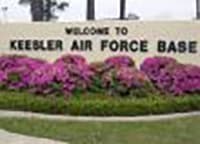
KEESLER AFB
U.S. Air Force
Unit with 273 member associations.
Kulis Air National Guard
U.S. Air Force
The Kulis Air National Guard Base, located in Anchorage, Alaska, was established during World War II to provide critical air defense for the region. It became the home of the 176th Wing (originally the 176th Tactical Airlift Group) of the Alaska Air National Guard, which was activated in 1969. The unit played a vital role in both state and federal missions, including airlift support, search and rescue operations, and disaster response throughout Alaska and beyond. In 2011, operations from Kulis were relocated to Joint Base Elmendorf-Richardson, marking the end of an era for the historic base.

LORING AFB
U.S. Air Force
Unit with 43 member associations.
MDAP-- Military Defense Assistance Program -- Germany
U.S. Air Force
The Military Defense Assistance Program (MDAP) for Germany was initiated in the early 1950s as part of the United States' broader efforts to strengthen Western European defenses during the Cold War. Through MDAP, the U.S. provided the newly formed Bundeswehr (West German armed forces) with vital military equipment, training, and logistical support to enable rapid rearmament and integration into NATO. The program supplied Germany with tanks, aircraft, small arms, and other materiel crucial for building a modern military force capable of countering the Soviet threat. MDAP played a significant role in reestablishing German military capabilities while ensuring close cooperation and interoperability within the NATO alliance.
medical unit keesler afb
U.S. Air Force
The medical unit at Keesler Air Force Base, known today as the 81st Medical Group, traces its roots to the establishment of Keesler Field in 1941. Originally organized to support the growing training mission during World War II, the unit provided essential medical care to thousands of airmen and played a crucial role in maintaining force readiness. Over the decades, the 81st Medical Group expanded its capabilities, becoming a major regional medical center renowned for its advanced care, medical training programs, and disaster response efforts, notably during Hurricane Katrina in 2005. Today, the unit continues its mission, delivering comprehensive healthcare and medical training to active-duty personnel, retirees, and their families.
Military Aircraft Storage and Disposition Center, David-Monthan AFB, Tucson, Arizona
U.S. Air Force
The Military Aircraft Storage and Disposition Center (MASDC) was established in 1946 at Davis-Monthan Air Force Base in Tucson, Arizona, to store and manage surplus military aircraft after World War II. Its mission quickly expanded to include the preservation, reclamation, and disposal of aircraft from all U.S. military branches. The facility’s vast desert location, with its low humidity, provided ideal conditions to minimize corrosion and protect stored aircraft. Over the decades, MASDC evolved into what is now known as the 309th Aerospace Maintenance and Regeneration Group (AMARG), becoming the world’s largest aircraft boneyard and playing a critical role in fleet management, parts reclamation, and historic preservation.
Multinational Forces -Iraq DOMEX
U.S. Air Force
The Multinational Forces-Iraq (MNF-I) Document and Media Exploitation (DOMEX) teams were specialized intelligence units active during the Iraq War, particularly from 2003 to 2011. Tasked with the collection, analysis, and exploitation of captured enemy documents, electronic media, and other materials, DOMEX teams provided critical information to coalition commanders and intelligence agencies. Operating alongside U.S. and coalition military units, DOMEX analysts uncovered insurgent networks, disrupted terrorist operations, and contributed to the targeting of high-value individuals. Their efforts played a key role in counterinsurgency operations and the broader intelligence mission of MNF-I throughout the conflict.
Naval Coastal Warfare Squadron 34
U.S. Air Force
Naval Coastal Warfare Squadron 34 (NCWRON 34) was a unit of the United States Navy Reserve specializing in coastal and harbor defense operations. Established during the Cold War era, the squadron was tasked with providing security for critical ports, anchorages, and maritime infrastructure against asymmetric threats. NCWRON 34 frequently participated in exercises and deployments worldwide, supporting operations such as Operation Iraqi Freedom and Enduring Freedom by safeguarding naval assets and conducting maritime interdiction. The unit was known for its integration of active-duty and reserve personnel, reflecting the Navy’s commitment to littoral and expeditionary warfare capabilities.
NAVCOMMSEC RAF Edzell Scotland
U.S. Air Force
NAVCOMMSEC RAF Edzell, located in Scotland, was a United States Navy communications security (NAVCOMMSEC) unit co-located at Royal Air Force Edzell. Established during the Cold War, its primary mission was to provide secure communications support, signals intelligence (SIGINT), and cryptologic operations for U.S. and NATO forces in the North Atlantic region. The unit operated advanced electronic monitoring and processing equipment, playing a key role in tracking Soviet naval activity and ensuring secure maritime communications. NAVCOMMSEC RAF Edzell remained operational until the base's closure in 1997, marking the end of decades of vital intelligence collaboration between American and British forces.
Non-Morse intercept Operator
U.S. Air Force
The Non-Morse Intercept Operator emerged as a specialized role during the Cold War, as militaries sought to monitor and exploit enemy communications that did not utilize standard Morse code transmissions. These operators were tasked with identifying, intercepting, and analyzing complex or unconventional signal formats, including frequency-shift keying and other digital modes used by adversaries for secure communications. Non-Morse Intercept Operators played a crucial part in signals intelligence (SIGINT) operations, providing valuable information on enemy movements, intentions, and technological capabilities. Their expertise contributed significantly to national security efforts and the broader intelligence picture throughout the late 20th century and into the modern era of electronic warfare.
osan air base inventory and supply group
U.S. Air Force
The Osan Air Base Inventory and Supply Group traces its origins to the early years of U.S. presence in South Korea following the Korean War. Established to support the logistical needs of Osan Air Base, the group has played a critical role in ensuring the continuous supply of equipment, munitions, and essential materials for U.S. Air Force operations on the peninsula. Over the decades, the group has adapted to evolving technologies and mission requirements, supporting both peacetime readiness and contingency operations. Its efficient management of inventory and supply chains remains vital to sustaining the operational capabilities of Osan Air Base and its tenant units.
Photographic repair
U.S. Air Force
The Photographic Repair unit originated during World War II, as advances in aerial reconnaissance and battlefield photography created a critical need for specialized maintenance of cameras and imaging equipment. Tasked with repairing, calibrating, and maintaining a variety of photographic devices, these units ensured that intelligence-gathering operations remained functional and reliable. Throughout the Korean and Vietnam Wars, Photographic Repair units adapted to evolving technologies, including motion picture cameras and early night vision equipment. Their expertise contributed significantly to the success of reconnaissance missions by providing clear and timely imagery for military planning and operations.
PLSS
U.S. Air Force
Certainly! However, the acronym "PLSS" is not widely recognized as a standard designation for a military unit in major armed forces. It could stand for something unique to a specific country or organization. If you intended a particular nation's unit or a specific meaning, please clarify. Assuming you are referring to a hypothetical or lesser-known unit, here is a generic short military history: --- The PLSS unit was established in the early 21st century as a specialized support and logistics force within its parent military organization. Initially tasked with providing rapid supply and sustainment solutions in conflict zones, the unit quickly gained a reputation for efficiency and adaptability. Over the years, PLSS expanded its capabilities to include advanced communications and field engineering support, participating in several multinational operations and humanitarian missions. Today, PLSS stands as a key enabler for frontline units, ensuring operational readiness and mission success. --- If you provide more details about PLSS (full name, country, or context), I can tailor the history more accurately!
Port Heiden AF Station, AK
U.S. Air Force
Port Heiden Air Force Station (AFS), located on the Alaska Peninsula, was established in 1958 as part of the United States' Cold War air defense network. Operated by the 714th Aircraft Control and Warning Squadron, the station was equipped with radar systems to detect and track potential Soviet aircraft approaching North America. Port Heiden AFS played a critical role in the Distant Early Warning (DEW) Line, providing early warning and airspace surveillance until advances in technology rendered it obsolete. The station was deactivated in 1969, and the site has since been remediated, with only limited remnants of its military past remaining today.
Prestwick AB Prestwick Scotland
U.S. Air Force
Prestwick Air Base, located in Prestwick, Scotland, has a rich military history primarily as a vital hub for transatlantic air operations during and after World War II. Beginning in 1939, Prestwick became a key stopover for ferrying aircraft from North America to the European theater, supporting both RAF and United States Army Air Forces operations. During the Cold War, the base continued to serve as a strategic waypoint for military flights, air-sea rescue missions, and NATO operations. Though its role as a dedicated military installation has diminished, Prestwick remains an important aviation facility with a legacy of supporting Allied air power.
PWHQ AFCENT : LCO Baumholder
U.S. Air Force
**PWHQ AFCENT / LCO Baumholder** is a military unit associated with NATO’s Allied Forces Central Europe (AFCENT), historically tasked with supporting NATO operations and coordination in Central Europe during the Cold War. Located at Baumholder, Germany, the Local Command Office (LCO) served as a key logistics and administrative hub, supporting both multinational exercises and the readiness of stationed forces. Throughout the latter half of the 20th century, this unit played a vital role in ensuring interoperability among allied forces and maintaining rapid response capabilities. Its legacy includes close cooperation with both U.S. and European military elements, contributing significantly to NATO's deterrence posture in the region.
Ranch Hand
U.S. Air Force
Operation Ranch Hand was a United States Air Force military unit and operation during the Vietnam War, active from 1962 to 1971. Its primary mission was to conduct aerial herbicide spraying, most famously using Agent Orange, to defoliate forests and destroy crops used by Viet Cong and North Vietnamese forces. Ranch Hand aircraft, mostly C-123 Providers, flew over 20,000 sorties, dispersing millions of gallons of chemical defoliants across South Vietnam, Laos, and Cambodia. The operation had significant environmental and long-term health impacts on both local populations and U.S. military personnel.
Royal Lao Air Force
U.S. Air Force
The Royal Lao Air Force (RLAF) was established in 1955 as the aerial branch of the Royal Lao Armed Forces, tasked with defending the Kingdom of Laos during a period of regional upheaval. Initially equipped with French-supplied aircraft, the RLAF later received significant support and training from the United States throughout the Laotian Civil War. The RLAF played a crucial role in reconnaissance, close air support, and supply missions, especially against Pathet Lao and North Vietnamese forces. Despite limited resources and challenging terrain, the RLAF remained active until the collapse of the Royal Lao Government in 1975, after which it was dissolved following the communist takeover.
SAC-3909 Opns. Sqdn-Greenham Common England
U.S. Air Force
The SAC-3909 Operations Squadron was a unit of the United States Air Force assigned to RAF Greenham Common in England during the Cold War. Activated in the early 1980s under Strategic Air Command (SAC), the squadron played a key role in operating and maintaining the Ground Launched Cruise Missiles (GLCM) as part of NATO’s nuclear deterrent in Europe. The unit was responsible for the security, readiness, and deployment of these missiles, contributing to the balance of power during a tense period of East-West relations. Following the signing of the Intermediate-Range Nuclear Forces (INF) Treaty in 1987, the mission of the 3909th wound down, and the squadron was inactivated as the missiles were withdrawn and the base closed in the early 1990s.
SAEMR SO G13
U.S. Air Force
**SAEMR SO G13** is a specialized military unit established in the early 2000s as part of broader modernization reforms within the South African Expeditionary Mechanized Regiment (SAEMR). The unit was originally formed to provide rapid response and support for peacekeeping operations within the Southern African Development Community (SADC) region. Notably, SAEMR SO G13 played a key role in Operation Savannah Shield, where it was instrumental in securing key logistical routes and supporting humanitarian efforts. Over the years, the unit has earned a reputation for its adaptability, professionalism, and effectiveness in both combat and peace-support missions.
Saigon Aerial Mail Terminal
U.S. Air Force
The Saigon Aerial Mail Terminal was a specialized military postal unit established by the United States during the Vietnam War to manage and expedite the flow of mail and packages to American forces stationed in South Vietnam. Located at Tan Son Nhut Air Base near Saigon, the terminal operated under the Military Postal Service and played a vital role in maintaining morale by ensuring the timely delivery of letters and parcels from home. The unit coordinated closely with airlift operations, utilizing military and contracted aircraft to transport mail in and out of the combat zone. Throughout its operation, the Saigon Aerial Mail Terminal remained a crucial lifeline for service members until the drawdown of U.S. involvement and the eventual closure of American facilities in Vietnam in 1973.
San Francisco Air Defense Sector (SFADS)
U.S. Air Force
The San Francisco Air Defense Sector (SFADS) was an integral part of the United States Air Force Air Defense Command, established in 1959 to provide air defense for Northern California and parts of Nevada. Headquartered at Beale Air Force Base, SFADS operated advanced radar sites and interceptor aircraft to detect and respond to potential Soviet bomber threats during the Cold War. The sector coordinated with the Semi-Automatic Ground Environment (SAGE) system, enhancing rapid response capabilities through real-time data processing and communication. SFADS was inactivated in 1963 as part of a broader reorganization and consolidation of air defense units across the country.
Seafarers international union afl cio
U.S. Air Force
The **Seafarers International Union (SIU) of North America, AFL-CIO** was founded in 1938 to represent merchant mariners and maritime workers in the United States and Canada. Throughout World War II, SIU members played a critical role in supporting Allied operations by crewing supply ships and transporting vital materials across dangerous waters, often facing enemy submarines and attack. In subsequent conflicts such as the Korean and Vietnam Wars, SIU crews continued to provide essential logistical support, ensuring the steady flow of troops, equipment, and supplies. Today, the SIU remains a key component of the U.S. Merchant Marine, supporting national defense through the operation of ships in the Maritime Security Program and Ready Reserve Force.