
Loading dashboard
Preparing your dashboard…
Loading dashboard
Preparing your dashboard…
7,146 units • 1,346,679 members
307th Engineer Battalion
U.S. Army
The 307th Engineer Battalion was originally constituted in the National Army on August 5, 1917, and assigned to the 82nd Division during World War I, where it served with distinction in France. Reactivated for World War II, the battalion participated in key campaigns including Sicily, Normandy, and the Rhineland, earning several commendations for its combat engineering support. Throughout the Cold War and into the modern era, the 307th has continued to provide vital engineering capabilities, including mobility, survivability, and construction support in both peacetime and combat operations. Today, the unit remains an integral part of the 82nd Airborne Division, upholding its legacy of excellence and adaptability in support of U.S. Army missions worldwide.
725th Maintenance Battalion
U.S. Army
The 725th Maintenance Battalion was originally constituted on 26 August 1941 as the 725th Ordnance Light Maintenance Company and activated at Schofield Barracks, Hawaii. The unit provided critical maintenance and logistical support for the 25th Infantry Division during World War II, the Korean War, and the Vietnam War, ensuring operational readiness of vehicles and equipment. Over the decades, the battalion underwent several reorganizations, reflecting changes in Army structure and technology, and was redesignated as the 725th Support Battalion. Today, the unit continues its legacy of excellence as part of the 25th Infantry Division, supporting operations and deployments worldwide.
1:19th Infantry
U.S. Army
The 1st Battalion, 19th Infantry Regiment (1/19th Infantry) traces its lineage to the original 19th Infantry Regiment, constituted in 1861 and organized during the American Civil War. Over its history, the battalion has seen action in major conflicts including the Civil War, the Indian Wars, the Philippine-American War, World War II, and the Korean War. In more recent decades, the 1/19th Infantry has served primarily as a training unit at Fort Moore (formerly Fort Benning), Georgia, responsible for conducting Infantry One Station Unit Training (OSUT) for new recruits. The battalion is recognized for its long-standing traditions of excellence, discipline, and service to the United States Army.
1:2 Cavalry
U.S. Army
The 1st Squadron, 2nd Cavalry Regiment (1/2 Cavalry), traces its lineage to the 2nd Regiment of Dragoons, first established in 1836. The unit saw early action in the Seminole Wars, Mexican-American War, and the Civil War, building a reputation for adaptability and valor. Throughout the twentieth century, 1/2 Cavalry served in major conflicts including World War II, the Vietnam War, and operations in Iraq and Afghanistan, often conducting reconnaissance and security missions. Today, 1/2 Cavalry remains an active element of the 2nd Cavalry Regiment, stationed in Europe and supporting NATO operations.
1:506 Infantry
U.S. Army
The 1st Battalion, 506th Infantry Regiment (1-506 IN), known as "Currahee," was first activated in 1942 at Camp Toccoa, Georgia, as part of the famed 101st Airborne Division. The battalion saw distinguished service during World War II, participating in major operations such as D-Day (Normandy), Operation Market Garden, and the Battle of the Bulge. After periods of inactivation and reactivation, 1-506 IN served in the Vietnam War, earning numerous unit citations for valor. In recent decades, the battalion has deployed to Iraq and Afghanistan, continuing its proud legacy of airborne and air assault infantry excellence.
3:68th Armor
U.S. Army
The 3rd Battalion, 68th Armor Regiment (3/68th Armor) has a distinguished history within the United States Army Armor Branch. Originally constituted during World War II, the unit has served in various armored and mechanized roles, supporting both European and domestic operations throughout its history. During the Cold War, 3/68th Armor was stationed in Germany as part of the U.S. Army’s forward-deployed forces, emphasizing deterrence against Warsaw Pact threats. In more recent years, the battalion has participated in training exercises and deployments, adapting to modern combined arms tactics and supporting operations in the Middle East.
Finance Corps
U.S. Army
The Finance Corps is a vital branch of the United States Army, officially established on June 1, 1920, though its origins trace back to the Pay Department founded in 1775. Throughout its history, the Finance Corps has been responsible for administering military pay, disbursements, and financial management for soldiers and Army operations. During major conflicts such as World War II, the Korean War, and beyond, the Corps adapted to support complex logistical and operational demands, ensuring troops were paid and resources were properly allocated. Today, the Finance Corps continues to play a crucial role in supporting Army readiness through expert financial operations and resource management.
13th Engineering Battalion
U.S. Army
The 13th Engineer Battalion was first constituted in the Regular Army in 1916 and has served with distinction in numerous conflicts, including World War II, the Korean War, the Vietnam War, and Operations Iraqi Freedom and Enduring Freedom. Initially organized to support combat operations with construction, mobility, and demolition expertise, the battalion has adapted to a variety of engineering missions over its history. The unit earned campaign participation credit in major battles such as Normandy and the Rhineland during World War II and played a crucial role in river crossings and route clearance in later conflicts. Today, the 13th Engineer Battalion continues to provide combat engineering support, ensuring mobility, survivability, and sustainment for the U.S. Army and its allies.
2:64th Armor
U.S. Army
The 2nd Battalion, 64th Armor Regiment (2/64th Armor) traces its lineage to the 64th Armor, activated in 1942 during World War II. The battalion saw distinguished service with the 3rd Infantry Division, participating in major campaigns across North Africa, Sicily, Italy, France, and Germany. During the Cold War, 2/64th Armor was stationed in Germany as part of NATO forces, maintaining readiness against Warsaw Pact threats. In the post-Cold War era, the battalion deployed to Southwest Asia during Operation Desert Storm and later supported operations in Iraq and other theaters, exemplifying its motto, "We Pierce."
299th Engineer Battalion
U.S. Army
The 299th Engineer Battalion was first constituted on 23 March 1943 in the Army of the United States and activated on 1 May 1943 at Camp White, Oregon. During World War II, the battalion provided vital combat engineering support in campaigns across the European Theater, including the Rhineland and Central Europe operations. Reactivated and inactivated several times throughout its history, the unit has served in various capacities, including construction, bridging, and route clearance missions. In recent decades, the 299th Engineer Battalion has supported operations in Iraq and Afghanistan, continuing its tradition of providing essential engineering capabilities to the U.S. Army.
39th. Engineer Battalion
U.S. Army
The 39th Engineer Battalion was originally constituted on 15 July 1940 in the Regular Army and activated at Camp Bowie, Texas. During World War II, the battalion participated in key campaigns across North Africa, Sicily, and Italy, providing critical combat engineering support, including bridging rivers and clearing mines. Post-war, the 39th played significant roles in Vietnam, supporting mobility and construction operations. In more recent years, the battalion has deployed to Iraq and Afghanistan, continuing its tradition of providing vital engineering support to U.S. Army operations.
525th MI
U.S. Army
The 525th Military Intelligence Brigade (Airborne), originally constituted during World War II as the 525th Interrogation Team, has a distinguished history of providing critical intelligence support to U.S. Army operations. Reactivated and redesignated multiple times, the unit played key roles in conflicts such as the Vietnam War, where it supported intelligence collection, counterintelligence, and interrogation missions. In the post-Vietnam era, the brigade evolved to support rapid deployment with airborne capabilities, participating in operations including Operation Just Cause in Panama, Operation Desert Storm, and the Global War on Terrorism in Iraq and Afghanistan. Today, the 525th MI Brigade continues to serve as a premier expeditionary intelligence formation, delivering multi-discipline intelligence support to commanders around the globe.
534TH MILITARY POLICE
U.S. Army
The 534th Military Police Company has a distinguished history of service within the United States Army. Activated during World War II, the unit provided critical law enforcement, security, and battlefield circulation control in both the European and Pacific theaters. Over the decades, the 534th has supported a variety of missions, including deployments to Korea, Germany, and the Middle East, contributing to operations such as Operation Iraqi Freedom and Operation Enduring Freedom. Renowned for its professionalism and adaptability, the 534th Military Police Company continues to uphold its legacy of excellence in military policing and force protection.
1:107th ACR
U.S. Army
The 1st Squadron, 107th Armored Cavalry Regiment (1/107th ACR) traces its lineage to Ohio National Guard cavalry units organized in the late 19th century. The unit served with distinction in both World Wars, providing reconnaissance and security missions for larger formations. During the Cold War, the 1/107th ACR was reorganized as part of the 107th Armored Cavalry Regiment, equipped with armored vehicles and tasked with reconnaissance, surveillance, and security operations. In the 21st century, its soldiers have deployed in support of missions both at home and abroad, including peacekeeping and homeland security.
1:502nd Infantry
U.S. Army
The 1st Battalion, 502nd Infantry Regiment (1/502nd Infantry), known as the "First Strike," is a distinguished unit of the 101st Airborne Division (Air Assault). Activated during World War II, the 502nd parachuted into Normandy on D-Day, June 6, 1944, playing a critical role in the liberation of France and subsequent European campaigns. The battalion later saw combat in Vietnam, Iraq, and Afghanistan, earning numerous unit citations for valor. Today, the 1/502nd continues its legacy of rapid deployment and excellence in air assault operations.
101st MP Co
U.S. Army
The 101st Military Police Company (101st MP Co) has a storied history supporting the U.S. Army’s operations since its activation. Historically aligned with the 101st Airborne Division, the unit has provided critical law enforcement, security, and battlefield circulation control during major conflicts, including Vietnam, Operation Desert Storm, and the Global War on Terrorism. The company has deployed multiple times to Iraq and Afghanistan, earning commendations for its professionalism and adaptability in both combat and peacekeeping missions. Through decades of service, the 101st MP Co has demonstrated unwavering commitment to safeguarding soldiers and upholding military law and order.
11th Engineers
U.S. Army
The 11th Engineers was originally constituted in the Regular Army in 1916 and organized at Fort Belvoir, Virginia. During World War I, the unit deployed to France, where it played a crucial role in constructing trenches, roads, and railways under combat conditions, earning a French Croix de Guerre for its valor. In World War II, the 11th Engineers supported armored divisions in Europe, facilitating rapid advances by building bridges and clearing obstacles. Over the decades, the unit has continued to serve with distinction, adapting to changing missions and technologies while upholding its proud heritage of combat engineering excellence.
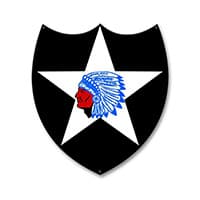
2nd Infantry Division
U.S. Army
The 2nd Infantry Division, also known as the "Indianhead Division," was formed in 1917 and first saw combat in World War I, participating in key battles such as Belleau Wood and the Meuse-Argonne Offensive. During World War II, the division landed on Omaha Beach on D-Day+1 and fought across France, Belgium, and into Germany. In the Korean War, the 2nd Infantry Division was one of the first U.S. units to arrive and played a critical role in defensive actions and offensives throughout the conflict. Today, the division remains forward-deployed in South Korea, serving as a key component of the United States’ commitment to the defense of the Korean Peninsula.
3:43 ADA
U.S. Army
The 3rd Battalion, 43rd Air Defense Artillery Regiment (3-43 ADA) traces its origins to World War I, when it was first constituted as part of the Coast Artillery Corps in 1918. Reactivated and redesignated several times, the unit served with distinction during World War II, providing anti-aircraft defense in the Pacific Theater. In recent decades, 3-43 ADA has been an integral component of the U.S. Army’s air and missile defense, notably deploying Patriot missile systems during Operations Desert Storm, Iraqi Freedom, and Enduring Freedom. Stationed at Fort Bliss, Texas, 3-43 ADA continues to support air defense missions both at home and abroad, upholding its tradition of excellence.
32nd Signal Battalion
U.S. Army
The 32nd Signal Battalion was first constituted on 1 March 1943 in the United States Army during World War II and activated at Camp Crowder, Missouri. The battalion provided vital communications support for command and control operations throughout the European Theater, notably participating in the Rhineland and Central Europe campaigns. After the war, the unit underwent several activations and inactivations, reflecting the changing needs of the Army. During the Cold War, the 32nd Signal Battalion was stationed in Germany, where it played a crucial role in NATO communications before its inactivation in 2007 as part of Army transformation initiatives.
385th MP Battalion
U.S. Army
The 385th Military Police Battalion was first constituted on 28 October 1944 and activated at Ft. Custer, Michigan, during World War II. Tasked with providing military police support, the battalion served in the European Theater, where it played a vital role in law enforcement, security, and prisoner-of-war operations. After the war, the unit was inactivated and later reactivated in the Army Reserve, continuing its mission of supporting military operations both at home and abroad. Over the decades, the 385th MP Battalion has participated in numerous deployments, including operations in Iraq and Afghanistan, upholding its legacy of service and discipline.
ARNG
U.S. Army
The Army National Guard (ARNG) traces its origins to the formation of colonial militias in 1636, making it one of the oldest military organizations in the United States. The ARNG has played a vital role in every major American conflict, from the Revolutionary War to current operations overseas. It serves as a dual-purpose force, supporting both federal missions abroad and state missions during emergencies and natural disasters. Today, the ARNG comprises over 300,000 citizen-soldiers, providing critical support to both the U.S. Army and local communities nationwide.
1:13th Infantry
U.S. Army
The 1st Battalion, 13th Infantry Regiment (1/13th Infantry) has a distinguished history dating back to its constitution in 1861 during the American Civil War. The unit served with valor in numerous major conflicts, including the Civil War, Indian Wars, Spanish-American War, World War II, and the Vietnam War, earning multiple campaign streamers and commendations. In World War II, the battalion fought as part of the 8th Infantry Division in the European Theater, participating in operations in Normandy, Northern France, and Germany. Today, the 1/13th Infantry is stationed at Fort Jackson, South Carolina, where it serves as a Basic Combat Training unit, continuing its legacy of preparing new soldiers for service in the U.S. Army.
1:41 INF
U.S. Army
The 1st Battalion, 41st Infantry Regiment (1/41 INF) has a distinguished history within the United States Army, tracing its lineage back to its constitution in 1917. The unit saw action in World War II, participating in key campaigns across North Africa, Sicily, and Europe. During Operation Desert Storm in 1991, 1/41 INF made history as the first U.S. Army unit to breach the Iraqi defensive lines, playing a pivotal role in the ground offensive. In recent years, the battalion has deployed in support of Operations Iraqi Freedom and Enduring Freedom, continuing its tradition of excellence and adaptability on modern battlefields.