
Loading dashboard
Preparing your dashboard…
Loading dashboard
Preparing your dashboard…
7,146 units • 1,346,719 members
HSB 1st:320th FA
U.S. Army
The 1st Battalion, 320th Field Artillery Regiment (HSB 1st/320th FA) was originally constituted in 1917 as part of the 82nd Division during World War I, providing critical artillery support on the Western Front. The unit later served with distinction in World War II, participating in key campaigns such as Normandy, Rhineland, and the Ardennes-Alsace. During the Vietnam War, the battalion was attached to the 101st Airborne Division, delivering fire support in major operations. In recent decades, HSB 1st/320th FA has deployed in support of Operations Iraqi Freedom and Enduring Freedom, continuing its tradition of excellence in airborne artillery operations.
HSC 5th Attack Helicopter Battalion
U.S. Army
The HSC 5th Attack Helicopter Battalion, also known as the “Viper Battalion,” was established in the early 2000s as part of efforts to modernize army aviation capabilities. Equipped primarily with AH-1Z Viper helicopters, the unit specializes in close air support, anti-armor operations, and reconnaissance missions. The battalion has participated in multiple joint exercises and operational deployments, providing critical aerial firepower and support to ground forces. Over the years, HSC 5th has earned a reputation for tactical excellence, adaptability, and a strong commitment to mission success.
hsc 628th ASB
U.S. Army
The 628th Aviation Support Battalion (ASB) is a unit within the U.S. Army, primarily tasked with providing aviation maintenance and logistical support to combat aviation brigades. Activated as part of the 28th Infantry Division's aviation assets, the 628th ASB has played a crucial role in sustaining helicopter operations through both peacetime training and overseas deployments, including service in support of Operation Iraqi Freedom and Operation Enduring Freedom. The battalion specializes in aircraft repair, supply distribution, and technical support, ensuring the operational readiness of Army aviation units. Through its dedicated service, the 628th ASB has earned a reputation for reliability and excellence in supporting Army aviation missions worldwide.
HSC HHBN 2ID
U.S. Army
**HSC, HHBN, 2ID** stands for Headquarters and Support Company, Headquarters and Headquarters Battalion, 2nd Infantry Division. This unit serves as the central command and support element for the 2nd Infantry Division, a storied formation in the U.S. Army with origins dating back to World War I. HSC, HHBN provides vital administrative, logistical, and operational support to the division’s headquarters, enabling effective command and control across the unit’s multinational and multi-domain operations. Stationed in South Korea, the unit plays a critical role in maintaining readiness and strengthening the U.S.-ROK alliance, serving as a key component in the defense of the Korean Peninsula. Throughout its history, HSC, HHBN has upheld the proud traditions of the 2ID, adapting to evolving missions and technologies to meet modern challenges.
HSN 3rd & 319th, Field Artillery
U.S. Army
The HSN 3rd & 319th Field Artillery is a composite designation referencing elements of the historic 3rd Battalion and the 319th Field Artillery Regiment, renowned for their distinguished service within the United States Army. The 319th Field Artillery traces its roots to World War I, providing critical fire support during campaigns in France and later playing a pivotal role as the airborne artillery for the famed 82nd Airborne Division in World War II, including the Normandy invasion and Operation Market Garden. The 3rd Battalion has continued this legacy through the Cold War, Vietnam, and into recent operations in Iraq and Afghanistan, adapting to modern warfare while upholding traditions of excellence. Together, the HSN 3rd & 319th symbolize a proud heritage of precision firepower, rapid deployment, and steadfast service in support of U.S. forces worldwide.
HST 3:6 Cav 6th Cav BDE
U.S. Army
HST 3/6 Cav, part of the 6th Cavalry Brigade, traces its lineage to the storied traditions of U.S. Army cavalry operations. Originally established to provide attack and reconnaissance support, the unit has operated a variety of rotary-wing aircraft in both training and operational environments. Throughout its service, HST 3/6 Cav has participated in numerous exercises and deployments, enhancing the Army’s aerial reconnaissance and security capabilities. As an integral element of the 6th Cavalry Brigade, the unit upholds a proud legacy of mobility, adaptability, and excellence in both peacetime and combat missions.
HWB 1:2 ACR
U.S. Army
**HWB 1/2 ACR** refers to the Headquarters and Headquarters Troop, 1st Squadron, 2nd Armored Cavalry Regiment (now known as the 2nd Cavalry Regiment). The 1/2 ACR has a storied lineage, tracing its roots back to the formation of the 2nd Dragoons in 1836. Throughout its history, HWB 1/2 ACR provided command and control for reconnaissance and security operations, seeing combat in major conflicts such as the Indian Wars, World War II, the Gulf War, and Operation Iraqi Freedom. The unit is recognized for its adaptability, having transitioned from horse-mounted cavalry to armored vehicles and Strykers, playing a critical role in both European and Middle Eastern theaters. Today, its legacy continues as part of the U.S. Army’s premier cavalry regiment, maintaining readiness for rapid deployment and reconnaissance missions.
hwb 3:2 acr
U.S. Army
**History of HWB 3/2 ACR:** The Headquarters and Headquarters Troop, Bravo (HWB), 3rd Squadron, 2nd Armored Cavalry Regiment (3/2 ACR) traces its lineage to the storied 2nd Cavalry Regiment, which was first activated in 1836. Throughout its history, the 3/2 ACR has served in numerous conflicts, including patrolling the Iron Curtain during the Cold War, and later deploying to the Middle East for Operations Desert Storm, Iraqi Freedom, and Enduring Freedom. The HWB Troop provides essential command, control, and support functions for the squadron, ensuring operational readiness and mission success. Renowned for its adaptability and professionalism, HWB 3/2 ACR continues to uphold the proud traditions of the regiment in both peacetime and conflict.
I:29 infantry Ft. Benning Ga_575 RPC Darmstadt Germany
U.S. Army
The I/29 Infantry, originally part of the 29th Infantry Regiment, has a storied history with deep roots in the U.S. Army. Stationed at Fort Benning, Georgia, the unit was integral in training and readiness activities, supporting the Army’s infantry doctrine. During the Cold War, elements of the regiment, including I/29 Infantry, were assigned to the 575th Replacement Processing Center (RPC) in Darmstadt, Germany, to bolster NATO’s forward presence and facilitate troop rotations. The unit played a crucial role in maintaining U.S. military readiness in Europe until the post-Cold War drawdown and restructuring of American forces overseas.
IACH-Ft. Riley, KS
U.S. Army
The Irwin Army Community Hospital (IACH) at Fort Riley, Kansas, has served as the primary medical facility for soldiers, families, and retirees since its establishment in 1958. Named in honor of Brigadier General Bernard John Dowling Irwin, a Medal of Honor recipient, IACH has supported the Big Red One (1st Infantry Division) and the Fort Riley community through periods of both peace and conflict. Over the decades, the hospital has adapted to advances in military medicine and the changing needs of the Army, consistently providing quality healthcare and medical readiness. Today, IACH continues its mission by delivering comprehensive medical support to ensure the health and readiness of America’s fighting force at Fort Riley.
IDF
U.S. Army
The Israel Defense Forces (IDF) were officially established in May 1948, following the declaration of the State of Israel and the outbreak of the Arab-Israeli War. Formed from pre-state Jewish paramilitary organizations such as the Haganah, Palmach, and Irgun, the IDF became the unified military force responsible for defending Israel’s sovereignty. Throughout its history, the IDF has participated in multiple major conflicts, including the 1956 Suez Crisis, the 1967 Six-Day War, and the 1973 Yom Kippur War, often demonstrating rapid mobilization and innovative tactics. The IDF is also involved in ongoing security operations, counterterrorism, and peacekeeping missions, playing a central role in Israel's national identity and security strategy.
III-Armored Division -India Co. 3 Bn STB
U.S. Army
**III-Armored Division - India Company, 3rd Battalion, Special Tank Brigade (STB):** Formed during the late 1960s as part of India’s strategic armored expansion, India Company of the 3rd Battalion, STB, quickly distinguished itself for its operational readiness and advanced tank warfare tactics. The unit first saw major action during the Indo-Pakistani War of 1971, where it played a key role in breakthrough maneuvers on the western front, contributing to the rapid advance toward key objectives. Throughout the 1980s and 1990s, the company participated in multiple joint exercises and modernization programs, integrating new armored platforms and digital command systems. Today, India Company remains at the forefront of the III-Armored Division’s spearhead forces, recognized for its discipline, technical excellence, and combat effectiveness.
instructor Pershing missel school fort sill ok
U.S. Army
The Pershing Missile School, located at Fort Sill, Oklahoma, was established in the early 1960s to provide specialized training for U.S. Army personnel assigned to the Pershing missile system. As an instructor at this school, soldiers were responsible for teaching the assembly, maintenance, and operational procedures of the Pershing I and later Pershing II nuclear-capable ballistic missiles. The school played a critical role during the Cold War, ensuring crews were prepared for rapid deployment and effective use of the Pershing system in Europe as part of NATO’s deterrence strategy. The Pershing Missile School continued its mission until the Intermediate-Range Nuclear Forces (INF) Treaty led to the deactivation of the Pershing systems and the closure of related training programs in the late 1980s.
IRR
U.S. Army
The Individual Ready Reserve (IRR) is a category of the United States Armed Forces Reserve components, established to provide a pool of trained military personnel who can be called upon during national emergencies or to augment active units. Formed as part of the broader reserve system after World War II, the IRR consists of former active duty or reserve service members who have completed their active service commitment but still have a remaining service obligation. Although IRR members do not participate in regular drills or annual training, they can be mobilized by presidential order when additional manpower is needed. The IRR has played a significant role during major conflicts such as the Gulf War, Operation Enduring Freedom, and Operation Iraqi Freedom, when thousands of IRR members were recalled to active duty.
ITAC
U.S. Army
**ITAC (Intelligence, Tactical Analysis and Coordination) Military Unit History:** Formed in the early 2000s, the Intelligence, Tactical Analysis and Coordination (ITAC) unit was established to enhance real-time battlefield intelligence and streamline joint operations. Initially composed of specialists from army, navy, and air force intelligence branches, ITAC quickly proved its value during counterinsurgency operations, providing actionable intelligence that led to several high-profile successes. The unit has since expanded its role to include cyber intelligence and unmanned systems coordination, adapting to the evolving nature of modern warfare. Today, ITAC is recognized as a leading force in integrating multi-domain intelligence to support both national and allied military missions worldwide.
JFHQ-LA
U.S. Army
Joint Force Headquarters – Louisiana (JFHQ-LA) is the senior command element of the Louisiana National Guard, headquartered at Jackson Barracks in New Orleans. Established in response to evolving state and federal missions, JFHQ-LA provides command and control of all Louisiana Army and Air National Guard forces. It has played a pivotal role in coordinating disaster response efforts, notably during Hurricane Katrina in 2005, and in supporting overseas deployments. JFHQ-LA continues to ensure the readiness and integration of Louisiana's National Guard units for both state emergencies and federal missions.
JFHQ-NJ, 50th IBCT, 5-117th CAV, 119th CSB, 1-150th AVN
U.S. Army
Certainly! Here is a short military history for each unit: **Joint Force Headquarters – New Jersey (JFHQ-NJ):** JFHQ-NJ provides command and control of all New Jersey Army and Air National Guard units. It coordinates state and federal missions, including disaster response and homeland security, ensuring readiness and support for both state and national objectives. The headquarters plays a key role in joint operations and interagency cooperation within the state. **50th Infantry Brigade Combat Team (50th IBCT):** The 50th IBCT, part of the New Jersey Army National Guard, traces its lineage to the 50th Armored Division. Reorganized as an IBCT in 2007, the brigade has deployed elements to Iraq, Afghanistan, and in support of domestic missions. It is known for its versatility, combining infantry, cavalry, artillery, and support units. **5th Squadron, 117th Cavalry Regiment (5-117th CAV):** The 5-117th CAV is a reconnaissance and security squadron within the 50th IBCT. With roots dating back to the 19th century, the unit has served in both World Wars, the Global War on Terror, and numerous state emergencies. Its primary roles include reconnaissance, surveillance, and target acquisition. **119th Combat Sustainment Support Battalion (119th CSB):** The 119th CSB provides logistical and sustainment support to operational units in both peacetime and combat environments. Headquartered in New Jersey, the battalion has supported overseas deployments and domestic missions, ensuring units have the necessary supplies, maintenance, and transportation. **1st Battalion, 150th Aviation Regiment (1-150th AVN):** The 1-150th AVN operates rotary-wing aircraft in support of both state and federal missions. With a history of service in Iraq, Afghanistan, and disaster relief operations, the battalion provides air assault, medevac, and reconnaissance capabilities, enhancing the operational reach of the New Jersey National Guard.
Joint Forces Alabama
U.S. Army
Joint Forces Alabama is a collaborative military formation that brings together elements of the Alabama Army National Guard and the Alabama Air National Guard to provide unified support for state and federal missions. Established to enhance coordination during emergencies, natural disasters, and homeland defense operations, the unit leverages the unique capabilities of both land and air components. Over recent years, Joint Forces Alabama has played a pivotal role in hurricane response efforts, pandemic support operations, and assisting civil authorities during periods of unrest. Through integrated training and joint exercises, the unit continues to strengthen its readiness to respond to a wide range of contingencies both within Alabama and beyond.
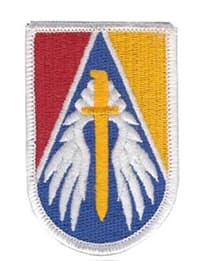
JRTC
U.S. Army
Unit with 36 member associations.
Kalani High School Platoon
U.S. Army
The Kalani High School Platoon was established as part of the Junior Reserve Officers’ Training Corps (JROTC) program at Kalani High School in Honolulu, Hawaii. Founded in the late 1960s, the platoon has a proud tradition of fostering leadership, discipline, and civic responsibility among its cadets. Over the decades, its members have participated in various local and national drill competitions, community service projects, and ceremonial events. The Kalani High School Platoon continues to play a vital role in developing future leaders and upholding the values of honor and service within the school and the broader community.
Landstuhl Regional Medical Center LRMC
U.S. Army
Landstuhl Regional Medical Center (LRMC), located near Landstuhl, Germany, was established in 1953 as a key U.S. military medical facility in Europe. Over the decades, LRMC has served as the largest American military hospital outside the United States, providing critical care to service members, their families, and coalition forces. During major conflicts such as Operations Desert Storm, Enduring Freedom, and Iraqi Freedom, LRMC became the primary treatment and evacuation center for wounded personnel from the Middle East, Africa, and Europe. Its strategic location and advanced medical capabilities have made it a vital hub for medical support, humanitarian missions, and readiness in the European theater.
LRRP Platoon 1st Brigade
U.S. Army
The LRRP (Long Range Reconnaissance Patrol) Platoon of the 1st Brigade was established during the Vietnam War to conduct deep reconnaissance and intelligence-gathering missions behind enemy lines. Comprised of specially selected and highly trained soldiers, the platoon operated in small teams, utilizing stealth and advanced fieldcraft to monitor enemy movements, direct artillery and air strikes, and perform ambushes. Their operations provided critical real-time intelligence to brigade commanders, significantly enhancing battlefield awareness and operational effectiveness. Over time, the LRRP Platoon’s tactics and successes contributed to the evolution of modern special operations and were later integrated into the formation of elite units such as the U.S. Army Rangers.
Lyster Army Health Clinic, Fort Rucker, AL
U.S. Army
Lyster Army Health Clinic, located at Fort Rucker, Alabama, was established in 1962 and named in honor of Brigadier General William J. Lyster, a distinguished Army Medical Corps officer. Serving as the primary medical facility for the U.S. Army Aviation Center of Excellence, the clinic provides comprehensive healthcare services to soldiers, their families, and retirees. Throughout its history, Lyster Army Health Clinic has played a vital role in supporting the health and readiness of the Army aviation community at Fort Rucker. The clinic has continually adapted to meet evolving military healthcare needs, integrating advanced technology and patient-centered care practices.
MAAG Laos
U.S. Army
The Military Assistance Advisory Group, Laos (MAAG Laos) was established by the United States in 1955 to provide military aid, training, and advisory support to the Royal Lao Armed Forces during the early stages of the Laotian Civil War. Operating in a challenging environment shaped by Cold War tensions, MAAG Laos sought to bolster Laos’ ability to resist communist insurgency, particularly from the Pathet Lao and their North Vietnamese allies. The group worked closely with both military and civilian agencies to coordinate American assistance while navigating the restrictions imposed by international agreements, such as the 1962 Geneva Accords. In 1962, following these accords and a pledge to neutralize Laos, the official MAAG Laos presence was withdrawn, though U.S. involvement in Laos continued covertly through other channels.