
Loading dashboard
Preparing your dashboard…
Loading dashboard
Preparing your dashboard…
7,146 units • 1,346,657 members
52CAB:361AWC(escort)
U.S. Army
The 52nd Combat Aviation Battalion (52CAB), operating under the 361st Aviation Wing Company (AWC), was an escort aviation unit active during the Vietnam War. Tasked primarily with providing armed helicopter escort for troop transport and supply missions, the unit played a crucial role in ensuring the safety of convoys and airmobile operations in contested areas. The 52CAB/361AWC utilized UH-1 Hueys and AH-1 Cobra gunships, often flying dangerous missions under enemy fire to protect friendly forces. Their efforts significantly contributed to mission success rates and the reduction of casualties during critical operations throughout their deployment.
52nd Security Force Infantry
U.S. Army
The 52nd Security Force Infantry was established in 1942 as part of the rapid expansion of ground forces during World War II. Initially tasked with protecting vital supply lines and key military installations, the unit distinguished itself in the European theater, particularly during the defense of the Ardennes in the winter of 1944. In the postwar era, the 52nd adapted to new security challenges, providing support for peacekeeping operations and counterinsurgency missions. Today, the unit remains a key component of military security operations, upholding its legacy of vigilance and readiness.
537th Topographic Survey Btl
U.S. Army
The 537th Topographic Survey Battalion was a specialized unit within the United States Army responsible for providing critical mapping, surveying, and geodetic support to military operations. Activated during World War II, the battalion played a key role in producing accurate topographic maps and conducting surveys essential for planning and executing campaigns, particularly in the European and Pacific Theaters. After the war, the 537th continued its technical mission, supporting both peacetime and combat operations by updating maps and geographic data for the Army. The unit’s expertise ensured that commanders had the precise terrain information necessary for strategic and tactical decision-making throughout its active years.
53rd Armored Infantry Battalion
U.S. Army
The 53rd Armored Infantry Battalion was an element of the United States Army that served during World War II as part of the 4th Armored Division. Activated in 1942, the battalion trained extensively before deploying to the European Theater, landing in France shortly after D-Day. It played a crucial role in the rapid armored thrusts across France, participating in the liberation of towns and the relief of Bastogne during the Battle of the Bulge. The 53rd Armored Infantry Battalion continued its advance into Germany, contributing to the eventual Allied victory in Europe before being inactivated after the war’s end.
53rd Engr Bn SEC ND US ARMY
U.S. Army
The 53rd Engineer Battalion (Security), North Dakota, U.S. Army, has a distinguished history of service dating back to its initial activation during World War II. Originally organized to provide critical engineering and security support, the battalion was tasked with constructing and maintaining vital infrastructure, such as bridges, roads, and fortifications, often under hazardous conditions. Throughout its existence, the 53rd Engr Bn SEC has participated in both domestic and overseas operations, contributing to disaster response, homeland security, and combat engineering missions. The unit’s dedication to excellence and adaptability has made it a vital asset within the United States Army’s engineering and security operations.
53rd Rifle Company
U.S. Army
The 53rd Rifle Company was established during World War II as part of a broader mobilization of infantry units. It was initially assigned to the 17th Rifle Regiment and took part in several key engagements on the Eastern Front, including the defense of strategic supply routes. Throughout the war, the 53rd Rifle Company earned recognition for its resilience and effective small-unit tactics during both offensive and defensive operations. After the war, the company was reorganized as part of postwar military restructuring, with many of its veterans honored for their service.
54 USASA FLD. STATION
U.S. Army
The 54th USASA Field Station (United States Army Security Agency Field Station) was a specialized signals intelligence (SIGINT) unit during the Cold War era. Activated in the 1950s, it operated primarily in Germany, tasked with intercepting and analyzing communications of potential adversaries in the European theater. The unit played a crucial role in gathering intelligence on Warsaw Pact activities, contributing to NATO’s situational awareness. The 54th USASA Field Station was eventually reorganized or redesignated as part of the broader restructuring of Army intelligence operations in the late 1970s and 1980s.
54rmtm
U.S. Army
**54th Separate Reconnaissance Battalion (54 ORB / 54РМТМЦ)** The 54th Separate Reconnaissance Battalion (54 ORB, Ukrainian: 54-й окремий розвідувальний батальйон, військова частина А2077, also known as 54РМТМЦ) is a Ukrainian military unit specializing in reconnaissance and intelligence operations. Established as part of the Ukrainian Ground Forces, the battalion has been actively engaged in the defense of Ukraine since the outbreak of the war in Donbas in 2014 and has played a critical role in gathering intelligence, conducting special operations, and supporting frontline units. The battalion has participated in numerous key operations in eastern Ukraine, demonstrating high mobility and adaptability in complex combat environments. Members of the 54 ORB are recognized for their professionalism, bravery, and significant contributions to Ukraine's military efforts.

551 transportation ft. eustis Va.
U.S. Army
Unit with 33 member associations.
555 Ambulance Comp: 70 Med Dep
U.S. Army
The 555th Ambulance Company, part of the 70th Medical Depot, served as a vital medical support unit during World War II. Activated in the early 1940s, the company provided frontline ambulance services, evacuating wounded soldiers from combat zones to field hospitals across the European Theater of Operations. Their operations were crucial during major campaigns, including the Normandy invasion and the subsequent push across France and Germany. The dedication and efficiency of the 555th contributed significantly to the survival and recovery of countless Allied troops throughout the conflict.
557 TC DET
U.S. Army
The 557th Transportation Company Detachment (557 TC DET) is a U.S. Army unit specializing in transportation and logistical support. Activated during a period of increased operational demand, the detachment has provided essential movement of personnel, equipment, and supplies for both stateside and overseas missions. Throughout its history, the 557 TC DET has supported training exercises, humanitarian missions, and contingency operations, often working alongside other units to ensure mission readiness and sustainment. Known for its adaptability and professionalism, the detachment continues to play a vital role in sustaining Army operations wherever it is deployed.
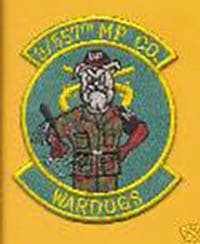
557TH MP CO
U.S. Army
Unit with 100 member associations.
55th Ord:83 Ord Bat.
U.S. Army
The 55th Ordnance Company, later part of the 83rd Ordnance Battalion, has a distinguished history of providing ordnance support to U.S. Army operations. Originally activated during World War II, the 55th Ordnance served in the European Theater, delivering critical munitions and maintenance services. During the Cold War, as part of the 83rd Ordnance Battalion, it was stationed in Germany, supporting NATO forces with ammunition supply and explosive ordnance disposal. The unit continued its legacy of logistical excellence through subsequent operations, adapting to evolving technologies and missions in support of U.S. Army readiness.
560th MCT
U.S. Army
The 560th Movement Control Team (MCT) is a logistics unit within the United States Army specializing in transportation coordination and movement control. Activated to support global missions, the 560th MCT ensures the efficient movement of personnel, equipment, and supplies across various theaters of operation. The unit has deployed in support of major operations, including Operation Iraqi Freedom and Operation Enduring Freedom, where it played a crucial role in sustainment and logistical planning. Through its expertise in transportation management, the 560th MCT enhances the Army's ability to project and sustain combat power worldwide.
563RD ORD. CO.
U.S. Army
Imported from legacy system. Member count: 15
56th Finance Division
U.S. Army
The 56th Finance Division was activated during World War II to manage and oversee financial operations for U.S. Army units deployed in the European Theater. Tasked with disbursing soldiers’ pay, managing military budgets, and ensuring fiscal accountability, the division played a crucial role in maintaining troop morale and operational efficiency. Following the war, the 56th Finance Division continued serving in various capacities during peacetime, supporting military operations both domestically and overseas. Its legacy highlights the importance of financial stewardship in sustaining military readiness and effectiveness.
56th MPCO: Utah
U.S. Army
The 56th Military Police Company (56th MPCO), part of the Utah Army National Guard, has a proud history of service both domestically and abroad. Activated in Utah, the unit has provided crucial military police support, including law enforcement, security operations, and detainee operations. Over the years, the 56th MPCO has deployed in support of Operations Iraqi Freedom and Enduring Freedom, earning recognition for its professionalism and dedication. In addition to overseas missions, the unit regularly supports state emergency response efforts, demonstrating its versatility and commitment to both community and country.
56TH RPSC
U.S. Army
Imported from legacy system. Member count: 34
5700 civil engineer sq. crash rescue
U.S. Army
The 5700th Civil Engineer Squadron (Crash Rescue) was a United States Air Force unit based at various locations, most notably at Wheelus Air Base, Libya, during the 1950s and 1960s. Its primary mission was to provide rapid crash rescue and firefighting services for military aircraft operations, ensuring the safety of aircrews and the protection of valuable Air Force assets. The squadron played a critical support role during the era of Strategic Air Command deployments and NATO training exercises in North Africa. Its personnel were highly trained in emergency response, contributing significantly to airfield safety and operational readiness until the American withdrawal from Wheelus in 1970.
575th Army Postal Unit Ft Lewis, WA
U.S. Army
The 575th Army Postal Unit, based at Fort Lewis, Washington, has played a crucial role in providing mail and postal services to U.S. Army personnel. Established to support troop morale and logistics, the unit ensured the reliable delivery of correspondence and packages during both peacetime and deployments. Over its history, the 575th supported numerous operations, adapting to technological advances in military mail handling and distribution. Its dedicated service contributed significantly to maintaining communication links between soldiers and their families, reinforcing the Army's commitment to troop welfare.
575th fsc
U.S. Army
The 575th Forward Support Company (FSC) is a logistics unit in the United States Army, typically assigned to support a maneuver battalion within a Brigade Combat Team. Activated as part of the Army’s modular force transformation in the early 21st century, the 575th FSC provides essential sustainment functions, including supply, maintenance, and transportation. The unit has supported overseas contingency operations, deploying to locations such as Iraq and Afghanistan to ensure frontline troops receive necessary equipment and services. The 575th FSC continues to play a vital role in maintaining the operational readiness of supported units during both training and real-world missions.
5760 Signal Detachment.
U.S. Army
The 5760 Signal Detachment was a specialized communications unit within the United States Army, established during the Cold War era. Tasked with providing secure and reliable signal support, the detachment played a crucial role in maintaining communication lines for command and control operations. Throughout its active years, the 5760 Signal Detachment supported various field exercises and deployments, ensuring seamless information flow between higher headquarters and subordinate units. Its expertise in tactical communication contributed significantly to mission success before the unit was eventually inactivated as part of broader force restructuring.
57th ATC Unit
U.S. Army
The 57th Air Traffic Control (ATC) Unit was activated in 1967 to provide critical airspace management and control for military operations. Initially deployed during the Vietnam War, the unit played a vital role in coordinating air support and ensuring the safe movement of allied aircraft in contested environments. Over the decades, the 57th ATC Unit has supported various missions, including humanitarian aid, disaster relief, and combat operations worldwide. Known for its technical expertise and operational flexibility, the unit continues to uphold a legacy of excellence in air traffic services for the United States military.
589 Motor Ambulance Company
U.S. Army
The 589th Motor Ambulance Company was a United States Army medical unit activated during World War II to provide frontline casualty evacuation and medical transport. Organized in 1944, the company was equipped with motorized ambulances and assigned to various Army corps in the European Theater of Operations. Its personnel were responsible for rapidly retrieving wounded soldiers from battle zones and transporting them to field hospitals under often hazardous conditions. The 589th played a crucial role in saving lives by ensuring timely medical care and evacuation during major campaigns, including the push across France and into Germany. The company's dedication earned it commendations for bravery and efficiency in combat support operations.