
Loading dashboard
Preparing your dashboard…
Loading dashboard
Preparing your dashboard…
7,146 units • 1,346,726 members
DeWitt Army Hospital,1st USA
U.S. Army
DeWitt Army Hospital, 1st USA, was established during World War II as part of the United States Army’s medical infrastructure. Located at Fort Belvoir, Virginia, the hospital was named in honor of Brigadier General Calvin DeWitt, a notable Army medical officer. It served as a key treatment and rehabilitation center for wounded soldiers returning from overseas theaters, providing comprehensive medical care and support. Throughout its operational years, DeWitt Army Hospital played a crucial role in military healthcare before being replaced by newer facilities in the 21st century.
Direct support
U.S. Army
"Direct Support" is not the name of a specific military unit but rather a term used to describe a type of support provided by military units, particularly in logistics, maintenance, and operational roles. The concept of direct support emerged prominently during World War II, when increasingly complex military operations required dedicated units to provide immediate assistance to combat forces, such as maintenance battalions repairing tanks and vehicles close to the front lines. In the U.S. Army, for example, units designated as "Direct Support" (DS) provide tailored support to specific maneuver units, ensuring rapid response to operational needs. Over time, the direct support structure has evolved with modern military doctrine, emphasizing flexibility and integration with supported units to enhance combat effectiveness.
Dragon Force, 2:43 Armor- Camp Casey:Hovey, South Korea
U.S. Army
Dragon Force, 2nd Battalion, 43rd Armor Regiment, stationed at Camp Casey and Camp Hovey in South Korea, has a distinguished history as a key armored unit supporting the defense of the Korean Peninsula. Activated during the Cold War, the battalion was tasked with maintaining readiness against potential aggression along the Demilitarized Zone (DMZ). Dragon Force participated in numerous joint training exercises with Republic of Korea (ROK) forces, enhancing interoperability and deterrence capabilities. Renowned for its professionalism and esprit de corps, 2/43 Armor played a vital role in upholding the United States’ commitment to security and stability in Northeast Asia.
Drill Sergeant Academy, 95th Division
U.S. Army
The Drill Sergeant Academy of the 95th Division traces its origins to the U.S. Army Reserve’s 95th Infantry Division, established in 1918. During the post-World War II era, the division became renowned for its focus on training and readiness, eventually forming a dedicated Drill Sergeant Academy. This institution played a crucial role in preparing Army Reserve and National Guard Soldiers to become certified drill sergeants, upholding rigorous standards of discipline and instruction. Over the decades, the 95th Division’s Drill Sergeant Academy has contributed significantly to the Army's training mission, earning a reputation as the “Iron Men of Metz” for its excellence and professionalism.
E 2:7ADA 11th Brigade
U.S. Army
E Battery, 2nd Battalion, 7th Air Defense Artillery (E 2/7 ADA) is a unit within the 11th Air Defense Artillery Brigade of the United States Army. The 7th ADA Battalion traces its lineage to World War II, evolving through various air defense missions during the Cold War and beyond. As part of the 11th ADA Brigade, E 2/7 ADA has played a critical role in providing air and missile defense for deployed forces, particularly during Operations Desert Storm and Iraqi Freedom. The unit is equipped with advanced Patriot missile systems, ensuring protection against aerial threats and contributing significantly to the Army’s integrated air defense capabilities.
E 82nd Artillery-D 229th AHB
U.S. Army
Certainly! Here’s a concise military history: The E Battery, 82nd Artillery Regiment, was originally constituted during World War II and later served with distinction in the Vietnam War as part of the 1st Cavalry Division (Airmobile), providing fire support in numerous operations. The D Company, 229th Assault Helicopter Battalion (AHB), also played a vital role in Vietnam, conducting air assaults, resupply missions, and medical evacuations under challenging combat conditions. Both units became renowned for their bravery and innovation in air mobility and artillery coordination. Over the years, their legacy has contributed significantly to the evolution of combined arms and airmobile tactics within the U.S. Army.
E company 10th engineer battalion 3rd infantry division
U.S. Army
E Company, 10th Engineer Battalion, 3rd Infantry Division boasts a legacy of distinguished service dating back to its formation. The 10th Engineer Battalion was originally constituted in 1916 and has participated in major conflicts including World War I, World War II, and the Global War on Terrorism. E Company has provided critical combat engineer support—such as mobility, countermobility, and survivability operations—enabling the 3rd Infantry Division’s maneuver forces to accomplish their missions. Throughout its history, the company has demonstrated exceptional skill and valor, earning numerous commendations for its contributions in both combat and peacetime operations.
e company supply battalion 2d logistical command apo 96248
U.S. Army
E Company, Supply Battalion, 2d Logistical Command, APO 96248, was a vital logistics support unit in the United States Army during the Korean War and the subsequent Cold War era. Stationed in South Korea, the company was responsible for providing critical supply, maintenance, and logistical services to frontline units and rear-area installations. E Company managed the distribution of essential items such as food, fuel, ammunition, and equipment, ensuring operational readiness for U.S. and allied forces. Its contributions were crucial in sustaining the effectiveness and mobility of American military operations on the Korean peninsula throughout its period of service.
E Troop 2:3ACR
U.S. Army
E Troop, 2nd Squadron, 3rd Armored Cavalry Regiment (E Troop, 2/3 ACR), has a distinguished history as part of the storied 3rd Armored Cavalry Regiment, known as the “Brave Rifles.” The unit has served in numerous campaigns, providing reconnaissance, security, and combat support since its inception. E Troop played critical roles in operations during the Gulf War, Operation Iraqi Freedom, and Operation Enduring Freedom, demonstrating adaptability and resilience in complex environments. Its soldiers have earned numerous commendations for their professionalism and bravery, upholding the proud traditions of the 3rd ACR.
E-10
U.S. Army
Certainly! However, "E-10" is not a standard designation for a military unit in most armed forces; it is often used as a pay grade or rank (e.g., in the U.S. military, E-10 refers to the Senior Enlisted Advisor positions). If you are referring to a fictional or specific unit named "E-10," here is a brief example: The E-10 Battalion was established during the early years of the 21st century as a rapid response unit specializing in electronic warfare and cyber defense. Initially formed from a cadre of communication specialists, the unit quickly gained distinction during Operation Iron Shield, where it successfully neutralized enemy command networks. Over subsequent deployments, E-10 adapted cutting-edge technologies to intercept and disrupt hostile transmissions, earning a reputation for efficiency and innovation. Today, E-10 continues to serve as a critical asset in safeguarding national security in the digital domain. If you meant a different "E-10," please provide more details!
E369
U.S. Army
E369 is a fictional military unit designation, as there is no widely recognized real-world unit by that name in historical records. For a creative short military history: Formed in 1942 during World War II, the E369 Battalion was established as an elite engineering and reconnaissance unit within the Allied forces. The battalion played a crucial role in several key operations, including the construction of temporary bridges during the Normandy invasion and intelligence gathering ahead of Operation Market Garden. After the war, E369 was restructured as a rapid response unit, seeing action in several Cold War-era conflicts and peacekeeping missions. Renowned for its adaptability and technical expertise, E369 remains a symbol of innovation and dedication in military engineering history.
Electronic Material Readiness Activity
U.S. Army
The **Electronic Material Readiness Activity (EMRA)** was a United States Navy organization established during the latter half of the 20th century to ensure the readiness, supply, and maintenance of electronic equipment across naval forces. EMRA was tasked with managing the lifecycle support, testing, and repair of critical electronic systems, including communications, radar, and navigation devices aboard ships and submarines. By centralizing these functions, EMRA improved fleet operational availability and minimized downtime due to equipment failures. Over time, its missions and functions were eventually integrated into larger naval logistics and systems commands as part of modernization and restructuring efforts.
F battery 26th artillery
U.S. Army
F Battery, 26th Artillery, was a unit of the United States Army with a distinguished service record. Activated during World War II, the 26th Artillery Regiment provided crucial fire support in the European Theater, participating in major campaigns such as Normandy and the Rhineland. In the Vietnam War, F Battery was reactivated as part of the 23rd Artillery Group, delivering heavy artillery fire in support of American and allied operations. Renowned for its accuracy and effectiveness, F Battery earned several commendations before its eventual deactivation following the end of U.S. involvement in Vietnam.
F co 51 inf
U.S. Army
F Company, 51st Infantry Regiment, has a distinguished history within the U.S. Army. Originally constituted during World War I, the 51st Infantry Regiment participated in key campaigns and underwent several reorganizations over the decades. During the Vietnam War, F Company served as a Long Range Patrol (LRP) and later as a Ranger unit, conducting reconnaissance and special operations missions behind enemy lines. Today, the legacy of F Company, 51st Infantry, is honored through its contributions to modern training and operational excellence within the Army.
F co. 724th Maint. Bn Ft. Stewart,Ga
U.S. Army
F Company, 724th Maintenance Battalion, based at Fort Stewart, Georgia, played a crucial support role within the U.S. Army’s logistics and maintenance operations. The unit specialized in providing direct and general maintenance support for vehicles, weapons systems, and equipment, ensuring operational readiness for frontline units. During its active years, F Co. 724th Maint. Bn. supported various training exercises and deployments, notably assisting mechanized and armored units stationed at or rotating through Fort Stewart. Its dedicated service contributed significantly to the overall mission effectiveness of the 3rd Infantry Division and other tenant units at the installation.
ffsCo,FtLee,VA
U.S. Army
Certainly! Here’s a short military history for the unit **FFS Co, Fort Lee, VA**: The Financial Field Services Company (FFS Co), stationed at Fort Lee, Virginia, was established to support the United States Army’s financial operations and ensure efficient management of funds for deployed and garrisoned units. Throughout its history, FFS Co has provided critical pay, disbursement, and accounting services during both peacetime and contingency operations, directly supporting soldiers and their families. The unit has played a significant role in streamlining Army financial processes, especially during major deployments and logistical operations. FFS Co continues to uphold its commitment to financial excellence as part of the Army’s broader mission readiness at Fort Lee, now known as Fort Gregg-Adams.
Field Station Key West FL
U.S. Army
Field Station Key West, located in Key West, Florida, was a United States Army Security Agency (ASA) signals intelligence (SIGINT) facility established during the early years of the Cold War. Activated in the late 1940s, the station played a crucial role in intercepting and analyzing communications from Cuba and the Caribbean, especially during periods of heightened tension such as the Cuban Missile Crisis. Operated primarily by the 313th ASA Battalion and later by various military intelligence units, Field Station Key West provided valuable intelligence to national decision-makers. The facility was eventually closed as advances in technology and shifting strategic priorities rendered its mission obsolete, but its legacy remains an important chapter in U.S. military intelligence history.
Fifth Army HQ Medical Dispensary
U.S. Army
The Fifth Army HQ Medical Dispensary was established during World War II to provide vital medical support to the soldiers and staff of the United States Fifth Army. Operating primarily in the Mediterranean Theater, the dispensary delivered frontline medical care, treating battlefield injuries, managing disease outbreaks, and supporting overall troop health during pivotal campaigns such as the Italian Campaign. Its personnel coordinated closely with field hospitals and evacuation units, ensuring wounded soldiers received timely and effective care. The dispensary's efforts were crucial in maintaining the operational readiness of the Fifth Army throughout the conflict.
fifth us army band
U.S. Army
The Fifth US Army Band, also known as the "Red Diamond Band," traces its origins to World War II, when it was activated to support the Fifth United States Army in the European Theater. The band provided musical support for troop morale, official ceremonies, and public relations events throughout the Italian Campaign. Following the war, the unit continued to serve in various capacities, participating in stateside and overseas missions, parades, and community outreach. Over the decades, the Fifth US Army Band has upheld a tradition of excellence, enhancing esprit de corps and representing the Army at military and civilian functions.
Finance Ft. McClellan, Anniston Al
U.S. Army
The Finance unit at Fort McClellan, located in Anniston, Alabama, played a crucial role in supporting U.S. Army operations throughout much of the 20th century. Tasked with managing payroll, disbursements, and financial records, the unit ensured that soldiers and civilian personnel received timely and accurate compensation. During World War II and the Cold War era, the Finance unit supported the bustling training activities at Fort McClellan, which hosted the Army Chemical Corps, Military Police, and Women’s Army Corps. The unit continued its mission until the base’s closure in 1999, contributing significantly to the administrative efficiency and morale of those stationed at Fort McClellan.
First Armored Amphib Btn.
U.S. Army
The First Armored Amphibious Battalion was activated during World War II as part of the United States Marine Corps' effort to develop specialized units capable of conducting amphibious assaults with armored vehicles. Equipped primarily with LVT(A) amphibious tanks, the battalion played a crucial role in several key Pacific campaigns, including the battles of Kwajalein, Saipan, and Tinian. Its ability to provide direct fire support during beach landings greatly enhanced the effectiveness and survivability of assaulting infantry units. The battalion's innovative tactics and combat performance contributed significantly to the success of U.S. amphibious operations throughout the war.

FIRST ARMY
U.S. Army
Unit with 108 member associations.
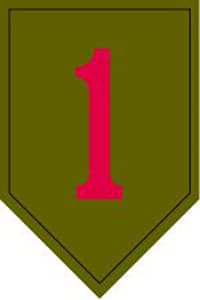
FIRST DIVISION
U.S. Army
Unit with 71 member associations.
FLSG - Alpha
U.S. Army
Force Logistics Support Group Alpha (FLSG-Alpha) is a key logistics unit within the United States Marine Corps, originally formed to provide comprehensive combat service support to Marine Air-Ground Task Forces. Established during the Vietnam War, FLSG-Alpha played a critical role in sustaining operations by managing supply chains, transportation, maintenance, and medical services for frontline units. The unit was instrumental during major campaigns such as Operation Dewey Canyon and the defense of Khe Sanh, ensuring uninterrupted logistical support under challenging conditions. Over the decades, FLSG-Alpha has evolved, adapting its structure and capabilities to support modern expeditionary operations worldwide.