
Loading dashboard
Preparing your dashboard…
Loading dashboard
Preparing your dashboard…
3,725 units • 488,040 members
9th Air Commando
U.S. Air Force
The **9th Air Commando Squadron** was a United States Air Force unit activated during the Vietnam War. Established in 1967, it was part of the 14th Air Commando Wing and primarily operated out of Nha Trang and later Pleiku Air Base in South Vietnam. The squadron flew Douglas C-47D "Spooky" gunships, providing close air support, armed reconnaissance, and interdiction missions, particularly effective in night operations. The 9th Air Commando Squadron proved vital in supporting ground forces and disrupting enemy supply lines before being redesignated as the 9th Special Operations Squadron in August 1968.
9th air div.geiger fld. spokane wash.
U.S. Air Force
The 9th Air Division was an important United States Air Force command headquartered at Geiger Field, Spokane, Washington. Activated in 1949 during the early years of the Cold War, the division was tasked with the air defense of the Pacific Northwest, overseeing fighter-interceptor squadrons and radar units. Its mission included the coordination of air defense operations and the integration of new technologies to counter potential Soviet air threats. The 9th Air Division operated at Geiger Field until its inactivation in 1958, leaving a legacy of vigilance and modernization in continental air defense.
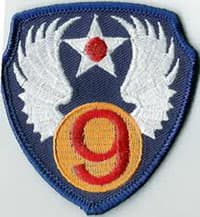
9TH AIR FORCE
U.S. Air Force
Unit with 134 member associations.
9th Space Operations Squadron
U.S. Air Force
The 9th Space Operations Squadron (9 SOPS) is a unit of the United States Space Force, originally activated in 1996 as part of the Air Force Reserve. Its mission has centered on providing expertise in space operations, including satellite command and control, to support global military objectives. The unit has played a crucial role in integrating reserve personnel into space missions and augmenting active-duty space capabilities. Over the years, 9 SOPS has supported various operations by ensuring the reliability and effectiveness of space-based assets vital to national security. The squadron continues to adapt to the evolving demands of space warfare and defense.
9TIS
U.S. Air Force
**9TIS (9th Tactical Intelligence Squadron) Military History:** The 9th Tactical Intelligence Squadron (9TIS) was established in 1984 as part of the growing need for specialized battlefield intelligence within the Air Force. Initially focused on signals and imagery analysis, the squadron provided critical support during major operations such as Desert Storm and Enduring Freedom, enabling precision targeting and threat identification. Over the years, 9TIS has expanded its capabilities to include cyber intelligence and real-time data fusion, becoming a cornerstone in modern multi-domain operations. Today, the squadron continues to innovate in intelligence gathering, supporting both national defense and allied missions worldwide.
A Btry 2D CN TNG BN USAFATC FT SILL
U.S. Air Force
A Battery, 2nd Cannon Training Battalion, United States Army Field Artillery Training Center (A Btry 2D CN TNG BN USAFATC), located at Fort Sill, Oklahoma, has a rich tradition in artillery training. Established as part of the broader Field Artillery School at Fort Sill, this unit has been instrumental in preparing soldiers for service in both peacetime and combat operations since its inception. Through rigorous instruction in cannon gunnery, fire direction, and artillery tactics, A Battery has supported the development of proficient field artillery crews for the U.S. Army. Over the decades, its graduates have served with distinction in conflicts around the world, upholding the proud legacy of the Field Artillery branch.
A Co. 782d Maint. Bn.
U.S. Air Force
A Company, 782d Maintenance Battalion, traces its origins to the activation of the 782d Maintenance Battalion, a key support unit within the U.S. Army. Historically assigned to the 82nd Airborne Division at Fort Bragg (now Fort Liberty), North Carolina, A Company specialized in providing direct maintenance and logistical support to airborne and conventional forces. Throughout its service, the unit played a vital role in major deployments, including operations during the Cold War, Operation Desert Storm, and peacekeeping missions. Renowned for its technical expertise and rapid response, A Company, 782d Maint. Bn., contributed significantly to the operational readiness and effectiveness of the division’s combat units.
a:1st:503rd AFPD NYC 173rd MP
U.S. Air Force
**A/1st:503rd AFPD NYC 173rd MP** traces its lineage to the esteemed 503rd Infantry Regiment, a unit renowned for its airborne operations during World War II and later as part of the 173rd Airborne Brigade. The "A" Company, 1st Battalion, has played key roles in major conflicts, from the Pacific campaigns to Vietnam, where the 173rd became the first major U.S. Army unit deployed. The AFPD (Army Forces Police Detachment) in New York City highlights the unit’s specialized role in military policing and force protection, supporting both domestic and overseas operations. As part of the 173rd Military Police, the unit continues to uphold a tradition of rapid deployment and exemplary service in safeguarding personnel and maintaining order in diverse environments.
AATTC
U.S. Air Force
The Advanced Airlift Tactics Training Center (AATTC) was established in 1983 at Rosecrans Air National Guard Base in St. Joseph, Missouri. Its mission is to provide advanced, realistic tactical training to airlift aircrews from the United States Air Force, Air National Guard, Air Force Reserve, and allied nations. The AATTC specializes in teaching tactics for mobility aircraft to improve survivability and mission effectiveness in hostile environments. Over the years, it has gained a reputation as a premier center for airlift tactics innovation and instruction, playing a crucial role in preparing aircrews for global operations.
Advisory team 162 alo-fac
U.S. Air Force
Advisory Team 162, also known as ALO-FAC (Air Liaison Officer – Forward Air Controller), was a specialized unit within the U.S. Military Assistance Command, Vietnam (MACV) during the Vietnam War. The team’s primary mission was to advise and assist the Army of the Republic of Vietnam (ARVN) on the effective use of close air support and to coordinate air strikes in support of ground operations. Comprised of experienced U.S. Air Force officers and enlisted personnel, Advisory Team 162 provided vital communication links between ground forces and combat aircraft, ensuring timely and accurate air support. Their efforts played a crucial role in enhancing the ARVN’s combat effectiveness and contributed significantly to joint U.S.-South Vietnamese military operations.
Advisory team 90
U.S. Air Force
Advisory Team 90 was a United States military unit that operated as part of the Military Assistance Command, Vietnam (MACV) during the Vietnam War. The team was primarily tasked with advising and supporting the Army of the Republic of Vietnam (ARVN) forces in the Kien Hoa Province, located in the Mekong Delta region. Comprised of U.S. Army officers and enlisted personnel, AT-90 provided expertise in tactics, logistics, communications, and intelligence to enhance the capabilities of their Vietnamese counterparts. Their efforts were instrumental in counterinsurgency operations against Viet Cong forces, contributing to the broader pacification and stabilization missions in the region.
AF Rocket Propulsion Laboratory
U.S. Air Force
The Air Force Rocket Propulsion Laboratory (AFRPL), established in 1954 at Edwards Air Force Base, California, played a pivotal role in advancing U.S. rocket propulsion technology during the Cold War and beyond. Originally known as the Air Force Missile Development Center Propulsion Laboratory, the unit was instrumental in the research, development, and testing of liquid, solid, and advanced rocket engines for military and space applications. AFRPL’s efforts contributed to key propulsion systems for missiles such as the Minuteman and Peacekeeper ICBMs, as well as upper stages for space launch vehicles. In 1991, the laboratory was reorganized and became part of the Phillips Laboratory, continuing its legacy under new designations within the Air Force Research Laboratory.
AF:SG AFMOA
U.S. Air Force
The Air Force Medical Operations Agency (AFMOA), reporting to the Air Force Surgeon General (AF/SG), was established to oversee the execution of Air Force medical policies and optimize healthcare delivery across Air Force Medical Service (AFMS) facilities. Activated in 1992, AFMOA provided expert consultation, program management, and support for medical operations, readiness, and policy implementation. The agency played a key role in ensuring the medical readiness of Air Force personnel and improving the quality of care for service members and their families. In 2019, as part of Air Force medical service restructuring, AFMOA was inactivated and its functions were integrated into other AFMS entities.
AFAFC
U.S. Air Force
The Air Force Accounting and Finance Center (AFAFC) was established in 1948 in Denver, Colorado, as part of the United States Air Force’s efforts to centralize and streamline financial management following World War II. The center was responsible for handling the Air Force’s worldwide accounting, payroll, and financial services, supporting both active-duty and retired personnel. Over the decades, AFAFC played a crucial role in modernizing military pay systems and implementing advanced financial technologies. In 1991, its functions were merged into the Defense Finance and Accounting Service (DFAS), marking the end of AFAFC as a standalone unit.
AFAT-2 Pleiku Air Base, Vietnam
U.S. Air Force
AFAT-2 (Air Force Advisory Team 2) was a United States Air Force advisory unit stationed at Pleiku Air Base, South Vietnam, during the Vietnam War. Established in the early 1960s, AFAT-2 provided operational support, training, and coordination to the Republic of Vietnam Air Force (RVNAF) units based at Pleiku. The team played a crucial role in advising on air operations, maintenance, and tactical planning, significantly enhancing the RVNAF's combat capabilities in the Central Highlands region. AFAT-2 remained active until the gradual withdrawal of U.S. forces and the eventual closure of Pleiku Air Base in 1975.
AFC2ISRC : GCIC
U.S. Air Force
The Air Force Command, Control, Intelligence, Surveillance, and Reconnaissance Center (AFC2ISRC), later known as the Global Command and Control Intelligence Center (GCIC), was established in the late 1990s to enhance the U.S. Air Force’s ability to conduct integrated command and control (C2) and intelligence, surveillance, and reconnaissance (ISR) operations. Initially, AFC2ISRC played a pivotal role in developing and fielding advanced C2ISR capabilities, supporting both peacetime operations and combat missions such as those in the Balkans and the Middle East. The center was instrumental in integrating emerging technologies and doctrine to improve joint and coalition interoperability. In subsequent years, AFC2ISRC underwent realignments and redesignations, evolving into the GCIC and ultimately influencing the formation of the Air Force’s current C2ISR enterprise.
AFEES 39 Whitehall Street, NYC, NY
U.S. Air Force
AFEES 39 Whitehall Street in New York City served as a vital Armed Forces Examining and Entrance Station (AFEES) for decades, particularly during World War II, the Korean War, and the Vietnam War. Located at the tip of Manhattan, the facility processed and inducted thousands of recruits into the United States Armed Forces, making it a key gateway for servicemen from the New York metropolitan area. The building became a symbol of the draft experience, especially during the Vietnam War era, and was frequently the site of both anxious draftees and antiwar protests. Its operations continued until the late 1970s, after which the site was eventually decommissioned and repurposed.
AFEES Ft. Hamilton, Brooklyn, NY
U.S. Air Force
The Armed Forces Examining and Entrance Station (AFEES) at Fort Hamilton, Brooklyn, NY, played a critical role in processing and inducting new service members into the United States military throughout much of the 20th century. Established to serve the densely populated New York City area, AFEES Ft. Hamilton conducted medical examinations, aptitude testing, and administrative processing for draftees and volunteers, particularly during periods of large-scale mobilization such as World War II, the Korean War, and the Vietnam War. The station was a central hub for thousands of recruits, reflecting the diverse urban population it served. In later years, AFEES was re-designated as a Military Entrance Processing Station (MEPS), continuing its mission at Fort Hamilton to this day.
AFFES Atlanta, GA
U.S. Air Force
The Army & Air Force Exchange Service (AAFES) Atlanta, GA, operates as a vital support entity for U.S. military personnel and their families in the southeastern United States. Established as part of the broader AAFES network, the Atlanta Exchange has a longstanding history of providing essential goods, services, and morale-boosting facilities to soldiers, airmen, and their dependents stationed at or transiting through Georgia’s numerous military installations. Throughout its service, AAFES Atlanta has played a key role during periods of mobilization, such as the Gulf War and post-9/11 deployments, ensuring troops received necessary supplies and comfort items. Continually adapting to modern military needs, the Atlanta Exchange remains a cornerstone of military community support in the region.
AFMDC
U.S. Air Force
Certainly! Here is a brief military history for the unit "AFMDC": The Armed Forces Medical and Dental Corps (AFMDC) was established to provide comprehensive medical and dental support to military personnel in both peacetime and conflict. Formed in response to the increasing need for specialized healthcare within the armed services, the AFMDC has evolved to include advanced trauma care, disease prevention, and humanitarian assistance capabilities. Throughout its history, AFMDC personnel have served in numerous operations, offering critical medical services during both domestic emergencies and international deployments. Renowned for their professionalism and expertise, members of the AFMDC continue to play a vital role in maintaining the health and readiness of the armed forces.
AFPAA
U.S. Air Force
The Armed Forces of the Philippines Aerospace Association (AFPAA) is a specialized unit within the Philippine military structure, focusing on the advancement of aerospace capabilities for the nation’s defense. Established in the early 21st century, the AFPAA was created to enhance the Armed Forces of the Philippines' (AFP) air and space operations, research, and strategic planning. The unit collaborates closely with the Philippine Air Force and other international partners to develop modern aerospace technologies and doctrines. Through continuous training and innovation, the AFPAA plays a crucial role in ensuring the country’s airspace security and supporting overall military modernization efforts.
AFWPAC
U.S. Air Force
**AFWPAC**, or **Air Forces, Western Pacific**, was a major United States Air Force command established during World War II. Activated in August 1944, AFWPAC was responsible for coordinating and supporting air operations in the Western Pacific Theater, primarily under the Fifth and Thirteenth Air Forces. The unit managed logistics, base construction, and operational planning for the rapid advance of Allied forces across Pacific islands toward Japan. After the war, AFWPAC played a role in occupation duties and regional security until its inactivation as the U.S. Air Force reorganized its Pacific commands in the postwar era.
AG DPU FT. SHAFTER HAW
U.S. Air Force
AG DPU FT. SHAFTER HAW refers to the Adjutant General's Distribution Point Unit located at Fort Shafter, Hawaii. Established as a key administrative and personnel support element, the unit has played a pivotal role in streamlining human resources and records management for U.S. Army personnel stationed in the Pacific region. Throughout its history, AG DPU FT. SHAFTER HAW has adapted to changing military needs, implementing new technologies and processes to enhance operational efficiency. Its continued mission ensures vital support to commanders and soldiers, contributing to readiness and effectiveness across the U.S. Army Pacific theater.
aidc
U.S. Air Force
Certainly! The AIDC (Aerospace Industrial Development Corporation) is not a military unit but a Taiwanese state-owned aerospace company established in 1969. However, it has played a crucial role in the military history of the Republic of China (Taiwan) by designing and manufacturing indigenous military aircraft, such as the F-CK-1 Ching-Kuo Indigenous Defense Fighter and the AT-3 jet trainer. AIDC has supported Taiwan’s air force modernization by upgrading existing fighter jets and collaborating on advanced aerospace technologies. Through its innovations and partnerships, AIDC has significantly contributed to strengthening Taiwan’s defense capabilities and ensuring the self-reliance of its military aviation sector.