
Loading dashboard
Preparing your dashboard…
Loading dashboard
Preparing your dashboard…
U.S. Marine Corps
Branch
U.S. Marine Corps
VMAQ-1 : VMAQT-1
U.S. Marine Corps
Marine Tactical Electronic Warfare Squadron 1 (VMAQ-1), originally established as VMC-1 in 1952, was a pioneering United States Marine Corps unit specializing in electronic warfare. The squadron participated in key conflicts, including the Korean and Vietnam Wars, providing electronic countermeasures, radar jamming, and aerial reconnaissance. Redesignated as VMAQ-1 in 1977, the unit operated the EA-6A Intruder and later the EA-6B Prowler, supporting operations such as Desert Storm and Enduring Freedom. VMAQT-1 was formed in 2013 as the Marine Corps' training squadron for Prowler crews until the retirement of the aircraft and squadron deactivation in 2016.
The Basic School Quantico, Va.
U.S. Marine Corps
The Basic School (TBS), located in Quantico, Virginia, was established in 1891 as the School of Application to provide newly commissioned Marine Corps officers with essential leadership and warfighting skills. Over the years, TBS has evolved into the cornerstone of Marine officer training, emphasizing small unit tactics, leadership, and the ethos of "every Marine a rifleman." During World War II, TBS expanded rapidly to meet the demands for trained officers, playing a critical role in preparing leaders for combat across the globe. Today, TBS continues its mission of shaping Marine officers, instilling the core values and tactical proficiency required for service in the Fleet Marine Force.
2nd MEF
U.S. Marine Corps
The II Marine Expeditionary Force (II MEF) is a Marine Air-Ground Task Force (MAGTF) headquartered at Camp Lejeune, North Carolina. Established in 1962, II MEF has played a key role in numerous operations, including Desert Storm, Iraqi Freedom, and Enduring Freedom. As the largest of the Marine Corps’ three MEFs, it provides combat-ready forces for rapid deployment worldwide. II MEF regularly trains with allied nations and supports humanitarian and disaster relief missions, contributing to global security and U.S. national interests.
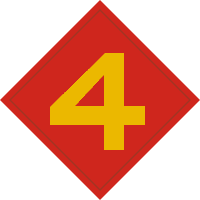
4th Marine Division
U.S. Marine Corps
The 4th Marine Division is a reserve division of the United States Marine Corps, with headquarters in New Orleans, Louisiana. It was activated in 1943 during World War II and has participated in numerous campaigns, including the Battle of Iwo Jima. The division is composed of four infantry regiments and various support units, spread across multiple states in the United States. The 4th Marine Division continues to train and deploy in support of both domestic and international missions.
VMAQ-2
U.S. Marine Corps
Marine Tactical Electronic Warfare Squadron 2 (VMAQ-2) was a United States Marine Corps aviation unit established in 1952 as VMC-2 and later redesignated VMAQ-2 in 1975. The squadron specialized in electronic warfare, flying the EA-6A Intruder and later the EA-6B Prowler to conduct electronic attack, jamming enemy radar, and gathering electronic intelligence. VMAQ-2 participated in major conflicts including the Vietnam War, Operation Desert Storm, and the Global War on Terror, providing critical support to Marine and joint forces. The squadron was deactivated in March 2019 as the Marine Corps retired the EA-6B, marking the end of an era in Marine electronic warfare.
OCS
U.S. Marine Corps
The Officer Candidate School (OCS) is a military training institution established to commission officers in various branches of the armed forces. Originating in the United States during World War I and expanding significantly during World War II, OCS was designed to quickly and effectively prepare enlisted personnel and civilians for leadership roles. The curriculum emphasizes leadership development, military tactics, and physical fitness, ensuring candidates are ready for the responsibilities of command. Today, OCS continues to serve as a vital pathway for commissioning officers, adapting its programs to meet the evolving needs of modern militaries.
Ist Marine Expeditionary Force
U.S. Marine Corps
The I Marine Expeditionary Force (I MEF) is a major Marine Air-Ground Task Force of the United States Marine Corps, headquartered at Camp Pendleton, California. Established in 1969 during the Vietnam War era, I MEF has served as a leading force in numerous major operations, including Operation Desert Storm, Operation Iraqi Freedom, and Operation Enduring Freedom in Afghanistan. Designed for rapid deployment and combined-arms operations, the unit integrates ground, air, and logistics elements for flexible, sustained missions. Over the decades, I MEF has earned a reputation for excellence, adaptability, and combat readiness in both humanitarian and combat operations worldwide.
MCRD Parris Island SC
U.S. Marine Corps
Marine Corps Recruit Depot (MCRD) Parris Island, South Carolina, was officially established as a Marine training facility in 1915 and has since become one of the most iconic sites for Marine Corps recruit training. During World War I and World War II, the depot played a pivotal role in training hundreds of thousands of Marines for combat. Over the decades, Parris Island has been the primary training location for all enlisted male Marines east of the Mississippi River and for all female Marine recruits nationwide. The depot’s storied legacy is marked by its rigorous training regimen and its lasting contribution to shaping generations of United States Marines.