
Loading dashboard
Preparing your dashboard…
Loading dashboard
Preparing your dashboard…
U.S. Army Veteran
Branch
U.S. Army
Rank
SFC
Service Years
1989 - 2010
HHD 6th transportation Bn 7th transportation Group
U.S. Air Force
HHD, 6th Transportation Battalion was a key logistics unit within the 7th Transportation Group of the United States Army. Activated during World War II, the battalion played a crucial role in providing transportation and logistical support in both European and later Cold War theaters. Throughout its service, the 6th Transportation Battalion managed movement control, convoy operations, and supply distribution, supporting major Army operations and ensuring the rapid movement of troops and materiel. The unit continued to serve with distinction in various conflicts and humanitarian missions until its inactivation as part of Army restructuring in the early 21st century.
Hq Co NATO SHAPE (COM Z)
U.S. Army
Headquarters Company, NATO Supreme Headquarters Allied Powers Europe (SHAPE), Communications Zone (COM Z), played a pivotal role during the Cold War era. Established to support SHAPE, the central command of NATO's military forces in Europe, Hq Co NATO SHAPE (COM Z) provided essential administrative, logistical, and operational assistance. The unit ensured secure communications and effective coordination between NATO member nations, particularly in the event of a conflict with the Warsaw Pact. Stationed primarily in Belgium, Hq Co NATO SHAPE (COM Z) contributed significantly to NATO's readiness and the defense posture of Western Europe.
USAREC
U.S. Army
The United States Army Recruiting Command (USAREC) was established in October 1964 to centralize and streamline the Army’s recruiting efforts across the nation. Headquartered at Fort Knox, Kentucky, USAREC is responsible for recruiting enlisted soldiers and officers for both the Regular Army and the Army Reserve. Throughout its history, USAREC has adapted to changing manpower needs, technological advancements, and shifting public attitudes toward military service. The command plays a crucial role in maintaining the Army’s strength by finding, enlisting, and preparing qualified individuals to serve.
17th Aviation (Korea)
U.S. Army
The 17th Aviation Company was activated in Korea in 1951 during the Korean War to provide aerial reconnaissance, observation, and transport support to U.S. and United Nations forces. Equipped primarily with light aircraft such as the L-19 Bird Dog and later helicopters, the unit played a key role in artillery spotting, medical evacuation, and battlefield communications. Throughout the conflict, the 17th Aviation demonstrated adaptability and courage, often operating under hostile fire and challenging weather conditions. After the Korean War, the unit continued to serve in various capacities, contributing to the evolution of Army aviation tactics and doctrine.
Joint Readiness Training Center Fort Polk LA
U.S. Army
The Joint Readiness Training Center (JRTC) at Fort Polk, Louisiana, was established in 1987 to provide advanced, realistic training for U.S. Army units. Originally located at Fort Chaffee, Arkansas, the JRTC moved to Fort Polk to take advantage of the region's challenging terrain, ideal for simulating diverse combat environments. JRTC specializes in training light infantry, airborne, air assault, and special operations forces, focusing on joint and combined arms operations. Over the decades, it has become a premier training hub, preparing units for deployments worldwide and enhancing the Army's overall readiness and effectiveness.
US Military Training Mission Saudi Arabia
U.S. Army
The US Military Training Mission (USMTM) to Saudi Arabia was established in 1953 as a result of a security assistance agreement between the United States and the Kingdom of Saudi Arabia. Its primary mission is to advise, assist, and train Saudi Arabian military forces to promote regional security and strengthen the strategic partnership between the two nations. Over the decades, USMTM has played a crucial role in modernizing the Saudi armed forces, supporting the development of their capabilities in areas such as air defense, ground operations, and naval security. The mission continues to serve as a cornerstone of US-Saudi military cooperation in the Middle East.
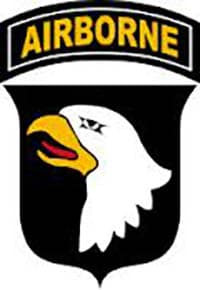
101st Airborne
U.S. Army
The 101st Airborne Division is a specialized unit of the United States Army that is trained for air assault operations. It was created during World War II and gained fame for its role in the D-Day invasion of Normandy in 1944. The division has since participated in numerous conflicts around the world, including the Vietnam War, Operation Desert Storm, and the wars in Iraq and Afghanistan. Known as the "Screaming Eagles," the 101st Airborne is considered one of the most elite and versatile divisions in the US military.