
Loading dashboard
Preparing your dashboard…
Loading dashboard
Preparing your dashboard…
U.S. Army
Branch
U.S. Army
24TH INFANTRY DIV
U.S. Army
The 24th Infantry Division is a mechanized infantry division of the United States Army. It was originally activated in 1941 during World War II and has since been reactivated several times. The division has a rich history, having participated in numerous campaigns and conflicts, including the Korean War and Operation Desert Storm. Today, the 24th Infantry Division remains a crucial component of the Army's force structure, ready to deploy and engage in operations around the world.
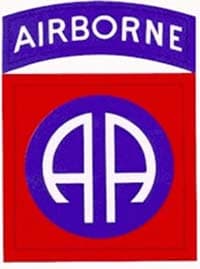
82nd Airborne
U.S. Army
The 82nd Airborne Division is a specialized infantry division of the United States Army. It is known for its rapid deployment capability and ability to conduct airborne operations. The division has a long and storied history, playing a crucial role in World War II, the Korean War, Vietnam War, Operation Urgent Fury in Grenada, Operation Just Cause in Panama, the Gulf War, and more recently in Iraq and Afghanistan. The 82nd Airborne Division is based at Fort Bragg, North Carolina, and remains one of the most highly trained and ready divisions in the U.S. Army.
5TH ARMY
U.S. Army
The 5th Army, also known as the United States Fifth Army, was a prominent American army formation during World War II. It played a crucial role in the Italian Campaign, fighting in numerous battles and campaigns such as the Battle of Anzio and the liberation of Rome. The 5th Army consisted of both American and British forces, and its leadership included renowned generals such as Mark Clark. The 5th Army's success in Italy helped pave the way for the eventual defeat of Nazi Germany.
18th Airborne
U.S. Army
The 18th Airborne Corps is a prominent formation of the United States Army, originally activated in 1942 during World War II. It played a significant role in major operations such as the Normandy invasion, the Battle of the Bulge, and Operation Market Garden. Post-World War II, the corps has served as a rapid deployment and contingency force, participating in conflicts including Operation Desert Storm, Operation Enduring Freedom, and Operation Iraqi Freedom. Today, the 18th Airborne Corps remains headquartered at Fort Liberty, North Carolina, and continues to serve as America's strategic force, ready for global deployment at a moment's notice.
“D” Company 75th Rangers
U.S. Army
“D” Company, 75th Rangers was an elite long-range reconnaissance patrol (LRRP) unit active during the Vietnam War. Originally formed from LRRP teams in the 173rd Airborne Brigade, the company was officially designated as part of the 75th Infantry Regiment (Ranger) in February 1969. “D” Company conducted deep penetration missions behind enemy lines, gathering critical intelligence, directing artillery and air strikes, and engaging in ambush operations. Renowned for their stealth and combat effectiveness, the unit played a vital role in disrupting Viet Cong and North Vietnamese Army activities throughout their area of operations.
802nd ENG Camp Casey
U.S. Army
The 802nd Engineer Battalion (ENG), stationed at Camp Casey, South Korea, has a distinguished history of supporting U.S. and allied operations on the Korean Peninsula. Activated as part of the U.S. Army's commitment to maintaining readiness and deterrence, the unit provides vital combat engineering, construction, and mobility support to the 2nd Infantry Division. Over the years, the 802nd ENG has participated in numerous joint exercises with Republic of Korea forces, enhancing interoperability and defensive capabilities. Their ongoing mission includes fortification construction, obstacle emplacement, and infrastructure development to ensure the security and effectiveness of forward-deployed forces.
1st SOCOM 4th PSYOPS 1ST group ABN
U.S. Air Force
The 1st SOCOM 4th PSYOPS 1st Group (Airborne) is a specialized psychological operations unit operating under the United States Special Operations Command (SOCOM). Established to conduct information and influence operations, the unit leverages airborne capabilities to deploy rapidly in support of joint and combined missions worldwide. Throughout its history, the group has played a pivotal role in shaping perceptions and behaviors in operational environments, supporting U.S. objectives from the Balkans and Iraq to modern engagements in the Indo-Pacific. Renowned for its expertise in psychological warfare, the 1st SOCOM 4th PSYOPS 1st Group (ABN) continues to adapt to evolving threats in the information domain.
353rd Transportation co
U.S. Army
The 353rd Transportation Company is a United States Army Reserve unit with a distinguished history of logistical support. Activated during World War II, the company played a crucial role in transporting troops, equipment, and supplies across the European Theater. In subsequent decades, the 353rd supported numerous operations, including deployments during the Gulf War and Operation Iraqi Freedom, where it enabled sustained combat operations through reliable convoy and cargo transport. The unit continues to serve with dedication, providing vital transportation services in both domestic and overseas missions.
24th Military Intelligence
U.S. Army
The 24th Military Intelligence Battalion was originally constituted on 14 December 1951 and activated on 7 January 1952 in Austria. Over its history, the battalion has provided critical intelligence support to U.S. Army Europe, specializing in signals, counterintelligence, and human intelligence operations. The unit has participated in several major operations, including Cold War missions and post-9/11 deployments in support of Operation Iraqi Freedom and Operation Enduring Freedom. Today, the 24th Military Intelligence Battalion continues to deliver vital intelligence analysis and support to commanders, enhancing situational awareness and mission effectiveness.
1st Special Forces Groups (Airborne)
U.S. Air Force
The 1st Special Forces Group (Airborne), or 1st SFG(A), was activated on June 24, 1957 at Fort Bragg, North Carolina, as one of the original Special Forces units. It was later stationed in Okinawa, Japan, establishing its focus on operations in the Asia-Pacific region. Throughout the Vietnam War, the 1st SFG(A) conducted critical unconventional warfare, training indigenous forces and conducting direct action missions. After a brief deactivation in 1972, the unit was reactivated in 1984 at Fort Lewis, Washington, where it continues to play a vital role in U.S. Indo-Pacific Command missions, counterterrorism, and humanitarian operations worldwide.