

USN
595,802 members•32,193 units
Opening branch overview
Building the branch home surface
Loading branch highlights, featured unit context, and gallery moments.
Overview
Members
Units
595,802 members•32,193 units
Building the branch home surface
Loading branch highlights, featured unit context, and gallery moments.
Building the branch units surface
Loading unit filters, rankings, and the branch unit grid.
Guantanamo Bay
U.S. Navy
Guantanamo Bay Naval Base, located on the southeastern coast of Cuba, has been under continuous U.S. control since 1903, following the Spanish-American War. Initially established to serve as a coaling and naval station, its strategic location allowed the U.S. Navy to project power throughout the Caribbean. Over the decades, Guantanamo Bay has played roles in regional conflicts, Cold War intelligence, and humanitarian operations. Since 2002, it has become globally recognized as the site of a U.S. military detention facility used in the War on Terror.
USS MOUNT BAKER
U.S. Navy
USS WAINWRIGHT
U.S. Navy
USS Dwight D. Eisenhower (CVN-69)
U.S. Navy
USS Dwight D. Eisenhower (CVN-69), a Nimitz-class nuclear-powered aircraft carrier, was commissioned into the United States Navy in October 1977. Named after the 34th U.S. President and World War II Supreme Allied Commander, the "Ike" has played a pivotal role in American naval operations for decades. The carrier has participated in major operations, including Operation Desert Storm in 1991, Operation Enduring Freedom after the 9/11 attacks, and ongoing deployments in the Mediterranean and Persian Gulf regions. Renowned for its versatility and power projection, USS Dwight D. Eisenhower continues to serve as a flagship of U.S. naval might and a key element of carrier strike group deployments worldwide.
USS KINKAID
U.S. Navy
NAVSECGRU
U.S. Navy
USS FOX
U.S. Navy
Brownwater Navy Vietnam
U.S. Navy
The Brownwater Navy was a specialized branch of the United States Navy formed during the Vietnam War to conduct operations in the shallow rivers, canals, and coastal waters of South Vietnam. Officially known as the United States Navy's "Riverine Forces," these units used small, heavily armed boats such as Patrol Boat, River (PBR), Swift Boats (PCF), and Armored Troop Carriers (ATCs) to provide mobility, firepower, and logistical support to U.S. Army and South Vietnamese forces. Brownwater Navy sailors faced constant ambushes, mines, and hostile fire while patrolling the Mekong Delta and other waterways. Their crucial efforts disrupted enemy supply lines, supported ground operations, and played a significant role in counterinsurgency missions throughout the conflict.
CVN 69
U.S. Navy
SIMA MAYPORT
U.S. Navy
USS PHILIPPINE SEA
U.S. Navy
5th Naval District
U.S. Navy
The 5th Naval District was an administrative region of the United States Navy, established in the early 20th century to oversee naval operations and shore activities along the mid-Atlantic coast. Headquartered in Norfolk, Virginia, the district played a critical role during both World Wars, managing naval bases, shipyards, and training facilities in its jurisdiction. Its responsibilities included coastal defense, logistics, and the coordination of naval resources in Virginia, Maryland, and parts of North Carolina. The 5th Naval District was disestablished in 1977 as the Navy reorganized its administrative structure, but its legacy endures in the continued strategic importance of the Norfolk area to the U.S. Navy.
Naval Air Station North Island
U.S. Navy
Naval Air Station North Island, located at the north end of the Coronado Peninsula in San Diego, California, is often referred to as the "Birthplace of Naval Aviation." Established in 1917, the base quickly became a central hub for training naval aviators and developing seaplane operations during World War I. Throughout World War II, North Island played a critical role in aircraft maintenance, pilot training, and carrier operations for the Pacific Fleet. Over the decades, it has remained a vital installation, supporting numerous Pacific operations and homeporting several U.S. Navy aircraft carriers and aviation squadrons.
NAVAL HOSPITAL BREMERTON
U.S. Navy
NAVAL HOSPITAL CHARLESTON
U.S. Navy
USS KISKA
U.S. Navy
USS SAN DIEGO
U.S. Navy
USS BIDDLE
U.S. Navy
HOSPITAL CORPS
U.S. Navy
USS PROVIDENCE
U.S. Navy
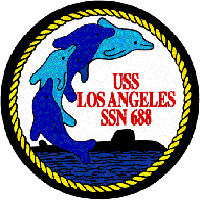
USS Los Angeles
U.S. Navy
The USS Los Angeles refers to multiple vessels in United States Navy history, most notably the airship USS Los Angeles (ZR-3) and the submarine USS Los Angeles (SSN-688). The USS Los Angeles (ZR-3) was a rigid airship built in Germany and delivered to the U.S. Navy in 1924 as part of World War I reparations, serving primarily in experimental and training roles until its decommissioning in 1932. The USS Los Angeles (SSN-688), commissioned in 1976, was the lead ship of the Los Angeles-class nuclear-powered fast attack submarines, playing a critical role in Cold War naval operations and technological advancements in undersea warfare. The submarine remained in service for 34 years before being decommissioned in 2010, marking the end of a distinguished career that helped define modern U.S. submarine capabilities.
ACU-2
U.S. Navy
MCB 3
U.S. Navy
NAVY RESERVE
U.S. Navy