

USN
596,142 members•32,193 units
Opening branch overview
Building the branch home surface
Loading branch highlights, featured unit context, and gallery moments.
Overview
Members
Units
596,142 members•32,193 units
Building the branch home surface
Loading branch highlights, featured unit context, and gallery moments.
Building the branch units surface
Loading unit filters, rankings, and the branch unit grid.
USS FULTON AS-11
U.S. Navy
USS Fulton (AS-11) was a Fulton-class submarine tender commissioned by the United States Navy in 1941. Throughout World War II, she provided vital maintenance, repair, and logistical support to submarines operating in the Pacific Theater, including during key campaigns such as those in the Solomons and the Philippines. After the war, USS Fulton continued to serve through the Korean War and into the Cold War era, supporting both conventional and nuclear-powered submarines. Decommissioned in 1991, she was one of the longest-serving submarine tenders in the U.S. Navy, with a distinguished record of service spanning five decades.
USS JAMES K POLK
U.S. Navy
USS O'Hare
U.S. Navy
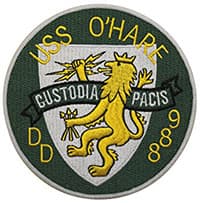
USS O’Hare (DD/DDR-889) was a Gearing-class destroyer commissioned by the United States Navy in 1945, named in honor of Medal of Honor recipient Lieutenant Commander Edward “Butch” O’Hare. Initially serving in the Pacific shortly after World War II, O’Hare participated in various Cold War operations, including anti-submarine warfare and NATO exercises. The ship was reclassified as a radar picket destroyer (DDR) in 1949 and reverted to DD-889 in 1963. After a distinguished career, USS O’Hare was decommissioned in 1973 and later transferred to the Spanish Navy, where she served as Méndez Núñez (D-63) until her final decommissioning.
uss orion AS-18
U.S. Navy
USS STEIN
U.S. Navy
VR-22
U.S. Navy
COMSIXTHFLEET
U.S. Navy
COMSIXTHFLEET, also known as the Commander, U.S. Sixth Fleet, is a major operational fleet of the United States Navy with headquarters in Naples, Italy. Established in 1950, the Sixth Fleet has played a critical role in maintaining maritime security and projecting American naval power throughout the Mediterranean Sea and surrounding regions. Over the decades, COMSIXTHFLEET has participated in numerous operations, including peacekeeping missions, humanitarian assistance, and joint exercises with NATO allies. The unit continues to serve as a forward-deployed force, responding to crises, deterring aggression, and supporting U.S. and allied interests in Europe, Africa, and the Middle East.
NAS Cubi Point
U.S. Navy
Naval Air Station (NAS) Cubi Point was a major United States Navy base located in the Philippines, adjacent to Subic Bay. Commissioned in 1956 after one of the largest earth-moving projects in U.S. military history, it served as a critical logistics, maintenance, and operations hub for U.S. naval aviation in the Pacific. During the Vietnam War and throughout the Cold War, NAS Cubi Point provided vital support to carrier air wings and deployed squadrons, enabling rapid response and sustained air operations in Southeast Asia. The base was closed in 1992 following the expiration of the U.S.-Philippines Military Bases Agreement.
Naval Air Station Whidbey Island, Sea Op Det
U.S. Navy
Naval Air Station Whidbey Island, Sea Operations Detachment (Sea Op Det) was established to support maritime aviation operations in the Pacific Northwest. Since its inception during World War II, the detachment has played a vital role in providing logistical and operational support for carrier-based aircraft and maritime patrol missions. Throughout the Cold War and into the modern era, Sea Op Det has been instrumental in supporting fleet exercises, search and rescue operations, and joint training with allied forces. Today, it continues to enhance the readiness and capabilities of Navy aviation units operating from NAS Whidbey Island.
ONI
U.S. Navy
SEAL TEAM 3
U.S. Navy
USS Albany (CG 10)
U.S. Navy
USS Albany (CG 10) was a guided missile cruiser in the United States Navy, originally commissioned as a heavy cruiser (CA 123) in 1946. She was converted to a guided missile cruiser between 1958 and 1962, becoming the lead ship of the Albany-class. Throughout her service, USS Albany participated in numerous NATO exercises, Mediterranean deployments, and served as flagship for the Sixth Fleet. The ship was decommissioned in 1980, marking over three decades of distinguished service during the Cold War era.

USS BELLEAU WOOD
U.S. Navy
USS **Belleau Wood** refers to two notable ships in United States Navy history, named after the World War I Battle of Belleau Wood. The first, **USS Belleau Wood (CVL-24)**, was a light aircraft carrier commissioned in 1943, serving with distinction in the Pacific Theater during World War II, participating in major campaigns such as the Battle of the Philippine Sea. For her service, she earned 12 battle stars before being transferred to the French Navy in 1953. The second, **USS Belleau Wood (LHA-3)**, was an amphibious assault ship commissioned in 1978, supporting numerous operations including humanitarian missions and Operation Desert Storm, before decommissioning in 2005. Both ships upheld the legacy of their namesake, embodying valor and service in their respective eras.
USS FORREST SHERMAN
U.S. Navy
USS HANCOCK
U.S. Navy
The USS Hancock refers to several notable ships in United States Navy history, most famously the aircraft carrier USS Hancock (CV/CVA-19). Commissioned in 1944 during World War II, Hancock participated in major Pacific Theater operations, including air strikes against Japanese forces in the Philippines, Iwo Jima, and Okinawa. The carrier earned four battle stars for her wartime service and later participated in the Korean and Vietnam Wars, providing vital air support and striking power. Decommissioned in 1976, the USS Hancock remains a symbol of U.S. naval strength and resilience through multiple conflicts.
USS LOS ALAMOS
U.S. Navy
uss simon lake as-33
U.S. Navy
USS VANDEGRIFT
U.S. Navy
VFA 125 DET FALLON
U.S. Navy
20TH NCR
U.S. Navy
BRAVO
U.S. Navy
MCB 1
U.S. Navy
NAS Kingsville
U.S. Navy
Naval Air Station (NAS) Kingsville, located in Kingsville, Texas, was commissioned in July 1942 as a key training base for naval aviators during World War II. Throughout the war, it served as a primary site for advanced flight training, focusing on carrier-based operations and producing thousands of pilots for the U.S. Navy. After the war, the base's mission shifted to jet training, adapting to technological advances during the Cold War era. Today, NAS Kingsville is one of the Navy's premier locations for training tactical jet pilots, primarily supporting Training Air Wing Two and playing a vital role in preparing aviators for fleet operations.
Naval Base Point Loma
U.S. Navy
Naval Base Point Loma, located in San Diego, California, traces its military history to the late 19th century, originally serving as Fort Rosecrans, a coastal defense site. During World War II, the area became a hub for anti-submarine warfare and expanded to support various naval operations in the Pacific. In 1959, the U.S. Navy established the Point Loma Submarine Base, which later merged with other naval facilities in the area. Today, Naval Base Point Loma serves as a critical support and homeport facility for submarines, surface ships, and special warfare units, playing a key role in the U.S. Pacific Fleet’s operations.