
About this Unit
Air Test and Evaluation Squadron Four (VX-4), known as the "Evaluators," was established by the U.S. Navy in 1950 at Naval Air Station Point Mugu, California. Its primary mission was to conduct operational test and evaluation of airborne fighter weapons systems, tactics, and equipment, particularly for Navy carrier-based aircraft. Over the decades, VX-4 played a crucial role in the development and refinement of air-to-air missiles, radar systems, and electronic warfare capabilities, notably contributing to the advancement of the F-4 Phantom II and F-14 Tomcat programs. In 1994, VX-4 was disestablished and its functions merged into VX-9, continuing its legacy of supporting naval aviation excellence.
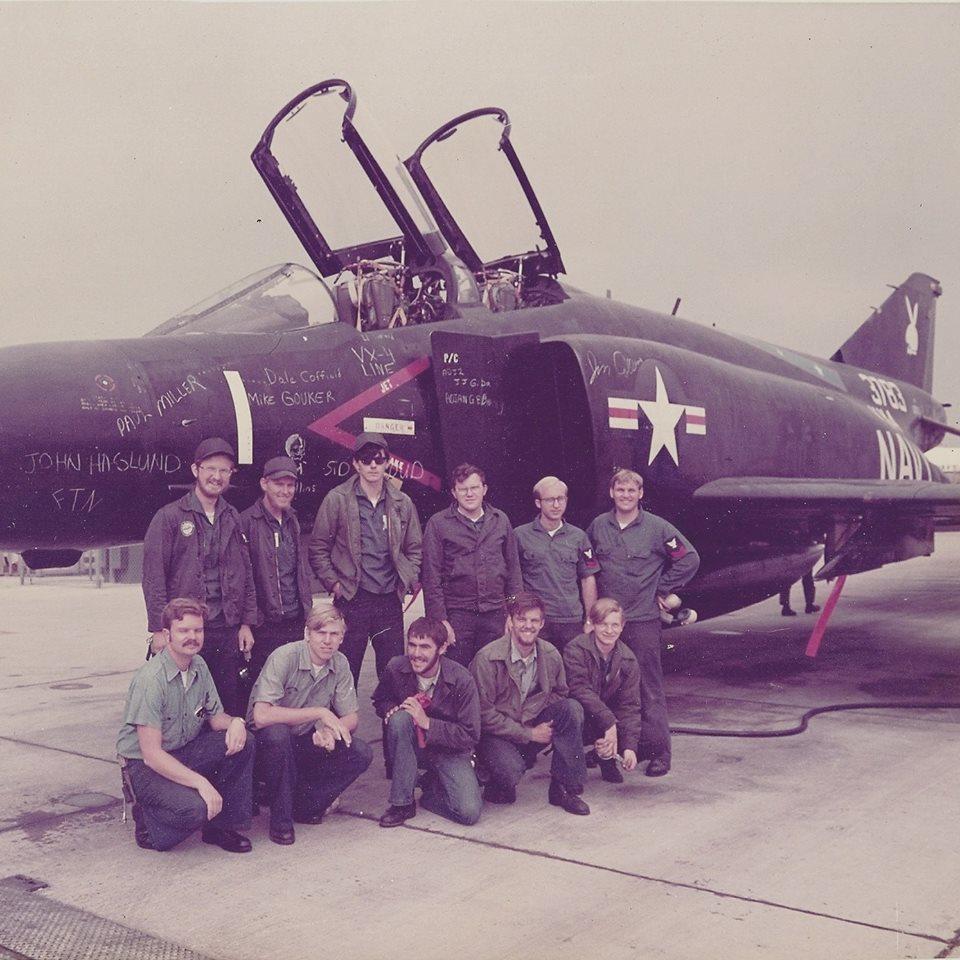
Historical Facts
•
Origins During WWII: Air Test and Evaluation Squadron Four (VX-4) was initially established in 1946 at Naval Air Station (NAS) Patuxent River, Maryland, as part of the post-World War II expansion of naval aviation test and evaluation activities.
•
Nickname "The Evaluators": VX-4’s official nickname was "The Evaluators," reflecting its core mission of testing and evaluating new fighter aircraft, weapons systems, and tactics for the U.S. Navy.
•
Pioneers of Missile Testing: VX-4 played a crucial role in the development and operational testing of the AIM-7 Sparrow and AIM-9 Sidewinder air-to-air missiles, both of which became mainstays of U.S. Navy air combat.
•
Home at NAS Point Mugu: In 1951, VX-4 relocated to NAS Point Mugu, California, which remained its primary base of operations for decades and provided access to extensive missile test ranges over the Pacific.
•
Iconic "Vandy 1" Black Aircraft: VX-4 became famous for its striking black-painted aircraft, particularly the "Vandy 1" callsign jets, which included black F-4 Phantom IIs and later F-14 Tomcats used for high-visibility flight test and demonstration purposes.
•
First to Test F-14 Tomcat: VX-4 was one of the first squadrons to receive the F-14 Tomcat in the early 1970s and conducted extensive operational evaluations that helped shape the jet’s tactics and deployment.
•
Frequent Air Show Participants: VX-4’s aircraft, especially the black "Vandy 1" jets, were popular attractions at air shows and public events, helping to inspire public interest in naval aviation.
•
Operational Readiness Evaluations: The squadron regularly flew mock combat missions against frontline Navy and Marine Corps squadrons to assess the effectiveness of new hardware and tactics in realistic scenarios.
•
Merger and Evolution: In 1994, VX-4 was disestablished and merged with VX-5 to form VX-9 "The Vampires," consolidating the Navy’s operational test and evaluation squadrons at China Lake, California.
•
Legacy in Naval Aviation: The work of VX-4 was instrumental in advancing the capabilities of U.S. Navy fighter aviation during the Cold War, and its traditions and expertise live on through VX-9.