
Opening branch overview
Building the branch home surface
Loading branch highlights, featured unit context, and gallery moments.
Overview
Members
Units
Building the branch home surface
Loading branch highlights, featured unit context, and gallery moments.
Building the branch units surface
Loading unit filters, rankings, and the branch unit grid.

5 members•1 unit
Relive and share the memories of your service-time with your brothers and sisters in arms today. VetFriends.com can help you reconnect.
Did you proudly serve in the USS Leyte (CV-32)?
Are you looking for someone who is or was in the USS Leyte (CV-32)?
Do you have USS Leyte (CV-32) photos you'd like to share?
Then join a community with your brothers and sisters of the USS Leyte (CV-32).
Branch
U.S. Navy
Members
5
USS Leyte (CV-32) was an Essex-class aircraft carrier commissioned by the United States Navy in April 1946, named after the pivotal World War II Battle of Leyte Gulf. Initially serving in the Atlantic Fleet, Leyte participated in training and readiness operations before being deployed to the Mediterranean with the 6th Fleet during the late 1940s. During the Korean War, Leyte was reassigned to the Pacific Fleet and conducted air strikes against North Korean and Chinese forces from late 1950 to early 1951. After her Korean War service, Leyte was converted to an anti-submarine warfare carrier (CVS-32) before being decommissioned in 1959.

U.S. Navy
Dahlgrenddg43 • U.S. Navy • 1990
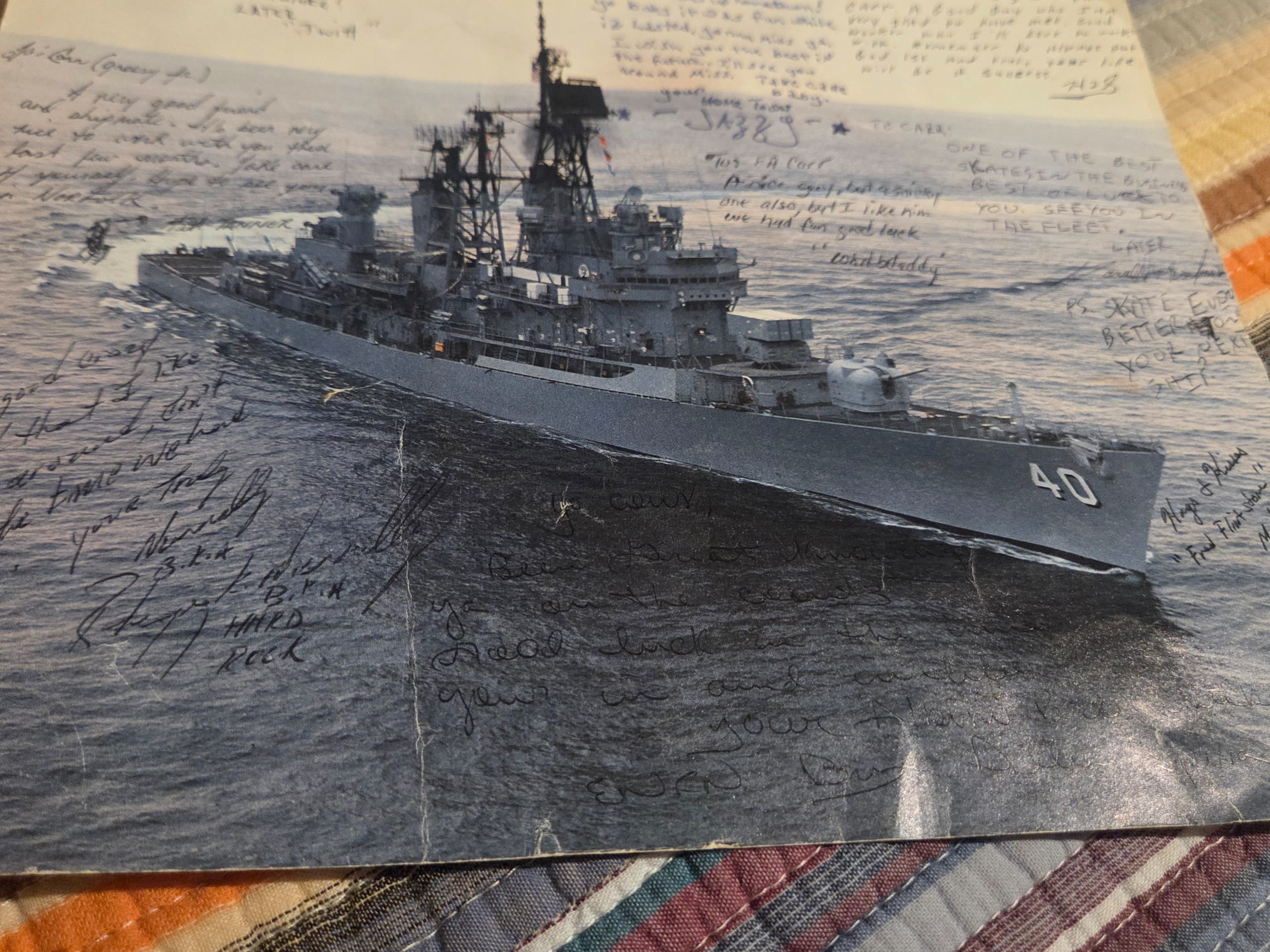
Coontz ddg 40 • U.S. Navy • 1989
Coontz ddg 40 • U.S. Navy • 1988