
About this Unit
USS Canberra (CAG-2) was a Baltimore-class heavy cruiser of the United States Navy, originally commissioned as CA-70 in 1943 and later converted to a guided missile cruiser in 1952. Named in honor of the Australian cruiser HMAS Canberra, she participated in major World War II Pacific operations, including the Battle of Leyte Gulf and Okinawa. After her conversion, USS Canberra became the first U.S. Navy ship to be equipped with guided missiles, serving prominently during the early Cold War period. She provided vital support during the Cuban Missile Crisis and represented American naval power until her decommissioning in 1970.
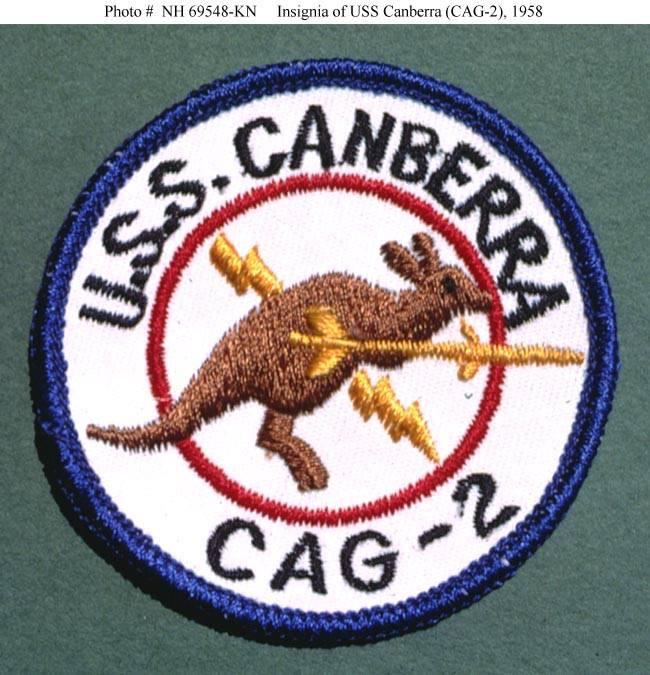
Historical Facts
•
First US Navy Ship Named After a Foreign Capital: USS Canberra (CA-70, later CAG-2) was the first United States Navy warship named after a foreign capital city—Canberra, the capital of Australia. It was named in honor of the Australian cruiser HMAS Canberra, sunk during the Battle of Savo Island in 1942.
•
Originally Named Pittsburgh: The ship was originally to be named USS Pittsburgh, but was renamed prior to launching to honor the Australian vessel lost at Savo Island, reflecting the close ties between the US and Australia during World War II.
•
Heavy Cruiser to Guided Missile Cruiser: After serving as a Baltimore-class heavy cruiser during World War II, Canberra was converted to a guided missile cruiser (CAG-2) in the early 1950s, becoming one of the first US ships equipped with guided missiles.
•
First American Ship Fired Upon by Soviet Missiles: During the 1960s, while operating off the coast of Vietnam, Canberra was reportedly the first US Navy ship to be targeted by Soviet-made surface-to-surface missiles, though the attack was unsuccessful.
•
Flagship Role: Canberra often served as the flagship for various fleet commanders, including the Commander, Cruiser-Destroyer Force, Atlantic Fleet, due to her advanced communications and command facilities after conversion.
•
Operation Sea Orbit: In 1964, Canberra participated in Operation Sea Orbit, the first all-nuclear-powered task force to circumnavigate the globe without refueling, serving as the flagship of the surface action group.
•
Presidential Transport: In 1961, Canberra hosted President John F. Kennedy during fleet review ceremonies off Newport, Rhode Island, marking a significant peacetime event in her service.
•
Extensive Vietnam Service: Canberra provided naval gunfire support during the Vietnam War, contributing to numerous bombardment missions and supporting ground forces, earning several battle stars.
•
Decommissioning and Legacy: USS Canberra was decommissioned in 1970 and sold for scrap in 1980 but remains a symbol of US-Australian naval cooperation; her ship's bell is displayed at the Australian National Maritime Museum.
•
Honors and Awards: Canberra received seven battle stars for her service in World War II and five campaign stars for Vietnam War service, reflecting her long and distinguished operational history.