
Opening branch overview
Building the branch home surface
Loading branch highlights, featured unit context, and gallery moments.
Overview
Members
Units
Building the branch home surface
Loading branch highlights, featured unit context, and gallery moments.
Building the branch units surface
Loading unit filters, rankings, and the branch unit grid.

U.S. Navy•2 members
Relive and share the memories of your service-time with your brothers and sisters in arms today. VetFriends.com can help you reconnect.
Did you proudly serve in the USNAVCOMMSTAUK Thurso, Scotland?
Are you looking for someone who is or was in the USNAVCOMMSTAUK Thurso, Scotland?
Do you have USNAVCOMMSTAUK Thurso, Scotland photos you'd like to share?
Then join a community with your brothers and sisters of the USNAVCOMMSTAUK Thurso, Scotland.
USNAVCOMMSTAUK Thurso, Scotland, formally known as the United States Naval Communication Station United Kingdom (USNAVCOMMSTAUK) Thurso, was established in the late 1950s as part of the broader US-UK defense cooperation during the Cold War. Located near the northern coast of Scotland, the station played a crucial role in supporting US and NATO naval communications, particularly for submarines operating in the North Atlantic. The facility provided secure, long-range communications vital for coordinating maritime operations and maintaining strategic deterrence. USNAVCOMMSTAUK Thurso remained operational until the early 1990s, when advances in technology and changes in global security dynamics led to its closure.
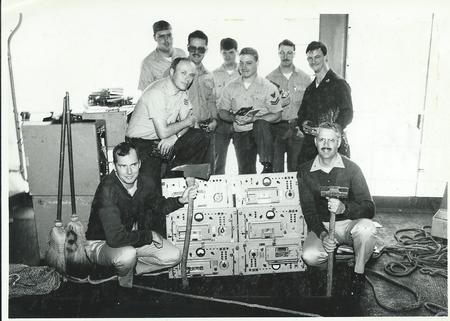
USS NIMITZ • U.S. Navy • 1980