
Opening branch overview
Building the branch home surface
Loading branch highlights, featured unit context, and gallery moments.
Overview
Members
Units
Building the branch home surface
Loading branch highlights, featured unit context, and gallery moments.
Building the branch units surface
Loading unit filters, rankings, and the branch unit grid.

U.S. Navy•10 members
Relive and share the memories of your service-time with your brothers and sisters in arms today. VetFriends.com can help you reconnect.
Did you proudly serve in the F .T .G . GITMO Cuba?
Are you looking for someone who is or was in the F .T .G . GITMO Cuba?
Do you have F .T .G . GITMO Cuba photos you'd like to share?
Then join a community with your brothers and sisters of the F .T .G . GITMO Cuba.
**F.T.G. GITMO (Fleet Training Group, Guantanamo Bay, Cuba) Military History** The Fleet Training Group (F.T.G.) at Guantanamo Bay, Cuba—commonly known as "GITMO"—was established in 1949 to provide comprehensive training for U.S. Navy ships and crews. Its mission was to ensure operational readiness through intensive exercises in gunnery, damage control, engineering, and tactical maneuvers. During the Cold War, F.T.G. GITMO played a crucial role in preparing Atlantic Fleet vessels, particularly during periods of heightened tension such as the Cuban Missile Crisis. The unit earned a reputation as the Navy's premier training center, instilling discipline and combat proficiency in generations of sailors.
Brownwater Navy Vietnam • U.S. Navy • 2023
AIMD CORPUS CHRISTI • U.S. Navy • 2001
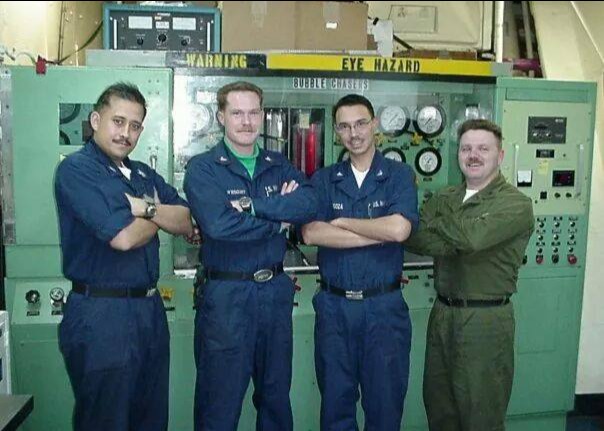
U.S. Navy

U.S. Navy