


USMC
382,665 members•14,705 units
Opening branch overview
Building the branch home surface
Loading branch highlights, featured unit context, and gallery moments.
Overview
Members
Units
382,665 members•14,705 units
Building the branch home surface
Loading branch highlights, featured unit context, and gallery moments.
Building the branch units surface
Loading unit filters, rankings, and the branch unit grid.
2:2nd Marines
U.S. Marine Corps
The 2nd Battalion, 2nd Marines (2/2), known as "Warlords," is a distinguished infantry battalion of the United States Marine Corps, formed in July 1925. The battalion saw extensive combat in World War II, participating in major campaigns such as Tarawa, Saipan, and Tinian. During the Gulf War, 2/2 took part in Operation Desert Storm and has since deployed to Iraq and Afghanistan for Operation Iraqi Freedom and Operation Enduring Freedom. The "Warlords" continue to serve as a key element of the 2nd Marine Division, maintaining a high state of readiness for crisis response around the globe.
2nd AAV Bn
U.S. Marine Corps
The 2nd Assault Amphibian Battalion (2nd AAV Bn) is a United States Marine Corps unit established in March 1942 at Camp Elliott, California. Originally activated as the 2nd Amphibian Tractor Battalion, it played a vital role in World War II, particularly in the Pacific campaigns such as Tarawa, Saipan, and Okinawa, providing amphibious assault capabilities. The battalion has since participated in numerous conflicts, including the Korean War, Operation Desert Storm, and the Global War on Terrorism, supporting Marine infantry with armored amphibian vehicles. Stationed at Camp Lejeune, North Carolina, 2nd AAV Bn continues to provide the Marine Corps with essential mechanized amphibious assault and mobility support.
2nd Maintenance Bn
U.S. Marine Corps
The 2nd Maintenance Battalion (2nd Maint Bn) is a United States Marine Corps unit that provides intermediate-level maintenance support to II Marine Expeditionary Force (II MEF) units, primarily based at Marine Corps Base Camp Lejeune, North Carolina. Established in 1952, the battalion has supported numerous operations, including deployments to Iraq and Afghanistan during Operations Iraqi Freedom and Enduring Freedom, ensuring the readiness and sustainability of Marine Corps ground equipment. Over the decades, 2nd Maint Bn has adapted to evolving technology and warfare requirements, maintaining a reputation for technical proficiency and mission accomplishment. Today, the battalion continues to play a vital role in sustaining II MEF's operational capabilities both at home and abroad.
9TH MT BN
U.S. Marine Corps
Quantico, VA
U.S. Marine Corps
Quantico, Virginia, is renowned as the home of Marine Corps Base Quantico, established in 1917. Originally a training camp during World War I, it quickly became a pivotal center for Marine Corps education, innovation, and leadership development. Over the years, Quantico has hosted key institutions such as the Marine Corps University, Officer Candidates School, and the FBI Academy. Today, it remains a critical hub for training, research, and coordination for both the U.S. Marine Corps and allied defense organizations.
1ST BN 6TH MAR
U.S. Marine Corps
MCB-40
U.S. Marine Corps
MCB-40, known as Mobile Construction Battalion Forty or the "Fighting Forty," was a United States Navy Seabee unit established in 1952. The battalion played a crucial role during the Vietnam War, constructing airfields, roads, and support facilities for U.S. and allied forces throughout Southeast Asia. Over the decades, MCB-40 also supported numerous peacetime construction and disaster relief missions in the Pacific and elsewhere, showcasing Seabee versatility. The unit was decommissioned in 1994 as part of post–Cold War military restructuring, leaving a legacy of engineering excellence and service.
MCDEC
U.S. Marine Corps
1st Battalion, 9th Marines B Co
U.S. Marine Corps
**1st Battalion, 9th Marines, Bravo Company**—known as “B Co, 1/9”—has a distinguished and storied history within the United States Marine Corps. Activated in 1942, the battalion saw heavy combat in the Pacific during World War II, including the battles of Bougainville, Guam, and Iwo Jima. Bravo Company continued its legacy during the Vietnam War, where 1/9 earned the nickname "The Walking Dead" due to sustaining some of the highest casualty rates of any Marine unit. In subsequent decades, Bravo Company participated in operations such as Desert Storm, Iraqi Freedom, and Enduring Freedom, exemplifying courage and commitment in every era.
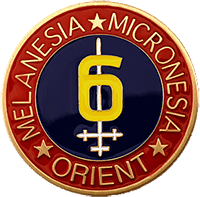
6th Marine Division
U.S. Marine Corps
The 6th Marine Division was activated in September 1944 during World War II, drawing its core from experienced regiments of the Marine Corps. It is most famous for its pivotal role in the Battle of Okinawa, one of the largest amphibious assaults in the Pacific Theater, where the division fought fiercely from April to June 1945. The division earned a Presidential Unit Citation for its actions on Okinawa and later participated in the occupation of northern China. The 6th Marine Division was deactivated in March 1946, having served with distinction in its brief but intense existence.
Anti Submarine Defense Force Atlantic
U.S. Marine Corps
The Anti Submarine Defense Force Atlantic was established during World War II in response to the growing threat of German U-boats in the Atlantic Ocean. Its primary mission was to protect Allied convoys by detecting, tracking, and neutralizing enemy submarines using a combination of surface ships, aircraft, and sonar technology. The unit played a crucial role in the Battle of the Atlantic, significantly reducing shipping losses and ensuring the steady flow of troops and supplies to Europe. After the war, the force continued to evolve, adapting to new submarine threats during the Cold War and remaining a key component of maritime security in the Atlantic region.
CAMP HANSEN
U.S. Marine Corps
COMM
U.S. Marine Corps
FIFTH MARINE DIVISION
U.S. Marine Corps
MARINE BARRACKS HAWAII
U.S. Marine Corps
Marine Barracks Hawaii traces its origins to 1914, when it was established to provide security and support for the growing U.S. naval presence at Pearl Harbor. Throughout World War II, Marines from the barracks played a critical role in defending Oahu and supporting operations across the Pacific theater. Over the decades, the unit has evolved to serve as a key base for the U.S. Marine Corps in the Pacific, supporting training, force deployment, and regional security initiatives. Today, Marine Barracks Hawaii continues its legacy of readiness and service, upholding its strategic importance in the Indo-Pacific region.
1:2nd Marines Hawaii
U.S. Marine Corps
The 1st Battalion, 2nd Marines (1/2), originally activated in 1941, is a distinguished infantry battalion of the United States Marine Corps, historically part of the 2nd Marine Regiment, 2nd Marine Division. While its traditional home has been Camp Lejeune, North Carolina, elements of 1/2 have periodically deployed or trained in Hawaii, particularly at Marine Corps Base Hawaii, for advanced amphibious and jungle warfare exercises in the Pacific theater. The battalion has seen combat in major conflicts, including World War II, the Korean War, Operation Desert Storm, and the Global War on Terrorism, earning a reputation for valor and effectiveness. 1/2 Marines continue to serve as a rapid-response force, ready to deploy worldwide in support of U.S. interests.
11th Marines HQ battery
U.S. Marine Corps
The Headquarters Battery, 11th Marines, serves as the command and control hub for the 11th Marine Regiment, a renowned artillery unit of the United States Marine Corps. Activated in 1918, the regiment and its HQ battery have provided vital fire support and operational leadership in major conflicts, including World War II, the Korean War, Vietnam War, and the Global War on Terror. The HQ battery coordinates logistics, communications, and tactical fire missions, ensuring the effectiveness of subordinate artillery battalions. Throughout its distinguished service, the 11th Marines HQ Battery has exemplified adaptability and professionalism in supporting Marine Corps operations worldwide.
3:10th Marines
U.S. Marine Corps
The 3rd Battalion, 10th Marines (3/10) is an artillery battalion of the United States Marine Corps, originally activated during World War II in 1941. The battalion participated in significant Pacific campaigns, including the battles of Guadalcanal, Tarawa, Saipan, Tinian, and Okinawa, providing crucial fire support to Marine infantry units. After World War II, 3/10 was deactivated but reactivated during the Cold War, serving in various capacities, including deployments to Lebanon in 1958 and the Caribbean during the Cuban Missile Crisis. In more recent history, 3/10 contributed forces to operations in the Middle East, including Operation Iraqi Freedom, before its deactivation in 2013 as part of Marine Corps force restructuring.
3:11th Marines
U.S. Marine Corps
The 3rd Battalion, 11th Marines (3/11) is an artillery battalion of the United States Marine Corps, established in May 1942 during World War II. The unit saw significant combat in the Pacific Theater, including the battles of Guadalcanal, Peleliu, and Okinawa. Reactivated for the Korean and Vietnam Wars, 3/11 provided crucial fire support in key engagements. In recent decades, the battalion has participated in Operations Desert Storm, Iraqi Freedom, and Enduring Freedom, continuing its legacy of artillery excellence within the 1st Marine Division.
CRASH FIRE RESCUE
U.S. Marine Corps
1st ANGLICO
U.S. Marine Corps
The 1st Air Naval Gunfire Liaison Company (1st ANGLICO) is a specialized unit of the United States Marine Corps, first activated in 1949. Its primary mission is to provide liaison, coordination, and terminal control for close air support and naval gunfire in support of joint, allied, and coalition forces. Over the decades, 1st ANGLICO has seen action in conflicts such as the Korean War, Vietnam War, Operation Desert Storm, and the Global War on Terrorism, including deployments to Iraq and Afghanistan. Renowned for their expertise in integrating supporting arms, 1st ANGLICO Marines are highly trained in communications, fire support, and working alongside partner nations’ forces.
2nd ANGLICO FMF
U.S. Marine Corps
The 2nd Air Naval Gunfire Liaison Company (2nd ANGLICO), Fleet Marine Force (FMF), was originally activated in 1950 at Camp Lejeune, North Carolina, to provide specialized fire support coordination and liaison capabilities for Marine Air-Ground Task Forces and allied units. Throughout its history, 2nd ANGLICO has played a critical role in integrating naval gunfire, close air support, and artillery fires in support of joint and coalition operations, including deployments during the Cold War, Operation Desert Storm, and the Global War on Terrorism. The unit is renowned for its expertise in supporting unconventional warfare and working alongside partner nation forces. Today, 2nd ANGLICO continues to serve as a vital asset for the U.S. Marine Corps, ensuring the effective employment of supporting arms across a range of military operations.
3D MAW
U.S. Marine Corps
MCB-3
U.S. Marine Corps
Naval Mobile Construction Battalion THREE (MCB-3), known as the "Better Than Best," is a distinguished unit of the United States Navy Seabees. Commissioned in 1942, MCB-3 played a vital role in World War II, constructing airfields, bases, and infrastructure across the Pacific theater, including Guadalcanal and Okinawa. The battalion continued its service in subsequent conflicts, notably supporting operations during the Korean and Vietnam Wars by building critical facilities under combat conditions. In peacetime and during humanitarian missions, MCB-3 has provided engineering support and disaster relief worldwide, exemplifying the Seabees’ motto, "We Build, We Fight."