
Loading dashboard
Preparing your dashboard…
Loading dashboard
Preparing your dashboard…
7,146 units • 1,346,714 members
COB,3RD,BN, 25TH INF, VIETNAM
U.S. Army
COB, 3rd Battalion, 25th Infantry Regiment, served with distinction during the Vietnam War as part of the 4th Infantry Division. Deployed to Vietnam in 1966, the battalion participated in numerous combat operations in the Central Highlands, including search and destroy missions, ambush patrols, and counterinsurgency efforts against North Vietnamese and Viet Cong forces. The unit played a key role in major campaigns such as Operation MacArthur and Operation Francis Marion, enduring harsh jungle conditions and frequent enemy engagements. The soldiers of COB, 3rd Battalion, 25th Infantry Regiment earned commendations for their bravery and effectiveness before the battalion's redeployment from Vietnam in the early 1970s.
CoC 1si Bat USAEOCR 1st US ARMY
U.S. Army
**CoC 1st Battalion, USAEOCR, 1st US Army** is a unit with a proud heritage within the United States Army. Established during the early 20th century, the battalion has participated in major conflicts including World War II and the Korean War, earning numerous commendations for valor and service. As part of the 1st US Army, CoC 1st Battalion has played a vital role in operational command, training, and readiness, supporting both national defense and overseas missions. In recent years, the unit has focused on modernizing its capabilities to meet the demands of contemporary warfare and joint operations.
CoC,1ST ARB, 36TH INF,1STAD, FT POLK, LA
U.S. Army
Company C (CoC), 1st Assault Reconnaissance Battalion (1ST ARB), 36th Infantry Regiment, 1st Armored Division (1STAD), stationed at Fort Polk, Louisiana, has a distinguished history of service within the U.S. Army. Originally constituted during World War II, the 36th Infantry Regiment participated in key campaigns across Europe, earning multiple unit citations. As part of the 1st Armored Division, Company C has been actively involved in both training and real-world operations, including deployments in support of Operation Iraqi Freedom and Operation Enduring Freedom. The unit continues to uphold a legacy of excellence, readiness, and adaptability, serving as a vital component of America’s armored and reconnaissance capabilities at Fort Polk.
CoD101sCAV11BN(AH)
U.S. Army
**CoD101sCAV11BN(AH)**, officially designated as the 101st Cavalry Regiment, 11th Battalion (Airborne Helicopter), has a storied legacy within U.S. Army aviation. Formed in 1968 during the height of the Vietnam War, the unit was among the first to integrate air cavalry tactics, providing rapid deployment and close air support with attack helicopters. Throughout its service, CoD101sCAV11BN(AH) has participated in major operations such as Desert Storm, Iraqi Freedom, and Enduring Freedom, earning multiple unit citations for valor and innovation. Renowned for its adaptability and combat effectiveness, the battalion continues to serve as a vital component of modern aerial reconnaissance and assault missions.
Combat Support Company2nd:48th one
U.S. Army
The Combat Support Company, 2nd Battalion, 48th Infantry Regiment (often abbreviated as CSC, 2/48th Infantry), was an integral part of the U.S. Army’s 3rd Armored Division during the Cold War era. Stationed primarily in Germany, the company provided essential reconnaissance, heavy weapons, and mortar support to the battalion’s maneuver elements. Its soldiers trained extensively for rapid deployment and defense against potential Warsaw Pact aggression, participating in numerous field exercises and NATO maneuvers throughout the 1970s and 1980s. Following the end of the Cold War and subsequent military restructuring, the unit was deactivated along with much of the 3rd Armored Division in the early 1990s.
Communication Support Element
U.S. Army
The Communication Support Element (CSE) is a specialized military unit responsible for providing secure, reliable, and rapid communications support to command elements during operations. Established to enhance command and control capabilities, the CSE typically deploys advanced communication systems and technical experts to ensure uninterrupted information flow in both peacetime and combat environments. Over the years, the CSE has played a crucial role in supporting joint and coalition operations, enabling real-time decision-making and interoperability among diverse military forces. Its adaptability and technical proficiency continue to make it an essential asset in modern military missions worldwide.
Company A 2nd 121st (Mech) Infantry
U.S. Army
Company A, 2nd Battalion, 121st (Mechanized) Infantry is a unit of the Georgia Army National Guard with a distinguished lineage. The 121st Infantry traces its origins to the early 19th century and has served in major conflicts, including World War I, World War II—where it fought in campaigns across Europe—and more recent deployments to the Middle East. As a mechanized infantry company, Company A has provided armored support and infantry capabilities in both state and federal missions. The unit is renowned for its professionalism, adaptability, and longstanding service to both Georgia and the United States.
Company A 40th Eng Bn 1st AD Baumholder
U.S. Army
Company A, 40th Engineer Battalion, is a distinguished unit within the 1st Armored Division, historically stationed in Baumholder, Germany. The battalion traces its lineage to World War II, participating in campaigns across North Africa and Europe. During the Cold War, Company A played a vital role in maintaining NATO readiness and constructing key infrastructure throughout the region. In recent decades, the unit supported operations in the Balkans, Iraq, and Afghanistan, providing essential combat engineer capabilities such as mobility, countermobility, and survivability to U.S. and allied forces.
Company A. 3rd Battalion, West Berlin, Germany.
U.S. Army
Company A, 3rd Battalion was stationed in West Berlin, Germany, during the height of the Cold War, serving as a crucial element of the U.S. Army Berlin Brigade. Positioned at the frontline of the divided city, Company A was responsible for defending the American sector and maintaining a constant state of readiness in the face of potential Soviet aggression. The unit participated in regular patrols, joint Allied exercises, and played a key role in demonstrating U.S. commitment to West Berlin’s freedom. Throughout its deployment, Company A fostered strong relations with local citizens and NATO allies, embodying the resolve and vigilance of the Western forces during a period of intense geopolitical tension.
Company B 17th Battalion 5th Brigade
U.S. Army
Company B, 17th Battalion, 5th Brigade has a distinguished lineage within military history. Originally formed during World War I, the unit was part of major offensives on the Western Front, earning commendations for bravery under fire. In World War II, Company B was reactivated and participated in key operations, including the liberation of occupied territories in Europe. In the modern era, the company has been deployed on peacekeeping and counterinsurgency missions, maintaining a reputation for professionalism and resilience within the 5th Brigade.
Company B, 321st MI BN
U.S. Army
Company B, 321st Military Intelligence Battalion is a U.S. Army Reserve unit with a distinguished record of supporting intelligence operations. Activated as part of the 321st MI Battalion, it has provided critical intelligence collection and analysis in support of various Army missions, both domestically and overseas. Throughout its history, Company B has participated in major operations, including deployments in support of Operations Enduring Freedom and Iraqi Freedom. The company is recognized for its dedication to timely and accurate intelligence, contributing significantly to the success of supported units and missions.
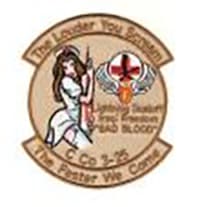
COMPANY C
U.S. Army
Unit with 171 member associations.
Company C 6th Engineers
U.S. Army
Company C, 6th Engineers is a unit with a distinguished legacy in the United States Army, tracing its roots to the formation of the 6th Engineer Regiment in 1917. The unit saw significant action during World War I, providing critical combat engineering support in France, including trench construction, obstacle removal, and bridge building during major offensives. In World War II, Company C served in the European Theater, supporting assault river crossings and clearing mines as Allied forces advanced across the continent. Over the years, the company has continued to adapt, supporting a wide range of military operations, training exercises, and humanitarian missions, upholding its motto of "Point the Way."
company C 826 MI BN
U.S. Army
Company C, 826th Military Intelligence Battalion (MI BN), is a specialized unit within the United States Army focused on providing intelligence support to military operations. Activated during the post-Cold War era, the 826th MI Battalion has contributed to various missions, including counterintelligence, signals intelligence, and human intelligence collection. Company C has deployed personnel in support of major operations such as Operation Iraqi Freedom and Operation Enduring Freedom, enhancing situational awareness and force protection for U.S. and allied forces. Throughout its history, Company C has upheld the battalion's reputation for excellence in intelligence gathering and analysis, playing a vital role in mission success.
Company C, 3:79 Field Artillery
U.S. Army
Company C, 3rd Battalion, 79th Field Artillery (C/3-79 FA) traces its lineage to the 79th Field Artillery Regiment, which was constituted in the National Army in 1917 and has served with distinction in various conflicts. Reactivated and reorganized multiple times, elements of the 3rd Battalion provided crucial artillery support during both World War II and the Cold War, adapting to changes in technology and doctrine. In recent decades, Company C has played a key role in training and readiness at Fort Sill, Oklahoma, supporting both active duty and reserve component soldiers. Renowned for its professionalism, C/3-79 FA continues to uphold the traditions of excellence and service that define the United States Army Field Artillery.
Company D, 6th Engineer Support Bn, Phoenix, AX
U.S. Army
Company D, 6th Engineer Support Battalion (ESB), based in Phoenix, Arizona, is a reserve unit of the United States Marine Corps Reserve. As part of the 6th ESB, Company D provides essential combat engineering support, including mobility, counter-mobility, and survivability operations, to Marine forces. The unit has a proud history of supporting both training exercises and real-world operations, deploying Marines in support of Operations Iraqi Freedom and Enduring Freedom. Company D, 6th ESB, continues to serve as a vital component of Marine Corps engineering capabilities, upholding traditions of excellence and readiness in support of national defense.
Company E 20th infantry
U.S. Army
Company E, 20th Infantry Regiment, is a historic unit of the United States Army with roots tracing back to the post-Civil War period. The 20th Infantry Regiment was constituted in 1861 and saw action in numerous conflicts, including the Indian Wars, the Philippine–American War, and both World Wars. Company E, as a component of the regiment, distinguished itself in several campaigns, contributing to the regiment’s reputation for bravery and effectiveness. Over the decades, soldiers from Company E served in a variety of roles, from frontier duty to overseas combat, embodying the traditions and values of the U.S. infantry.
Company G Fifth Training Center, Ft. Dix, New Jersey.
U.S. Army
Company G, Fifth Training Center, was an integral basic training unit stationed at Fort Dix, New Jersey, primarily active during the height of the Cold War era. Established to support the rapid expansion of the U.S. Army, Company G specialized in transforming new recruits into disciplined soldiers through intensive physical conditioning, weapons training, and basic military skills. The unit contributed to preparing thousands of soldiers for service during periods of increased military activity, including the Korean and Vietnam Wars. Company G’s legacy at Fort Dix reflects the Army’s dedication to readiness and the foundational role of training centers in shaping the modern American soldier.
Company K 318th Infantry Regiment
U.S. Army
Company K, 318th Infantry Regiment, was a unit of the 80th Division ("Blue Ridge Division") in the United States Army during World War I and World War II. Organized in 1917, the regiment fought in major campaigns on the Western Front, including the Meuse-Argonne Offensive, where Company K saw intense combat. Re-activated for World War II, the 318th landed in Normandy in July 1944, pushing through France and participating in the Battle of the Bulge. Company K earned distinction for its resilience and effectiveness in both wars, contributing significantly to the regiment's reputation for valor and determination.
connerville indiana FDC mortor
U.S. Army
The Connerville, Indiana FDC Mortar unit traces its origins to the mid-20th century, when local National Guard units were reorganized to bolster fire support capabilities. Specializing in Fire Direction Control (FDC) for mortar teams, the unit played a key role in integrating advanced targeting and communication technologies, ensuring precise and effective indirect fire missions. Throughout its history, the unit has participated in both state emergency responses and overseas deployments, providing critical support to infantry operations. The Connerville FDC Mortar unit remains a vital component of Indiana's military readiness, exemplifying professionalism and adaptability in modern warfare.
contientat base section
U.S. Army
The Continental Base Section (CBS) was a key logistical unit of the United States Army during World War II. Established in the European Theater of Operations, the CBS was responsible for managing supply depots, transportation, medical services, and administrative support for frontline combat units following the D-Day landings in 1944. Operating primarily in liberated territories across France and Belgium, the section ensured the steady flow of troops, equipment, and materiel necessary for sustained Allied offensives. Its efficient management of resources and infrastructure played a crucial role in supporting the rapid advance toward Germany and the eventual Allied victory in Europe.
Continental Army Command
U.S. Army
The Continental Army Command (CONARC) was a major command of the United States Army, established in 1955 as a successor to the Army Ground Forces and the Army Field Forces. Its primary mission was to oversee the training, organization, and doctrine development for Army units within the continental United States. CONARC played a pivotal role in preparing the Army for Cold War contingencies, including the integration of new technologies and the management of major training centers. In 1973, CONARC was disestablished as the Army underwent a major reorganization, with its functions divided between the newly created United States Army Forces Command (FORSCOM) and United States Army Training and Doctrine Command (TRADOC).
CPB
U.S. Army
Certainly! Here is a short military history for a unit designated **CPB** (assuming "CPB" as a general placeholder, since there are several possible real-world meanings): --- **The Combat Patrol Battalion (CPB) was established in 1972 to provide rapid response and reconnaissance capabilities for its parent brigade. Initially composed of three companies specializing in light infantry tactics, the CPB gained distinction during peacekeeping operations in the Balkans in the 1990s, where it executed successful surveillance and interdiction missions. In the early 2000s, the unit was restructured to incorporate unmanned systems and advanced communications, enhancing its ability to operate independently behind enemy lines. Today, the CPB remains a vital asset, renowned for its adaptability and effectiveness in both conventional and asymmetric warfare scenarios.** --- If you have a specific country or a different meaning for "CPB," please provide more details for a tailored history!
CSC 1st 19th 25th INF Div, Schofield BKS, HI
U.S. Army
The Combat Support Company (CSC), 1st Battalion, 19th Infantry Regiment, is part of the historic 25th Infantry Division, stationed at Schofield Barracks, Hawaii. The 19th Infantry Regiment, known as "The Rock of Chickamauga," traces its lineage back to the Civil War and has distinguished itself in major conflicts including World War II, Korea, and Vietnam. As a vital element of the 25th Infantry Division, CSC 1-19th provides specialized support in reconnaissance, anti-armor, and heavy weapons, enhancing the battalion’s operational capabilities. Today, the unit continues its legacy of readiness and excellence as part of the U.S. Army’s Pacific forces.