
About this Unit
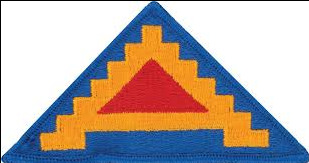
The United States Army Europe and Seventh Army (USAREUR/7th Army) has been a cornerstone of American military presence on the European continent since its activation during World War II. Formed in 1944, the Seventh Army played a crucial role in the liberation of France and the defeat of Nazi Germany. After the war, USAREUR was established in 1952 to oversee U.S. Army operations in Europe, and it later merged with the Seventh Army headquarters. Throughout the Cold War and into the 21st century, USAREUR/7th Army has provided deterrence, security cooperation, and rapid response capabilities across Europe, adapting to new challenges such as NATO operations and emerging security threats. Its headquarters is currently located in Wiesbaden, Germany.
Historical Facts
•
Formation after WWII: USAREUR (United States Army Europe) and the Seventh Army were both activated in the immediate aftermath of World War II, to oversee occupation duties in Germany and to serve as a deterrent against Soviet aggression during the early Cold War.
•
First Combat in North Africa: The Seventh Army was first activated in 1943 and led by Lt. Gen. George S. Patton. It saw its first combat action in Operation Husky—the invasion of Sicily—marking the first American army to fight on the European continent in WWII.
•
Operation Torch: The Seventh Army’s predecessor, the Western Task Force, was responsible for the US landings in French North Africa (Operation Torch) in November 1942, a pivotal moment in opening the second front against Axis powers.
•
Cold War Frontline: During the Cold War, USAREUR and Seventh Army units stood on the front lines against the Soviet Union and Warsaw Pact, with tens of thousands of troops stationed in West Germany, ready to defend Western Europe in the event of conflict.
•
Berlin Duty: USAREUR/Seventh Army was responsible for overseeing the US garrison in Berlin—a crucial symbol of American commitment throughout the Berlin Airlift (1948-1949) and the Berlin Crisis (1961).
•
Operation Gyroscope: In the 1950s and 60s, the Army implemented "Operation Gyroscope," rotating entire units and their families between the US and Germany, enhancing readiness and morale among soldiers stationed far from home.
•
Post-Cold War Restructuring: After the fall of the Berlin Wall, USAREUR/7th Army underwent significant downsizing, closing many bases and reducing troop numbers from over 200,000 in the 1980s to less than 30,000 today.
•
Bosnia and Kosovo Operations: USAREUR/7th Army played a key role in peacekeeping missions in the Balkans in the 1990s, leading US and NATO efforts in Bosnia (IFOR/SFOR) and Kosovo (KFOR).
•
Modern Training and Partnerships: USAREUR/7th Army conducts major annual exercises like DEFENDER-Europe, working closely with NATO allies to deter aggression and maintain readiness across Europe.
•
Merger and Legacy: The headquarters of USAREUR and Seventh Army were officially merged in 1966. The dual designation, "USAREUR/7th Army," honors both the operational and historical lineage of US land forces in Europe.