
Opening branch overview
Building the branch home surface
Loading branch highlights, featured unit context, and gallery moments.
Overview
Members
Units
Building the branch home surface
Loading branch highlights, featured unit context, and gallery moments.
Building the branch units surface
Loading unit filters, rankings, and the branch unit grid.

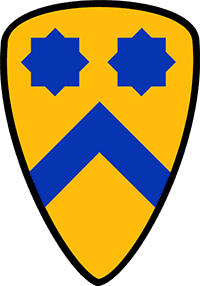
U.S. Army•160 members
Relive and share the memories of your service-time with your brothers and sisters in arms today. VetFriends.com can help you reconnect.
Did you proudly serve in the 2nd Cavalry Division?
Are you looking for someone who is or was in the 2nd Cavalry Division?
Do you have 2nd Cavalry Division photos you'd like to share?
Then join a community with your brothers and sisters of the 2nd Cavalry Division.
The 2nd Cavalry Division was a unit of the United States Army first activated in 1941. Originally organized as a segregated African American cavalry division, it was comprised largely of the 9th and 10th Cavalry Regiments, known as the "Buffalo Soldiers." Despite its formation during World War II, the division primarily served stateside, training at Fort Clark, Texas, and was never deployed overseas in combat. The division was inactivated in 1944, as the Army shifted away from horse-mounted units toward mechanized and armored forces.

U.S. Army

U.S. Army