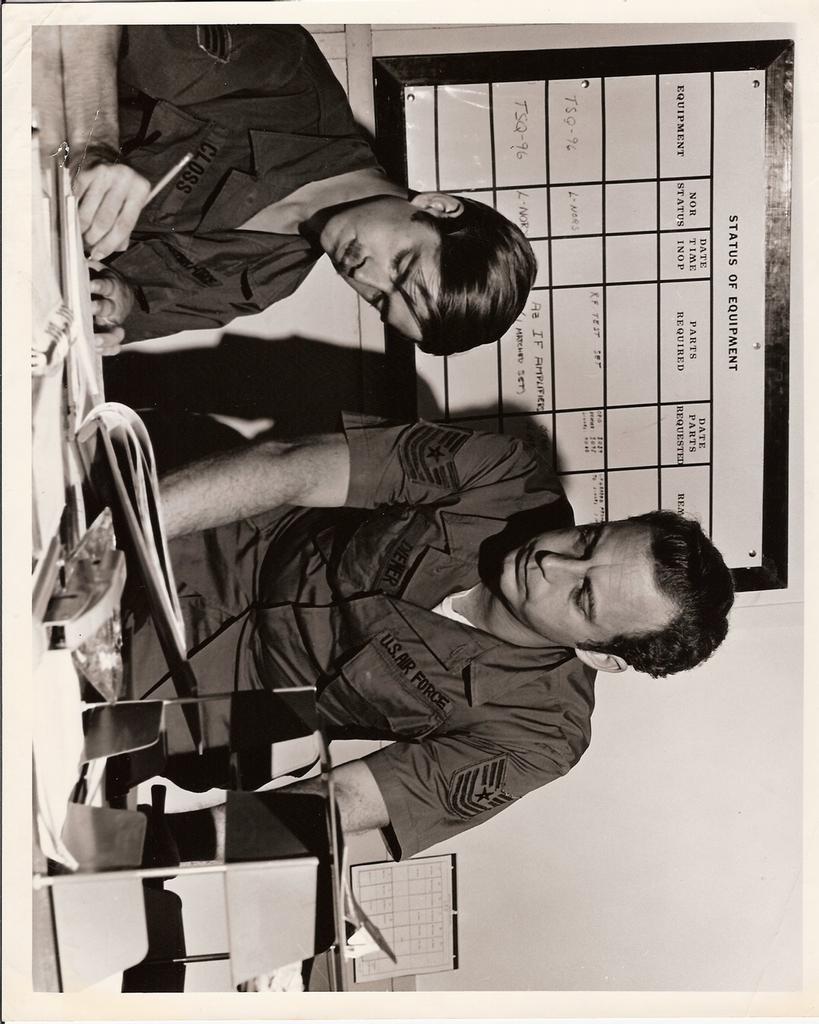
About this Unit
The Air Force Technical Applications Center (AFTAC) was established in 1959 and is headquartered at Patrick Space Force Base, Florida. Its primary mission is to monitor compliance with nuclear test ban treaties by detecting and analyzing nuclear explosions worldwide, using a global network of sensors. During the Cold War, AFTAC played a crucial role in verifying Soviet nuclear tests and continues to provide vital scientific and technical expertise in nuclear event detection. Over the decades, AFTAC has evolved to include cutting-edge technologies, supporting both national and international security efforts.

Historical Facts
•
Origins in Nuclear Detection: The Air Force Technical Applications Center (AFTAC) was established in 1959, with its roots tracing back to the Atomic Energy Detection System (AEDS) created after the first Soviet nuclear test in 1949.
•
Continuous Global Monitoring: AFTAC operates and maintains the United States' global nuclear event detection network, consisting of seismic, hydroacoustic, satellite, and atmospheric sensors to monitor nuclear explosions worldwide.
•
Key Role in Nuclear Test Ban Verification: The unit is a critical component for verifying compliance with treaties such as the Limited Test Ban Treaty (1963) and the Comprehensive Nuclear-Test-Ban Treaty (CTBT), using advanced detection technologies.
•
Discovering the Vela Incident: In 1979, AFTAC sensors detected a mysterious double flash in the South Atlantic, known as the "Vela Incident," which some experts suspect was a clandestine nuclear test conducted by South Africa or Israel.
•
Involvement in Chernobyl: After the 1986 Chernobyl disaster, AFTAC detected radioactive fallout, helping to alert the West and inform global response efforts before the Soviet Union acknowledged the accident.
•
Badge and Emblem: The AFTAC emblem features an atom and a worldwide grid, symbolizing its mission to monitor atomic activities globally. The Latin motto, "Monitorus Bellatorque," means "To Watch and To Warn."
•
Headquarters Relocation: For decades, AFTAC was headquartered at Patrick Air Force Base, Florida, but moved into a new, state-of-the-art headquarters building in 2014, just outside the same base.
•
Classified Missions: Much of AFTAC’s work is classified, but declassified accounts reveal involvement in everything from confirming foreign nuclear tests to assisting in disaster response through environmental monitoring.
•
Global Reach: AFTAC’s network includes over 3,600 sensors at more than 40 locations across the globe, making it one of the most extensive technical intelligence gathering operations in the U.S. military.
•
Support to Civilian Agencies: Beyond military missions, AFTAC has supported civilian agencies such as the U.S. Geological Survey and the National Oceanic and Atmospheric Administration in earthquake detection and tsunami warning efforts.