About this Unit
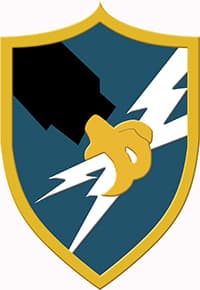
The Army Security Agency (ASA) was established in 1945 as a specialized intelligence branch of the United States Army, focused on signals intelligence (SIGINT) and communications security. Operating during the Cold War, Korean War, and Vietnam War, the ASA played a crucial role in intercepting and analyzing enemy communications, providing vital information to military commanders. The agency was known for its highly trained linguists, cryptologists, and electronic warfare specialists, who often worked in dangerous and covert environments. In 1977, the ASA was merged into the newly created United States Army Intelligence and Security Command (INSCOM), continuing its legacy under a broader intelligence mandate.
Historical Facts
• Origins in World War II: The Army Security Agency (ASA) was officially established in 1945, but its roots trace back to secret Army Signal Intelligence Service operations during World War II.
• Signals Intelligence Mission: The ASA was the United States Army's primary signals intelligence (SIGINT) agency, responsible for intercepting, deciphering, and analyzing enemy communications during the Cold War and beyond.
• Cold War Operations: ASA units were stationed in hotspots around the world, including West Germany, Korea, and Japan, to monitor Soviet and Warsaw Pact military communications.
• Role in the Vietnam War: ASA personnel played a crucial role in intercepting North Vietnamese radio traffic, providing vital intelligence to U.S. commanders and supporting covert operations such as the "Studies and Observations Group" (SOG).
• Secret Locations: Many ASA sites were hidden in remote locations, often disguised as ordinary military or civilian facilities to conceal their true intelligence-gathering roles.
• Use of Code Talkers: During the Korean War, the ASA employed Native American code talkers (notably Comanche and Choctaw) to transmit secure communications, reviving a tactic from World War II.
• Operation Ivy Bells: The ASA worked closely with the Navy on operations such as Ivy Bells, which involved tapping Soviet underwater communication cables in the Sea of Okhotsk.
• Technological Innovation: The agency was at the forefront of cryptographic technology, employing some of the earliest computers and decryption devices to break enemy codes.
• Vietnam War Casualties: Because of their highly sensitive missions, ASA personnel sometimes operated alongside Special Forces and suffered casualties, with some stories remaining classified to this day.
• Transition to INSCOM: In 1977, the ASA was merged into the new U.S. Army Intelligence and Security Command (INSCOM), ending its independent existence but preserving its legacy within modern Army intelligence operations.