
Loading dashboard
Preparing your dashboard…
Loading dashboard
Preparing your dashboard…
U.S. Army
Branch
U.S. Army
MACV Team 70
U.S. Army
MACV Team 70, also known as Advisory Team 70, was a unit of the U.S. Military Assistance Command, Vietnam (MACV) during the Vietnam War. Established as part of the broader MACV advisory effort, Team 70 was assigned to Bình Định Province in the II Corps Tactical Zone. Its primary mission was to advise and support the Army of the Republic of Vietnam (ARVN) and local paramilitary forces in counterinsurgency operations against the Viet Cong. The team played a significant role in coordinating pacification programs, improving local security, and fostering civil-military relations throughout the province until the drawdown of U.S. forces.
MACV Team 70
U.S. Army
MACV Team 70, also known as Advisory Team 70, was a unit of the U.S. Military Assistance Command, Vietnam (MACV) during the Vietnam War. Established as part of the broader MACV advisory effort, Team 70 was assigned to Bình Định Province in the II Corps Tactical Zone. Its primary mission was to advise and support the Army of the Republic of Vietnam (ARVN) and local paramilitary forces in counterinsurgency operations against the Viet Cong. The team played a significant role in coordinating pacification programs, improving local security, and fostering civil-military relations throughout the province until the drawdown of U.S. forces.
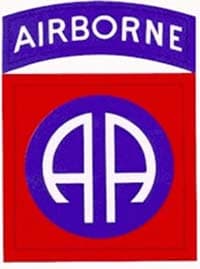
82nd Airborne
U.S. Army
The 82nd Airborne Division is a specialized infantry division of the United States Army. It is known for its rapid deployment capability and ability to conduct airborne operations. The division has a long and storied history, playing a crucial role in World War II, the Korean War, Vietnam War, Operation Urgent Fury in Grenada, Operation Just Cause in Panama, the Gulf War, and more recently in Iraq and Afghanistan. The 82nd Airborne Division is based at Fort Bragg, North Carolina, and remains one of the most highly trained and ready divisions in the U.S. Army.
HQ CO USARV G-2 USARPAC
U.S. Army
**HQ CO USARV G-2 USARPAC** (Headquarters Company, United States Army, Vietnam, G-2, United States Army Pacific) served as a key intelligence element during the Vietnam War. Established to support United States Army Vietnam (USARV) operations, the G-2 section was responsible for collecting, analyzing, and disseminating critical intelligence on enemy activities and terrain. Operating under the broader command structure of USARPAC (United States Army Pacific), the unit coordinated with allied intelligence agencies, contributing significantly to operational planning and security. Through its efforts, HQ CO USARV G-2 played a vital role in supporting combat operations and safeguarding US and allied forces in Southeast Asia.
1:54th Infantry West Germany
U.S. Army
The 1st Battalion, 54th Infantry Regiment (1/54th Infantry) was a mechanized infantry unit of the U.S. Army stationed in West Germany during the Cold War. Assigned to the 3rd Armored Division, the battalion played a vital role in NATO's forward defense strategy against potential Warsaw Pact aggression. Throughout its deployment, 1/54th Infantry participated in numerous field exercises and joint maneuvers, enhancing readiness and interoperability with allied forces. The unit remained in West Germany until the end of the Cold War, after which it was inactivated as part of the post-Cold War drawdown of U.S. forces in Europe.
Infantry Officer Career Course
U.S. Army
The Infantry Officer Career Course (IOCC) is a key professional development program within the United States Army, designed to prepare commissioned officers for company-grade leadership roles in infantry units. Established in the mid-20th century, the course evolved from earlier officer training schools to address the changing demands of modern land warfare. Located primarily at Fort Moore (formerly Fort Benning), Georgia, the IOCC combines advanced tactical instruction, leadership development, and combined arms integration. Over the decades, it has produced countless skilled leaders, ensuring the Army’s infantry officers are prepared for both conventional and asymmetric operations worldwide.
Command and General Staff College
U.S. Air Force
The Command and General Staff College (CGSC), established in 1881 at Fort Leavenworth, Kansas, is a premier institution for educating mid-career officers of the United States Army and allied nations. Its primary mission is to develop leaders with advanced skills in command, staff operations, and military planning. Throughout its history, CGSC has adapted its curriculum to meet the evolving demands of modern warfare, playing a pivotal role in preparing officers for both World Wars, the Cold War, and contemporary conflicts. Many renowned military leaders, including Generals Dwight D. Eisenhower and Colin Powell, are among its distinguished alumni.
Provost Marshal Ft Benning
U.S. Army
The Provost Marshal at Fort Benning, now part of Fort Moore, has played a crucial role in maintaining law, order, and discipline since the establishment of the installation in 1918. Tasked with overseeing military police operations, the unit has supported the training and readiness of the U.S. Army Infantry, Armor, and various tenant units stationed at the base. Throughout its history, the Provost Marshal’s office has managed security, traffic regulation, and crisis response, adapting to the evolving needs of a growing and dynamic military community. Its ongoing mission ensures the safety and effectiveness of one of the Army’s most significant training hubs.
School of Infantry
U.S. Army
The School of Infantry (SOI) is a crucial training establishment within the United States Marine Corps, established in 1988 to provide advanced infantry instruction following recruit training. Divided into SOI-East at Camp Geiger, North Carolina, and SOI-West at Camp Pendleton, California, the SOI trains all newly graduated Marines in combat skills. Infantry Marines attend the Infantry Training Battalion (ITB) for specialized infantry instruction, while non-infantry Marines go through Marine Combat Training (MCT) to learn essential battlefield skills. The School of Infantry has played a vital role in preparing Marines for combat operations in conflicts such as the Gulf War, Iraq, Afghanistan, and beyond.
Hq CO Ft Wainwright AK
U.S. Army
Headquarters Company (Hq CO), Fort Wainwright, Alaska, serves as the central administrative and support hub for various units stationed at Fort Wainwright. The installation itself, established in 1939 as Ladd Field and later renamed in honor of General Jonathan M. Wainwright, has played a key role in Arctic defense, Cold War operations, and modern military training. Hq CO provides essential command, control, and logistical support for missions conducted in Alaska’s challenging environment, supporting units such as the 1st Stryker Brigade Combat Team, 25th Infantry Division. Over the decades, Hq CO has adapted to evolving operational needs, contributing to both homeland defense and overseas deployments.
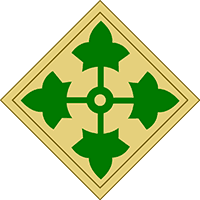
4th Infantry Division
U.S. Army
The 4th Infantry Division is a division of the United States Army that is based at Fort Carson, Colorado. It is known for its role in World War II, where it played a key role in the D-Day invasion of Normandy. The division has also served in the Vietnam War, Operation Iraqi Freedom, and Operation Enduring Freedom in Afghanistan. The 4th Infantry Division is currently a versatile and adaptable unit that trains to deploy rapidly and conduct combat operations in a variety of environments.
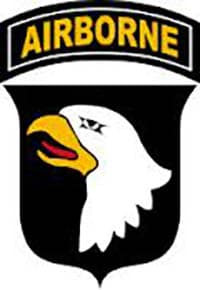
101st Airborne
U.S. Army
The 101st Airborne Division is a specialized unit of the United States Army that is trained for air assault operations. It was created during World War II and gained fame for its role in the D-Day invasion of Normandy in 1944. The division has since participated in numerous conflicts around the world, including the Vietnam War, Operation Desert Storm, and the wars in Iraq and Afghanistan. Known as the "Screaming Eagles," the 101st Airborne is considered one of the most elite and versatile divisions in the US military.
LANG
U.S. Army
The military unit known as LANG, or the Louisiana Army National Guard, traces its origins to the colonial militia units formed in the 18th century. Officially established in 1916 following the National Defense Act, LANG has served in major conflicts including both World Wars, the Korean War, and deployments to Iraq and Afghanistan. The unit plays a critical role in disaster response, particularly for hurricanes and floods impacting Louisiana. Today, LANG continues its dual mission of supporting national defense and providing vital aid during state emergencies.