
Loading dashboard
Preparing your dashboard…
Loading dashboard
Preparing your dashboard…
U.S. Army
Branch
U.S. Army
175th radio research Bien Hoa
U.S. Army
The 175th Radio Research Company (175th RRC), based in Bien Hoa, Vietnam, was a United States Army signals intelligence unit active during the Vietnam War. Established in the mid-1960s, the unit specialized in intercepting and analyzing enemy communications as part of the Army Security Agency's support to combat operations. The 175th RRC worked closely with combat units and provided critical intelligence that contributed to the success of numerous operations in III Corps Tactical Zone. Renowned for its technical expertise and dedication, the unit played a vital role in disrupting enemy command and control networks until its deactivation following the drawdown of U.S. forces in Vietnam.
73rd CBTI
U.S. Army
The 73rd Combat Battalion (73rd CBTI) is a distinguished military unit recognized for its versatility and operational excellence. Established in response to the growing need for rapid deployment forces, the battalion has participated in numerous national and international missions, ranging from peacekeeping operations to combat engagements. Throughout its history, the 73rd CBTI has earned commendations for its professionalism, adaptability, and commitment to mission success. The unit continues to serve as a vital component of its parent brigade, upholding traditions of honor and service.
INSCOM Mission Support Activity, Vint Hill Farms Station
U.S. Army
The INSCOM Mission Support Activity (MSA) at Vint Hill Farms Station was a key component of U.S. Army intelligence operations during the Cold War. Established under the U.S. Army Intelligence and Security Command (INSCOM), the MSA provided vital administrative, logistical, and technical support to intelligence-gathering missions conducted at Vint Hill. The station itself, located in Virginia, served as a significant signals intelligence (SIGINT) and communications intercept site from World War II through the early 1990s. The MSA’s efforts were instrumental in maintaining the operational readiness and effectiveness of intelligence units stationed at Vint Hill until the facility’s closure in 1997.
175th Radio Research Bien Hoa RVN
U.S. Army
The 175th Radio Research Company (RRC), stationed at Bien Hoa, Republic of Vietnam (RVN), was a U.S. Army signals intelligence unit active during the Vietnam War. Established in the mid-1960s, the 175th RRC’s primary mission was to conduct electronic surveillance and intercept enemy communications in support of American and allied operations. The unit operated sophisticated radio intercept and direction-finding equipment, playing a crucial role in providing actionable intelligence on Viet Cong and North Vietnamese Army activities. Throughout its deployment, the 175th RRC contributed significantly to the success of numerous operations in the III Corps Tactical Zone before its drawdown in the early 1970s.
175th Radio Research Company
U.S. Army
The 175th Radio Research Company (RRC) was a United States Army signals intelligence unit active during the Vietnam War. Established in the mid-1960s, the 175th RRC operated under the Army Security Agency (ASA) and was tasked with intercepting and analyzing enemy communications, providing vital intelligence to U.S. and allied forces. Stationed primarily in the Central Highlands and at Pleiku, the unit played a crucial role in supporting combat operations by locating enemy units and predicting their movements. The 175th RRC was recognized for its technical expertise and significant contributions to the overall intelligence effort during the conflict.
MATERIAL SUPPORT COMMAND VINT HILL FARMS STATION
U.S. Army
The Material Support Command at Vint Hill Farms Station played a critical role in United States Army intelligence operations during the mid-20th century. Located in Fauquier County, Virginia, Vint Hill Farms Station began as a clandestine signals intelligence (SIGINT) and cryptographic facility during World War II, supporting the interception and analysis of enemy communications. As the Cold War progressed, the Material Support Command was established to provide vital logistical, technical, and maintenance support for sophisticated communications and intelligence equipment used by the Army Security Agency and other intelligence entities. The facility remained an important hub for intelligence support until its closure in 1997, after which its missions were redistributed to other facilities.
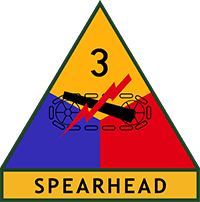
3rd Armored Division
U.S. Army
The 3rd Armored Division is a division of the United States Army that was first activated in 1941. It played a crucial role in World War II, participating in major battles such as the Battle of the Bulge and the liberation of concentration camps. The division was reactivated in the 1950s during the Cold War and saw action in the Gulf War before being deactivated in 1992. The 3rd Armored Division has a long history of valor and service to the nation, earning numerous awards and honors for its contributions to the defense of freedom and democracy.
303rd ASA Battalion
U.S. Army
The 303rd Army Security Agency (ASA) Battalion was activated in 1950 to provide signals intelligence (SIGINT) and electronic warfare support for U.S. Army operations. Initially formed during the early stages of the Cold War, the battalion served in Korea, conducting intercept and analysis of enemy communications. Throughout the Vietnam War, the 303rd ASA Battalion played a critical role in gathering intelligence on Viet Cong and North Vietnamese forces, supporting tactical and strategic decision-making. The battalion’s legacy is marked by its contributions to intelligence operations and its adaptation to rapidly evolving communications technology until its eventual deactivation and integration into successor intelligence units.