
Loading dashboard
Preparing your dashboard…
Loading dashboard
Preparing your dashboard…
U.S. Navy
Branch
U.S. Navy
USS Truxtun (DLGN-35)
U.S. Navy
USS Truxtun (DLGN-35), later reclassified as CGN-35, was a nuclear-powered guided missile cruiser commissioned into the United States Navy in 1967. As the fifth ship named after Commodore Thomas Truxtun, she played a vital role in carrier task force escort duties, participating in operations during the Vietnam War and later in the Persian Gulf. Truxtun was notable for her advanced nuclear propulsion, which allowed for extended deployments without refueling. After nearly three decades of distinguished service, she was decommissioned in 1995 and subsequently scrapped.
HDCU-111
U.S. Navy
HDCU-111, also known as Helicopter Drone Control Unit 111, was established in 2012 as part of the U.S. Navy’s shift toward integrating unmanned aerial systems within fleet operations. The unit quickly became a pioneer in deploying rotary-wing drone technology for maritime surveillance, anti-submarine warfare, and reconnaissance missions. HDCU-111 played a key role in enhancing situational awareness and real-time data sharing during multi-national exercises in the Pacific and Middle East. Over the years, the unit earned commendations for operational excellence and its innovative contributions to naval drone doctrine.
Naval Nuclear Power School
U.S. Navy
The Naval Nuclear Power School (NNPS) was established in 1955 as part of the United States Navy’s efforts to develop a highly trained force for its growing fleet of nuclear-powered submarines and ships. Originally located in New London, Connecticut, and later moved to Bainbridge, Maryland, the school finally settled in Charleston, South Carolina, in 1998. NNPS provides rigorous academic instruction in nuclear physics, reactor engineering, and thermodynamics to enlisted personnel and officers selected for service in the Navy’s nuclear propulsion program. The school's graduates have played vital roles in operating and maintaining the Navy's nuclear-powered warships, contributing significantly to the United States’ maritime dominance and strategic deterrence capabilities.
33RD IBCT US ARMY
U.S. Army
The 33rd Infantry Brigade Combat Team (IBCT) is a unit of the Illinois Army National Guard, tracing its lineage back to the 33rd Infantry Division which served with distinction in World War I and World War II. Reorganized as a brigade in the early 21st century, the 33rd IBCT has participated in numerous training and operational deployments, including missions in Afghanistan as part of Operation Enduring Freedom. The brigade specializes in light infantry operations, providing rapid deployment capabilities for both federal missions abroad and state emergency responses at home. Throughout its history, the 33rd IBCT has upheld a legacy of service and adaptability, embodying the motto "Golden Cross."
MIUWU-105
U.S. Navy
Mobile Inshore Undersea Warfare Unit 105 (MIUWU-105) was a United States Navy Reserve unit established as part of the Mobile Inshore Undersea Warfare (MIUW) program, designed to provide harbor and coastal surveillance and security. Activated during the Cold War, MIUWU-105 specialized in deploying mobile sensor and communications equipment to monitor and defend against underwater and surface threats in littoral environments. The unit participated in numerous training exercises, supporting fleet operations and joint task forces, and was periodically mobilized for real-world contingencies, including during Operations Desert Shield and Desert Storm. MIUWU-105 was eventually decommissioned as part of broader restructuring within Navy Expeditionary Combat Command, but its contributions remain a testament to the adaptability and readiness of Naval Reserve forces.
NROTC UC BERKELEY
U.S. Navy
The Naval Reserve Officers Training Corps (NROTC) unit at UC Berkeley was established in 1926, making it one of the oldest NROTC programs in the nation. Throughout its history, the unit has trained and commissioned thousands of Navy and Marine Corps officers, many of whom have served with distinction in conflicts from World War II to the present day. The program was temporarily disbanded in 1971 due to campus and national opposition to the Vietnam War but was later reinstated in 2017 as part of a renewed commitment to military education at Berkeley. Today, the NROTC UC Berkeley unit continues its legacy of developing leaders for service in the United States Navy and Marine Corps.
HDCU-113
U.S. Navy
**HDCU-113 Military Unit History:** HDCU-113, officially known as the 113th Helicopter Drone Control Unit, was established in 1987 as part of the United States Army’s efforts to integrate unmanned aerial systems into battlefield operations. Originally tasked with remote piloting and support of rotary-wing drone surveillance missions, HDCU-113 played a pivotal role during Operation Desert Storm, providing real-time reconnaissance and target acquisition for coalition forces. Throughout the 1990s and early 2000s, the unit continued to evolve, adopting cutting-edge drone technologies and expanding its mission scope to include electronic warfare and logistics support. Today, HDCU-113 remains at the forefront of Army drone operations, recognized for its innovation, adaptability, and significant contributions to modern military strategy.
Uss Sides (FFG-14)
U.S. Navy
USS Sides (FFG-14) was an Oliver Hazard Perry-class guided-missile frigate commissioned into the United States Navy in 1981. Named in honor of Admiral John H. Sides, the ship served primarily in the Pacific Fleet, undertaking missions ranging from escort duties to anti-submarine warfare and maritime security operations. USS Sides notably participated in Operation Earnest Will in the late 1980s, escorting reflagged Kuwaiti tankers through the Persian Gulf during the Iran-Iraq War. After nearly two decades of service, the frigate was decommissioned in 2001 and later scrapped.
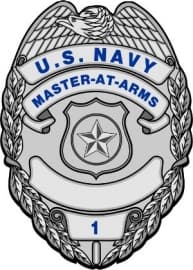
Security Forces(Navy)
U.S. Navy
**Security Forces (Navy)** are specialized units within naval services responsible for safeguarding naval installations, assets, and personnel. Their origins trace back to the need for dedicated shore-based protection during the 20th century, expanding significantly during World War II as naval bases became targets for sabotage and espionage. Over the decades, their mission has evolved to include anti-terrorism, force protection, and law enforcement duties both ashore and afloat. Today, Navy Security Forces are highly trained in physical security, access control, emergency response, and the use of advanced security technologies to ensure the safety and operational integrity of naval operations worldwide.
NCWGRU:MESGRU ONE
U.S. Navy
**NCWGRU/MESGRU ONE (Naval Coastal Warfare Group ONE / Maritime Expeditionary Security Group ONE)** has its origins in the Cold War era, when the U.S. Navy recognized the need for specialized forces to protect harbors, ports, and coastal areas. Originally established as Naval Coastal Warfare Group ONE, the unit was tasked with providing security for critical maritime infrastructure and supporting amphibious operations. In 2004, the unit was redesignated as Maritime Expeditionary Security Group ONE (MESGRU ONE) to reflect its broader expeditionary and security mission, including anti-terrorism, force protection, and maritime interdiction operations. Based on the West Coast, MESGRU ONE has deployed worldwide in support of major operations, safeguarding U.S. and allied assets in conflict zones and high-threat environments.
NCWRON33
U.S. Navy
Navy Cargo Handling Battalion (NCHB) 33, previously known as Navy Cargo Handling and Port Group (NCHPGRU) 33 and also referred to as Navy Cargo Handling Battalion (NCHB) 33 or Naval Cargo Handling Battalion (NCWRON) 33, is a United States Navy Reserve unit specializing in expeditionary logistics and cargo operations. Activated in 1994, NCWRON 33 provides highly trained personnel capable of conducting cargo handling, port operations, and supply support in both combat and humanitarian missions worldwide. The unit has supported numerous major exercises and operations, including deployments in support of Operation Iraqi Freedom and Operation Enduring Freedom, as well as disaster relief efforts. NCWRON 33 is headquartered at Joint Expeditionary Base Little Creek-Fort Story, Virginia, and continues to play a vital role within the Navy Expeditionary Logistics Support Group (NAVELSG).
NUCLEAR POWER TRAINING UNIT (NPTU) NRF IDAHO FALLS ID
U.S. Navy
The Nuclear Power Training Unit (NPTU) NRF Idaho Falls, Idaho, has played a critical role in the training of U.S. Navy nuclear propulsion personnel since its establishment in the 1950s. Located at the Naval Reactors Facility (NRF) within the Idaho National Laboratory, NPTU Idaho Falls provided hands-on training using land-based prototypes of naval nuclear reactors, including models based on submarine and aircraft carrier reactor designs. Thousands of officers and enlisted personnel underwent rigorous instruction and practical experience at the site, ensuring a highly skilled workforce for the Navy's nuclear-powered fleet. The NPTU at Idaho Falls was instrumental in supporting the Navy’s nuclear program for decades, until the decommissioning of its training prototypes, with training now consolidated at other NPTU locations.
USS EXCEL (MSO-439)
U.S. Navy
USS EXCEL (MSO-439) was an Aggressive-class minesweeper commissioned by the United States Navy in 1955. Designed for clearing naval mines to ensure safe passage for fleets, she served primarily in the Pacific Fleet during the Cold War, participating in numerous exercises and patrols, including deployments to the Western Pacific and the Vietnam War to support Operation Market Time. Her wooden hull and non-magnetic construction were critical for reducing vulnerability to magnetic mines. After decades of service, USS EXCEL was decommissioned in 1992 and eventually struck from the Naval Vessel Register, marking the end of her distinguished career in mine countermeasure operations.
MARSECGRU ONE
U.S. Coast Guard
**MARSECGRU ONE** (Maritime Security Group One) was established in the early 2000s in response to increasing maritime security threats and the need for specialized naval protection forces. The unit’s primary mission has focused on conducting anti-terrorism, force protection, and security operations for U.S. Navy vessels and critical maritime infrastructure worldwide. MARSECGRU ONE gained recognition for its deployments in volatile regions, including the Persian Gulf and the Horn of Africa, where it provided vital security during key maritime operations. Over the years, the unit has earned commendations for its adaptability, professionalism, and contributions to global maritime security initiatives.
USS White Plains (AFS-4)
U.S. Navy
USS White Plains (AFS-4) was a Mars-class combat stores ship commissioned by the United States Navy in 1968. Named after the Battle of White Plains from the American Revolutionary War, the vessel provided vital logistical support by delivering food, ammunition, and other supplies to ships at sea, primarily in the Pacific Fleet. White Plains played a significant role during the Vietnam War and later supported operations throughout the Western Pacific and Indian Ocean. After over two decades of distinguished service, she was decommissioned in 1995 and eventually scrapped.
USS California (CGN-36)
U.S. Navy
USS California (CGN-36) was a nuclear-powered guided missile cruiser commissioned into the United States Navy on February 16, 1974. As the lead ship of the California-class, she was designed to provide air defense and anti-submarine warfare capabilities for carrier battle groups during the Cold War. Over her service, USS California participated in numerous deployments, including operations in the Mediterranean, Indian Ocean, and Persian Gulf, notably escorting vital convoys and supporting U.S. interests overseas. After over two decades of distinguished service, she was decommissioned on July 9, 1999, as advancements in naval technology and high operating costs led to the retirement of her class.