
Loading dashboard
Preparing your dashboard…
Loading dashboard
Preparing your dashboard…
U.S. Army
Branch
U.S. Army
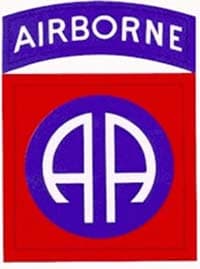
82nd Airborne
U.S. Army
The 82nd Airborne Division is a specialized infantry division of the United States Army. It is known for its rapid deployment capability and ability to conduct airborne operations. The division has a long and storied history, playing a crucial role in World War II, the Korean War, Vietnam War, Operation Urgent Fury in Grenada, Operation Just Cause in Panama, the Gulf War, and more recently in Iraq and Afghanistan. The 82nd Airborne Division is based at Fort Bragg, North Carolina, and remains one of the most highly trained and ready divisions in the U.S. Army.
1:9 INF
U.S. Army
The 1st Battalion, 9th Infantry Regiment (1/9 INF), known as "The Manchus," is a storied unit of the United States Army with origins dating back to 1855. Throughout its history, 1/9 INF has served in major conflicts, including the Indian Wars, the Philippine-American War, World War II, the Korean War, and the Vietnam War, where it earned a fierce reputation for its combat effectiveness. During the Vietnam War, the battalion was famously nicknamed “The Walking Dead” due to its exceptionally high casualty rate and relentless operational tempo. Today, 1/9 INF continues to uphold its proud legacy as part of the modern U.S. Army, adapting to new challenges and missions worldwide.
4th Battalion 31st Infantry Division
U.S. Army
The 4th Battalion, 31st Infantry Division, known as part of the "Dixie Division," traces its origins to World War I, when the 31st Infantry Division was formed from National Guard units primarily from Alabama, Florida, Louisiana, and Mississippi. During World War II, the division, including its 4th Battalion, was federalized and saw service in the Pacific Theater, notably participating in the liberation of the Philippines and subsequent occupation duties in Japan. The 31st Infantry Division was reactivated during the Korean War era, with its battalions, including the 4th, serving primarily in a training and reserve capacity. Over the years, the unit underwent several reorganizations before ultimately being inactivated as part of postwar military restructuring.