
USN
589,473 members•3,203 units
Opening branch overview
Building the branch home surface
Loading branch highlights, featured unit context, and gallery moments.
Overview
Members
Units
589,473 members•3,203 units
Building the branch home surface
Loading branch highlights, featured unit context, and gallery moments.
Building the branch units surface
Loading unit filters, rankings, and the branch unit grid.
USS KEARSARGE CVS33
U.S. Navy
USS KEARSARGE (CV-33), later redesignated CVS-33, was an Essex-class aircraft carrier commissioned by the United States Navy in 1946. Initially serving in the immediate post-World War II period, she participated in training and readiness operations before being modernized and redeployed during the Korean War, where she conducted combat operations and air support missions. In the late 1950s and early 1960s, KEARSARGE was converted to an anti-submarine warfare carrier (CVS) and played a significant role in Cold War operations, including serving as the primary recovery ship for several NASA space missions. The ship was decommissioned in 1970 after nearly 25 years of distinguished service.
USS Leyte Gulf CG 55
U.S. Navy
USS Leyte Gulf (CG 55) is a Ticonderoga-class guided-missile cruiser commissioned into the United States Navy on September 26, 1987. Named after the decisive World War II Battle of Leyte Gulf, the ship has served extensively in the Atlantic and Mediterranean, supporting carrier strike groups, conducting maritime security operations, and participating in major exercises and deployments. Notably, USS Leyte Gulf has been involved in operations such as Desert Storm, Enduring Freedom, and Iraqi Freedom, providing air defense and surface warfare capabilities. Over its distinguished service, the cruiser has received numerous awards for operational excellence and remains a key asset in the U.S. Navy’s surface fleet.
USS Lockwood (FF-1064)
U.S. Navy
USS Lockwood (FF-1064) was a Knox-class frigate commissioned by the United States Navy in 1971. Named after Vice Admiral Charles A. Lockwood, a prominent submarine commander during World War II, the ship was primarily tasked with anti-submarine warfare and escort duties during the Cold War. Throughout her service, Lockwood participated in numerous exercises and deployments, including operations in the Pacific and Indian Oceans, as well as supporting US interests in the Western Pacific. After more than two decades of service, USS Lockwood was decommissioned in 1992 and subsequently transferred to the Turkish Navy, where she served as TCG Karadeniz (F-255).
USS Manitowoc (LST-1180)
U.S. Navy
USS Manitowoc (LST-1180) was a Newport-class tank landing ship commissioned by the United States Navy in 1971. Designed to transport and deploy tanks, vehicles, and troops directly onto shore, she served extensively with the Atlantic Fleet and participated in multiple training exercises and amphibious operations. Manitowoc supported NATO exercises, Caribbean deployments, and humanitarian missions, reflecting the versatility of the Newport-class design. Decommissioned in 1993, she was later transferred to the Republic of China Navy, where she served as ROCS Chung Ho (LST-225).
USS Manley (DD-940)
U.S. Navy
USS Manley (DD-940) was a Forrest Sherman-class destroyer commissioned by the United States Navy in 1957. Named after Captain John Manley, a notable figure from the American Revolutionary War, the ship served extensively during the Cold War era. Manley participated in significant operations including the Cuban Missile Crisis blockade in 1962 and deployments during the Vietnam War, providing naval gunfire support. The destroyer continued service through NATO exercises and Mediterranean deployments until being decommissioned in 1983.
USS Meyerkord (FF-1058)
U.S. Navy
USS **Meyerkord (FF-1058)** was a Knox-class frigate commissioned into the United States Navy in 1969. Named in honor of Lieutenant Harold Dale Meyerkord, a Navy officer killed in action during the Vietnam War, the ship served primarily in anti-submarine warfare roles throughout the Cold War. Meyerkord participated in various Pacific Fleet operations, including multiple deployments to the Western Pacific and Indian Ocean, supporting U.S. interests and allied exercises. The frigate was decommissioned in 1991 and later transferred to Turkey, where she served as **TCG Karadeniz (F-255)** until her retirement from active duty.
USS Mississinewa (AO-144)
U.S. Navy
USS Mississinewa (AO-144) was a Neosho-class fleet oiler commissioned into the United States Navy in 1955. Primarily serving with the Atlantic Fleet, she played a crucial role in refueling and replenishing naval vessels at sea, enhancing fleet endurance during Cold War operations. The ship participated in numerous Mediterranean deployments and supported U.S. naval activities during crises such as the Lebanon intervention in 1958. After nearly three decades of service, USS Mississinewa was decommissioned in 1991 and subsequently struck from the Naval Vessel Register.
USS Myles C. Fox (DD-829)
U.S. Navy
USS Myles C. Fox (DD-829) was a Gearing-class destroyer commissioned in the United States Navy in 1945. Named after Marine Lieutenant Myles C. Fox, a posthumous Navy Cross recipient from World War II, the ship served prominently through the Cold War era. She participated in the Korean War, providing naval gunfire support and screening aircraft carriers, and later saw action in the Vietnam War with shore bombardments and anti-submarine patrols. After decades of service, USS Myles C. Fox was decommissioned in 1979 and subsequently transferred to the Republic of China Navy, where she continued service as ROCS Liao Yang.
USS Noa (DD-841)
U.S. Navy
USS Noa (DD-841) was a Gearing-class destroyer commissioned by the United States Navy in 1945, shortly after the conclusion of World War II. Serving through the Cold War era, Noa participated in numerous operations, including NATO exercises, Mediterranean deployments, and anti-submarine warfare missions. Notably, in 1962, USS Noa played a key role in the recovery of astronaut John Glenn after his historic Mercury-Atlas 6 spaceflight. The destroyer continued active service until her decommissioning in 1973, after which she was transferred to the Spanish Navy.
USS Ouellet (FF-1077)
U.S. Navy
USS Ouellet (FF-1077) was a Knox-class frigate commissioned into the United States Navy in 1970. Named in honor of Ensign David Ouellet, a Medal of Honor recipient from the Vietnam War, the ship specialized in anti-submarine warfare and participated in numerous Pacific Fleet operations, including deployments to the Western Pacific and the Indian Ocean. Ouellet played a key role in Cold War naval exercises and supported U.S. interests in the Asia-Pacific region throughout her service. The frigate was decommissioned in 1993 and later transferred to the Royal Thai Navy, where she served as HTMS Phutthayotfa Chulalok (FFG-461).
USS Power (DD-839)
U.S. Navy
USS Power (DD-839) was a Gearing-class destroyer commissioned into the United States Navy in September 1945, just after the end of World War II. Throughout her service, Power operated extensively in the Atlantic and Mediterranean, participating in NATO exercises and serving with the 6th Fleet during the Cold War. She played roles in crises such as the Lebanon intervention in 1958 and the Cuban Missile Crisis in 1962. After nearly three decades of active service, USS Power was decommissioned in 1977 and later transferred to the Republic of China (Taiwan), where she served as ROCS Shen Yang (DD-923).
USS RICH DD820
U.S. Navy
USS RICH (DD-820) was a Gearing-class destroyer commissioned by the United States Navy in July 1946. Named in honor of Lieutenant (junior grade) Ralph McMaster Rich, a Navy pilot killed in action during World War II, the ship served extensively during the Cold War era. Throughout her career, USS RICH participated in numerous NATO exercises, Mediterranean deployments with the 6th Fleet, and provided support during the Cuban Missile Crisis and Vietnam War. Decommissioned in 1977, she was later sold for scrap, having served over three decades as a vital component of the U.S. Navy's destroyer force.
USS San Bernardino (LST-1189)
U.S. Navy
USS San Bernardino (LST-1189) was a Newport-class tank landing ship commissioned by the United States Navy in 1971. Designed to transport and deploy tanks, vehicles, and troops directly onto shore without docks, she served during the final years of the Vietnam War, supporting amphibious operations and logistics. Throughout her service, San Bernardino participated in numerous exercises and deployments in the Pacific and Indian Oceans, enhancing U.S. amphibious capabilities. Decommissioned in 1995, the vessel was later transferred to the Chilean Navy, where she continued her service under the name Valdivia (LST-93).
USS The Sullivans (DDG-68)
U.S. Navy
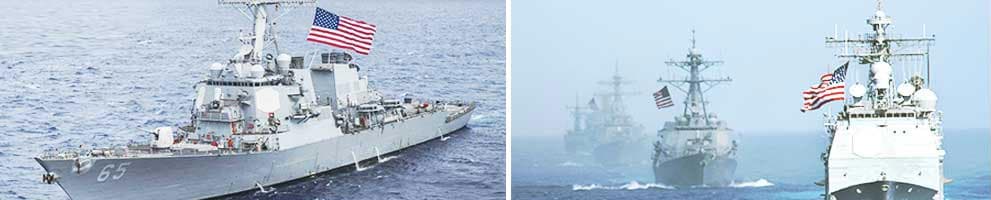
USS The Sullivans (DDG-68) is an Arleigh Burke-class guided missile destroyer commissioned into the United States Navy on April 19, 1997. Named in honor of the five Sullivan brothers who tragically lost their lives aboard USS Juneau during World War II, the ship embodies their legacy of sacrifice and service. Throughout its service, USS The Sullivans has participated in numerous operations, including maritime security patrols, joint exercises with allied navies, and support missions in the Global War on Terrorism. The ship continues to serve as a vital component of the U.S. Navy’s surface fleet, upholding the memory of the Sullivan brothers through dedication and excellence at sea.
USS Theodore E. Chandler (DD-717)
U.S. Navy
USS Theodore E. Chandler (DD-717) was a Gearing-class destroyer commissioned by the United States Navy in 1945. Named after Rear Admiral Theodore E. Chandler, the ship served extensively in the post-World War II era, including significant deployments during the Korean and Vietnam Wars. In Korea, she provided gunfire support and escorted carrier task forces, earning five battle stars for her service. During the Vietnam War, Theodore E. Chandler carried out naval gunfire missions and patrol duties before being decommissioned in 1975 and transferred to the Republic of China Navy.
USS Vega (AF-59)
U.S. Navy
USS Vega (AF-59) was an Alstede-class stores ship commissioned by the United States Navy in 1956. Designed to provide underway replenishment of food, refrigerated items, and dry goods, she played a crucial logistical role in supporting fleet operations, particularly in the Pacific. During her service, Vega participated in numerous deployments, including support missions during the Vietnam War, ensuring frontline units remained supplied in combat zones. After nearly two decades of service, USS Vega was decommissioned in 1977 and later struck from the Naval Vessel Register.
USS Vesole (DD-878)
U.S. Navy
USS Vesole (DD-878) was a Gearing-class destroyer of the United States Navy, commissioned in April 1945 near the end of World War II. Named in honor of Ensign Kay K. Vesole, who was killed in action during World War II, the ship served in various roles throughout her career, including anti-submarine warfare and escort duties. Vesole participated in significant Cold War operations, including deployments during the Korean and Vietnam Wars, as well as supporting NATO exercises in the Atlantic and Mediterranean. After nearly three decades of service, USS Vesole was decommissioned in 1976 and later sold for scrap.
USS Voge (FF-1047)
U.S. Navy
USS Voge (FF-1047) was a Garcia-class frigate of the United States Navy, commissioned in 1966. Named after Rear Admiral Richard George Voge, the ship primarily served in anti-submarine warfare roles during the Cold War. In 1976, USS Voge was involved in a notable collision with the Soviet submarine K-22 in the Mediterranean Sea, highlighting the intensity of US-Soviet naval encounters. The vessel continued its service until decommissioning in 1989, after which it was eventually scrapped.
USS Wright (CC-2)
U.S. Navy
USS Wright (CC-2) was a planned Lexington-class battlecruiser for the United States Navy, laid down in 1921 at the Newport News Shipbuilding Company. Named after the Wright brothers, the ship was part of a class designed during World War I to counter new fast battleships and cruisers. However, construction was halted and ultimately canceled in 1923 following the Washington Naval Treaty, which imposed strict limits on capital ship construction. The incomplete hull was scrapped on the slipway, and the name Wright was later reassigned to other Navy vessels.
VA 95 green lizards
U.S. Navy
Attack Squadron 95 (VA-95), known as the "Green Lizards," was a United States Navy attack squadron established in 1972 and based at Naval Air Station Whidbey Island, Washington. Flying the A-6 Intruder, the squadron participated in significant operations, including combat missions during Operation Desert Storm in 1991, where it delivered precision strikes against Iraqi targets. The Green Lizards also deployed aboard various aircraft carriers in the Pacific and Indian Oceans, supporting U.S. interests around the globe. VA-95 was decommissioned in 1995 as part of post-Cold War reductions in the Navy’s attack aircraft fleet.
VA-127
U.S. Navy
Attack Squadron 127 (VA-127), also known as the "Royal Blues," was a United States Navy attack squadron established in 1956. Originally formed as VA-126, it was redesignated VA-127 in 1962 and based at NAS Lemoore, California. The squadron's primary mission was to provide advanced jet training for fleet replacement pilots in attack aircraft such as the A-4 Skyhawk. VA-127 played a crucial role in preparing aviators for combat duty during the Vietnam War era. The squadron was disestablished on September 30, 1977.
VAQ-133
U.S. Navy
Electronic Attack Squadron 133 (VAQ-133), known as the "Wizards," was established in 1969 as an electronic warfare unit in the United States Navy. Originally flying the EKA-3B Skywarrior, the squadron later transitioned to the EA-6B Prowler, specializing in electronic attack and suppression of enemy air defenses. VAQ-133 has participated in numerous deployments and combat operations, including missions during the Cold War and in the Middle East. Today, the squadron operates the EA-18G Growler, continuing its vital role in providing electronic warfare support to the fleet.
VAQ-136
U.S. Navy
Electronic Attack Squadron 136 (VAQ-136), known as the "Gauntlets," was established in April 1973. Originally flying the EA-6B Prowler, the squadron was assigned to provide electronic warfare and suppression of enemy air defenses for carrier air wings. VAQ-136 has served aboard numerous aircraft carriers and participated in major operations, including Desert Storm, Enduring Freedom, and Iraqi Freedom. In 2012, the squadron transitioned to the advanced EA-18G Growler aircraft, continuing its legacy of excellence in electronic attack missions.
VF-161
U.S. Navy
VF-161, known as the "Chargers," was a United States Navy fighter squadron established in 1960. Initially flying the F-3 Demon and later transitioning to the F-4 Phantom II, VF-161 was actively involved in combat operations during the Vietnam War, conducting air superiority and strike missions from aircraft carriers in the Western Pacific. The squadron was credited with several aerial victories and played a key role in fleet defense during intense air engagements over North Vietnam. VF-161 was disestablished in 1988 after nearly three decades of distinguished service.