
USN
589,151 members•3,203 units
Opening branch overview
Building the branch home surface
Loading branch highlights, featured unit context, and gallery moments.
Overview
Members
Units
589,151 members•3,203 units
Building the branch home surface
Loading branch highlights, featured unit context, and gallery moments.
Building the branch members surface
Loading branch members, era browse tools, and directory controls.
Brownwater Navy Vietnam
U.S. Navy
The Brownwater Navy was a specialized branch of the United States Navy formed during the Vietnam War to conduct operations in the shallow rivers, canals, and coastal waters of South Vietnam. Officially known as the United States Navy's "Riverine Forces," these units used small, heavily armed boats such as Patrol Boat, River (PBR), Swift Boats (PCF), and Armored Troop Carriers (ATCs) to provide mobility, firepower, and logistical support to U.S. Army and South Vietnamese forces. Brownwater Navy sailors faced constant ambushes, mines, and hostile fire while patrolling the Mekong Delta and other waterways. Their crucial efforts disrupted enemy supply lines, supported ground operations, and played a significant role in counterinsurgency missions throughout the conflict.
Naval Air Station North Island
U.S. Navy
Naval Air Station North Island, located at the north end of the Coronado Peninsula in San Diego, California, is often referred to as the "Birthplace of Naval Aviation." Established in 1917, the base quickly became a central hub for training naval aviators and developing seaplane operations during World War I. Throughout World War II, North Island played a critical role in aircraft maintenance, pilot training, and carrier operations for the Pacific Fleet. Over the decades, it has remained a vital installation, supporting numerous Pacific operations and homeporting several U.S. Navy aircraft carriers and aviation squadrons.
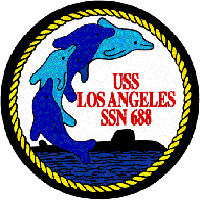
USS Los Angeles
U.S. Navy
The USS Los Angeles refers to multiple vessels in United States Navy history, most notably the airship USS Los Angeles (ZR-3) and the submarine USS Los Angeles (SSN-688). The USS Los Angeles (ZR-3) was a rigid airship built in Germany and delivered to the U.S. Navy in 1924 as part of World War I reparations, serving primarily in experimental and training roles until its decommissioning in 1932. The USS Los Angeles (SSN-688), commissioned in 1976, was the lead ship of the Los Angeles-class nuclear-powered fast attack submarines, playing a critical role in Cold War naval operations and technological advancements in undersea warfare. The submarine remained in service for 34 years before being decommissioned in 2010, marking the end of a distinguished career that helped define modern U.S. submarine capabilities.
RTC Orlando
U.S. Navy
Recruit Training Command Orlando, commonly known as RTC Orlando, was a major United States Navy boot camp located in Orlando, Florida. Opened in 1968, it was established to help meet the growing training demands during the Vietnam War era. RTC Orlando was notable as one of the first Navy training commands to integrate female recruits after the creation of the all-volunteer force in the 1970s. The base trained tens of thousands of sailors until it was closed in 1994 as part of a series of military consolidations, with operations transferred to the remaining Recruit Training Command at Great Lakes, Illinois.
USS Forrestal (CVA 59)
U.S. Navy
The USS Forrestal (CVA-59) was the lead ship of her class and the first "supercarrier" of the United States Navy, commissioned on October 1, 1955. Named after James Forrestal, the first Secretary of Defense, she played a pivotal role in Cold War naval operations, serving in both the Atlantic and Mediterranean fleets. Forrestal notably suffered a catastrophic fire in 1967 while deployed off the coast of Vietnam, resulting in significant loss of life and prompting major improvements in carrier safety procedures. Throughout her service, she participated in numerous exercises, deployments, and crisis responses until her decommissioning in 1993.
USS Dwight D. Eisenhower (CVN-69)
U.S. Navy
USS Dwight D. Eisenhower (CVN-69), a Nimitz-class nuclear-powered aircraft carrier, was commissioned into the United States Navy in October 1977. Named after the 34th U.S. President and World War II Supreme Allied Commander, the "Ike" has played a pivotal role in American naval operations for decades. The carrier has participated in major operations, including Operation Desert Storm in 1991, Operation Enduring Freedom after the 9/11 attacks, and ongoing deployments in the Mediterranean and Persian Gulf regions. Renowned for its versatility and power projection, USS Dwight D. Eisenhower continues to serve as a flagship of U.S. naval might and a key element of carrier strike group deployments worldwide.
Naval Communications Station, Guam
U.S. Navy
Naval Communications Station, Guam (NAVCOMMSTA Guam) was established in 1944 following the liberation of Guam during World War II, serving as a critical communications hub for the U.S. Navy in the Pacific. The station played a pivotal role in the relay of strategic and tactical messages throughout the Cold War, supporting U.S. military operations during the Korean and Vietnam Wars. Its facilities included extensive antenna fields and advanced communications technology, making it one of the largest and most significant naval communications centers in the region. In the late 1990s, NAVCOMMSTA Guam was reorganized and its functions were incorporated into the Naval Computer and Telecommunications Station (NCTS) Guam, continuing its legacy of providing vital communications support to the U.S. Indo-Pacific Command.
airdale
U.S. Navy
**Airdale** is a term historically used in the United States Navy to refer to personnel and units involved in naval aviation. The origins of naval aviation date back to the early 20th century, with the establishment of the first Navy air stations and the integration of aircraft aboard ships. "Airdale" units played crucial roles in World War II, providing reconnaissance, air cover, and direct strikes from aircraft carriers across the Pacific and Atlantic theaters. Over the decades, Navy airdales have continued to evolve, embracing jet technology and advanced carrier operations, remaining at the forefront of American naval power projection.
COMSUBPAC, Pearl Harbor
U.S. Navy
Commander, Submarine Force, U.S. Pacific Fleet (COMSUBPAC), headquartered at Pearl Harbor, Hawaii, was established in 1941 to oversee all U.S. Navy submarine operations in the Pacific. During World War II, COMSUBPAC coordinated submarine patrols that played a decisive role in disrupting Japanese maritime supply lines, significantly contributing to Allied victory. In the Cold War era, the command adapted to new strategic priorities, overseeing the deployment of nuclear-powered submarines and ballistic missile submarines as part of the nation’s nuclear deterrent. Today, COMSUBPAC continues to provide operational control, training, and support for Pacific Fleet submarines, ensuring undersea superiority in the Indo-Pacific region.
U.S. Navy (2026 - 2026)
U.S. Navy Veteran (2026 - Present)
U.S. Navy Active Duty (2025 - Present)
U.S. Navy Parent (2025 - Present)