
Loading dashboard
Preparing your dashboard…
Loading dashboard
Preparing your dashboard…
7,146 units • 1,346,657 members
4th Quartermaster Detachment
U.S. Army
The 4th Quartermaster Detachment is a United States Army Reserve unit specializing in water purification and supply operations. Activated in Greensburg, Pennsylvania, the unit is most remembered for its service during Operation Desert Storm in 1991. On February 25, 1991, the unit suffered a devastating loss when an Iraqi Scud missile struck their barracks in Dhahran, Saudi Arabia, resulting in 13 soldiers killed and 43 wounded—the single greatest loss of life for a U.S. unit during the Gulf War. Since then, the 4th Quartermaster Detachment has continued to serve with distinction, supporting military operations and humanitarian missions both at home and abroad.
4th Recruit Training Battalion, Oscar Company, Platoon 4023
U.S. Army
The 4th Recruit Training Battalion is a unit within the United States Marine Corps Recruit Depot Parris Island, responsible for training and transforming female recruits into United States Marines. Oscar Company, as part of the battalion, upholds the proud traditions and rigorous standards of Marine Corps boot camp. Platoon 4023, activated for specific recruit training cycles, has contributed to the battalion’s mission by graduating new Marines ready for service. Throughout its history, the 4th Recruit Training Battalion has played a vital role in integrating women into the Marine Corps and maintaining the Corps’ legacy of excellence and discipline.
4th terminal service LONG BEIN Vietnam
U.S. Army
The 4th Terminal Service Company was a U.S. Army logistics unit stationed at Long Binh, Vietnam, during the Vietnam War. Activated to provide critical port and cargo handling operations, the company supported the massive logistical flow through the Long Binh Post, the largest U.S. Army base in Vietnam. Its personnel managed the receipt, storage, and distribution of essential supplies, equipment, and ammunition, ensuring frontline troops remained well-equipped. The 4th Terminal Service Company played a vital role in sustaining military operations throughout the conflict until the drawdown of American forces.
5:78th
U.S. Army
The 5th Battalion, 78th Field Artillery Regiment (5/78th FA) has a distinguished history within the United States Army. Originally constituted during World War I, the unit has undergone various activations and redesignations, serving in key artillery roles in both European and domestic assignments. During the Cold War, the 5/78th was stationed in Germany, providing critical fire support as part of NATO forces. In more recent decades, the battalion has been involved in training operations at Fort Sill, Oklahoma, upholding its legacy of excellence in artillery proficiency and soldier readiness.
5012 WAC Detachment
U.S. Army
The 5012th WAC Detachment was a unit in the Women's Army Corps (WAC) during the mid-20th century, primarily active in the post-World War II era. Stationed at various locations, including overseas assignments such as in Germany and Japan, the detachment provided vital administrative, logistical, and support services to U.S. Army operations. Members of the 5012th WAC Detachment played a key role in maintaining military efficiency during the occupation and rebuilding periods. The unit’s contributions reflected the expanding roles of women in the U.S. military during the early Cold War years.
504th asa
U.S. Army
The 504th Army Security Agency (ASA) Company was a U.S. Army signals intelligence (SIGINT) unit active during the Vietnam War. Established in the early 1960s, the 504th ASA was responsible for intercepting and analyzing enemy communications, providing valuable intelligence to support combat operations. The unit operated throughout Vietnam, often working closely with combat units and participating in several major campaigns. After the Vietnam War, the 504th ASA was inactivated as the Army restructured its intelligence assets and transitioned into the modern Military Intelligence Corps.
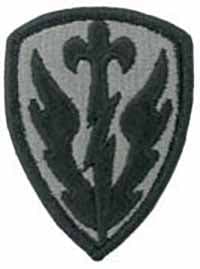
504TH MI BDE
U.S. Army
Unit with 40 member associations.
5053d USAR School
U.S. Army
The 5053d USAR School was a United States Army Reserve unit focused on providing advanced military education and training to Army Reserve personnel. Established during the Cold War era, the school specialized in leadership development, staff procedures, and specialized military subjects to maintain readiness among Reserve officers and noncommissioned officers. It conducted courses and exercises designed to mirror active-duty standards, ensuring seamless integration during mobilization. The 5053d USAR School played a significant role in supporting the Army Reserve’s mission until its deactivation or reorganization as part of broader post-Cold War restructuring.
505th MP Battalion 6th Army
U.S. Army
The 505th Military Police Battalion was activated during World War II as part of the 6th Army, providing military police support for critical operations in the Pacific Theater. The battalion played a key role in maintaining order, security, and prisoner management during the liberation of the Philippines and subsequent occupation duties in Japan. Following the war, the 505th MP Battalion continued to serve with distinction, supporting law enforcement, security, and mobility operations for the 6th Army during the early Cold War period. Its legacy reflects a tradition of discipline and service in both combat and peacetime environments.
505th TTSB BRIGADE
U.S. Army
The 505th Tactical Theater Signal Brigade (TTSB) was established to provide advanced communications and information systems support for deployed military forces. Throughout its history, the brigade has played a pivotal role in enabling command and control across theater-level operations, particularly during joint and coalition missions. The 505th TTSB has deployed in support of major operations, ensuring robust, secure, and reliable communications networks in challenging environments. The brigade continues to adapt to emerging technologies and evolving battlefield requirements, maintaining its reputation as a critical enabler of mission success.
5064th Garrison 123 Arcom
U.S. Army
The **5064th Garrison, 123 ARCOM** was established during the late Cold War era as part of the United States Army Reserve Command structure. Tasked with providing base operations and logistical support, the unit played a critical role in maintaining readiness for reserve forces assigned to the region. Throughout its history, the 5064th Garrison supported numerous training exercises, mobilizations, and joint operations with both active duty and other reserve components. Its legacy is marked by its dedication to sustaining operational capabilities and supporting the mission objectives of the 123rd Army Reserve Command (ARCOM).
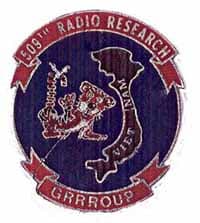
509TH RADIO RESEARCH GROUP
U.S. Army
Unit with 54 member associations.
50th AAA Brigade
U.S. Army
The 50th Anti-Aircraft Artillery (AAA) Brigade was originally constituted during World War II to provide air defense against enemy aircraft threatening Allied ground forces and strategic assets. Activated in 1943, the brigade was deployed to the European Theater, supporting major operations such as the Normandy invasion and the subsequent advance into Germany. Post-war, the 50th AAA Brigade continued service during the early Cold War period, adapting to evolving aerial threats and transitioning to updated air defense systems. The unit was eventually inactivated as part of broader restructuring, but its legacy endures as a testament to the critical role of air defense in modern warfare.
510th FA Artillary BTN
U.S. Army
The 510th Field Artillery Battalion (FA BTN) was activated during World War II to provide crucial artillery support for frontline infantry operations. Throughout the European Theater, the battalion was equipped with 155mm howitzers and played a significant role in major campaigns, including the Normandy landings and the Battle of the Bulge. The 510th earned commendations for its accurate and sustained fire, contributing to the success of Allied offensives. After the war, the battalion was inactivated but was later reconstituted during the Cold War era, serving as part of the U.S. Army’s reserve artillery forces.
514 Transportation
U.S. Army
The 514th Transportation Company is a unit within the United States Army Reserve, originally constituted during World War II to support logistical operations. Throughout its history, the 514th has been tasked with providing motor transport services, including the movement of personnel, equipment, and supplies in both peacetime and combat environments. The unit has been activated for various missions, including support during Operations Desert Storm, Iraqi Freedom, and Enduring Freedom, showcasing its adaptability and commitment to mission success. Renowned for its professionalism and operational excellence, the 514th Transportation Company continues to play a vital role in ensuring the Army’s logistical readiness.
51st. Air Defense
U.S. Army
The **51st Air Defense** unit has played a critical role in protecting airspace and supporting military operations since its establishment. Originally formed during the Cold War era, the unit was tasked with operating advanced radar and missile systems to detect and intercept potential aerial threats. Over the decades, the 51st adapted to evolving technologies, integrating modern air defense platforms and participating in joint exercises with allied forces. Its legacy includes distinguished service in both peacetime vigilance and active conflict zones, underscoring its enduring commitment to national and allied security.
520th Medical Clearing Company
U.S. Army
The 520th Medical Clearing Company was a specialized medical unit in the United States Army, activated during World War II. Its primary mission was to provide medical treatment and triage to wounded soldiers near the front lines, stabilizing patients for further evacuation to field hospitals. The company participated in several major campaigns in the European Theater, including the Normandy landings and the subsequent drive across France and into Germany. After the war, the 520th Medical Clearing Company was inactivated as part of the broader post-war demobilization efforts.
521st FA
U.S. Army
The 521st Field Artillery (FA) was constituted during World War II as part of the United States Army’s rapid expansion to meet global combat requirements. Activated in 1944, the unit provided critical fire support during campaigns in the European Theater, notably participating in the Rhineland and Central Europe operations. The 521st FA earned commendations for its accuracy and reliability in supporting infantry advances and neutralizing enemy positions. After the war, the unit was inactivated as part of the Army’s postwar drawdown, but its legacy continues through lineage connections with modern artillery formations.
523rd Geodetic Survey Unit
U.S. Army
The 523rd Geodetic Survey Unit was a specialized military unit responsible for conducting precise geodetic and topographic surveys to support military operations. Activated in the mid-20th century, the unit provided essential mapping, positioning, and navigational data crucial for artillery, aviation, and engineering units. Its highly trained teams employed advanced surveying instruments and techniques to establish control points and geodetic networks in both domestic and overseas theaters. The 523rd played a vital role in ensuring the accuracy of military maps and contributed significantly to the success of numerous operations before being inactivated as technological advancements rendered traditional survey methods obsolete.
524 PSC
U.S. Army
524th Personnel Service Company (524 PSC) is a U.S. Army unit whose primary mission centered on providing personnel, administrative, and human resources support to soldiers and units within its operational area. The unit has historically been assigned to support larger formations, such as divisions or corps, ensuring critical functions like casualty reporting, awards processing, and mail distribution. During its service, the 524 PSC has deployed in support of major operations, including those in Southwest Asia, where it played a vital role in sustaining force readiness. The unit is recognized for its professionalism and the essential behind-the-scenes contributions that keep military organizations functioning effectively.
526 cc&s
U.S. Army
The 526th Combat Communications Squadron (526 CC&S), originally activated during the Cold War, has played a crucial role in providing deployable communications and air traffic services for U.S. Air Force operations. Stationed at various times in Europe and the United States, the squadron supported both contingency and peacetime missions, ensuring command and control capabilities for air operations. Throughout its history, the 526th participated in key exercises and deployments, including support for NATO operations and rapid response during crises. Its legacy is marked by adaptability, technological expertise, and a commitment to mission success in diverse environments.
528th Med Lab
U.S. Army
The 528th Medical Laboratory was a specialized unit within the United States Army, originally activated during World War II. Its primary mission was to provide medical laboratory services, including disease diagnosis and environmental health analysis, in support of combat and garrison operations. The unit played a critical role in ensuring troop health by identifying infectious agents and analyzing samples from the field. Over the years, the 528th Medical Laboratory supported various overseas operations and was recognized for its technical excellence and adaptability in diverse environments.
528th MI unit (interrogation)
U.S. Army
The 528th Military Intelligence Battalion (Interrogation) traces its lineage to the U.S. Army’s efforts to provide specialized intelligence support to special operations forces. Activated in the late 20th century, the unit became a crucial component of the 528th Sustainment Brigade (Special Operations) (Airborne), providing dedicated human intelligence (HUMINT) and interrogation capabilities. The battalion supported operations in conflicts such as Operation Enduring Freedom and Operation Iraqi Freedom, where its interrogators played vital roles in gathering actionable intelligence from detainees. Known for their advanced training and integration with special operations, the 528th MI’s interrogation teams have contributed significantly to mission success in sensitive and high-risk environments.

528TH SOSB
U.S. Army
Unit with 40 member associations.