
Loading dashboard
Preparing your dashboard…
Loading dashboard
Preparing your dashboard…
7,146 units • 1,346,702 members
3rd 156 infantry Louisiana national guard
U.S. Army
The 3rd Battalion, 156th Infantry Regiment is a historic unit of the Louisiana Army National Guard, tracing its lineage back to the 19th century. It was originally organized in the Louisiana Militia and has served in major conflicts, including World War I and World War II as part of the 31st "Dixie" Division. In more recent history, the 3-156th Infantry has participated in overseas deployments in support of Operations Iraqi Freedom and Enduring Freedom. The battalion continues to serve as a key component of the 256th Infantry Brigade Combat Team, providing trained infantry forces for both state and federal missions.
3rd Div AMU
U.S. Army
The 3rd Division Army Marksmanship Unit (3rd Div AMU) traces its origins to the mid-20th century, established to enhance marksmanship proficiency within the 3rd Infantry Division. Tasked with developing elite shooters, the unit rapidly gained recognition in national and international marksmanship competitions, contributing to the division’s reputation for excellence. Over the decades, the 3rd Div AMU has played an integral role in training soldiers, refining small arms tactics, and supporting operational readiness. Its continued commitment to marksmanship excellence reinforces the combat effectiveness and prestige of the 3rd Infantry Division.
3rd Engr Bn, 3rd Mar.Div
U.S. Army
The 3rd Engineer Battalion (3rd Engr Bn) is a combat engineer unit that has served as part of the 3rd Marine Division (3rd Mar.Div) of the United States Marine Corps. Activated during World War II, the battalion provided vital engineering, mobility, and demolition support during major Pacific campaigns, including the battles of Bougainville, Guam, and Iwo Jima. In the decades since, the 3rd Engr Bn has participated in numerous operations, offering construction, obstacle breaching, and survivability enhancements for Marine forces. Today, the battalion remains a key component of the 3rd Marine Division, supporting expeditionary operations throughout the Indo-Pacific region.
3rd General Hospital
U.S. Army
The 3rd General Hospital was a U.S. Army medical unit originally organized during World War I, primarily staffed by personnel from Columbia University and Presbyterian Hospital in New York. Reactivated for World War II, the unit was deployed to the European Theater, where it provided crucial medical care to wounded Allied soldiers following the D-Day invasions. Stationed in locations such as England and later France, the 3rd General Hospital treated thousands of casualties, playing a vital role in the success of Allied medical operations. Its legacy is marked by professionalism, innovation in battlefield medicine, and a commitment to saving lives under challenging conditions.
3rd HU Field Hospital Leghorn, Italy
U.S. Army
The 3rd Hospital Unit (HU) Field Hospital was a U.S. Army medical facility stationed at Leghorn (now Livorno), Italy, during the post-World War II era. Established as part of the American military presence in Italy, the unit provided medical support to U.S. forces and their dependents in the region. The hospital played a crucial role in treating service members during the early years of the Cold War, offering a range of medical and surgical services. Its presence contributed significantly to the health and readiness of U.S. military personnel stationed in southern Europe until its eventual deactivation.
3rd Missile Battalion : 79th Field Artillery
U.S. Army
The 3rd Missile Battalion, 79th Field Artillery was originally constituted in 1916 as part of the 79th Field Artillery Regiment. It was redesignated as the 3rd Missile Battalion during the Cold War, reflecting its new role in the U.S. Army’s nuclear-capable missile forces. In the late 1950s and early 1960s, the battalion was equipped with the MGM-5 Corporal and later the MGM-29 Sergeant surface-to-surface missiles, providing tactical nuclear support in Europe as part of NATO's deterrence posture. The battalion was eventually inactivated as missile technology evolved and U.S. Army missile units were reorganized in the 1970s.
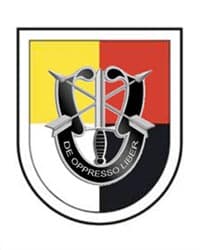
3RD SPECIAL FORCES GROUP
U.S. Army
Unit with 48 member associations.
3rd USArmy Logistics Support Gp
U.S. Army
The 3rd US Army Logistics Support Group was established to provide comprehensive logistical support to the United States Army’s 3rd Army, particularly during major operations and deployments. Activated during the Cold War era, the unit played a critical role in ensuring the rapid movement of supplies, maintenance, and transportation for frontline forces in both training exercises and contingency operations. Throughout its history, the 3rd US Army Logistics Support Group contributed significantly to the success of numerous missions by coordinating supply chains and sustaining combat readiness. Its legacy highlights the vital importance of logistics in modern military operations and the overall effectiveness of the 3rd Army.
4:502 IN
U.S. Army
The 4th Battalion, 502nd Infantry Regiment (4/502 IN) is a distinguished unit within the U.S. Army, tracing its lineage to the original 502nd Parachute Infantry Regiment activated in 1942. The regiment, as part of the famed 101st Airborne Division, played a pivotal role in major World War II operations, including D-Day, Operation Market Garden, and the Battle of the Bulge. Reactivated and reorganized over the decades, the 4/502 IN continued its legacy with deployments during the Cold War in Europe as part of NATO forces, and later participated in peacekeeping and combat operations in the Balkans and Middle East. Renowned for its airborne heritage and combat effectiveness, the battalion embodies the "Strike" ethos of the 502nd Infantry Regiment.
4:502nd
U.S. Army
The 4th Battalion, 502nd Infantry Regiment (4/502nd), known as the "Strike Force," is part of the 101st Airborne Division (Air Assault) of the United States Army. Activated during the Vietnam War era, the battalion participated in major combat operations, including the Tet Offensive and the Battle of Hamburger Hill. After Vietnam, the 4/502nd was inactivated and reactivated several times, serving as a key element in the division's rapid-deployment and air assault capabilities. The unit’s soldiers have continued to serve with distinction in subsequent conflicts, including operations in Iraq and Afghanistan, upholding the proud legacy of the 502nd "Deuce Four" lineage.
4:59th FA
U.S. Army
The 4th Battalion, 59th Field Artillery Regiment (4/59th FA) has its origins in the 59th Field Artillery, which was constituted in 1917 and served with distinction in both World Wars. Reactivated and redesignated several times throughout the 20th century, the 4/59th FA provided critical fire support as part of various artillery brigades, notably during the Cold War period in Europe, where it played a key role in NATO deterrence operations. The battalion was equipped with advanced artillery systems and participated in numerous training exercises to maintain combat readiness. Over its history, the 4/59th FA earned a reputation for precision, reliability, and dedication to mission accomplishment before its eventual inactivation as part of Army force structure changes.
401st Intelligence Corps Detachment
U.S. Army
The 401st Intelligence Corps Detachment is a specialized military unit focused on intelligence collection and analysis to support operational commands. Established during the Cold War era, the unit played a critical role in counterintelligence and security operations, particularly in overseas deployments. Over the years, the 401st has adapted to evolving threats, including cyber and asymmetric warfare, enhancing its capabilities in signals and human intelligence. Today, it continues to provide vital intelligence support to joint and combined military operations worldwide.
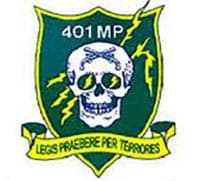
401ST MP CO
U.S. Army
Unit with 114 member associations.
402nd Personnel Service Co.
U.S. Army
The 402nd Personnel Service Company (PSC) is a U.S. Army Reserve unit specializing in human resources and administrative support for military personnel. Activated in the late 20th century, the 402nd PSC has provided essential personnel services, including records management, casualty reporting, and postal operations, to soldiers across various theaters of operation. The unit has supported major deployments during operations such as Operation Iraqi Freedom and Operation Enduring Freedom, ensuring that service members received critical administrative support in both combat and peacetime environments. Throughout its history, the 402nd PSC has demonstrated adaptability and professionalism, contributing significantly to the Army's mission readiness and personnel well-being.
40th Arty Brigade San Francisco Ca
U.S. Army
The 40th Artillery Brigade, based in San Francisco, California, traces its origins to early 20th-century coastal defense units tasked with protecting the strategic San Francisco Bay area. During World War II, the brigade played a vital role in harbor defense, manning coastal artillery batteries and anti-aircraft positions against potential threats from the Pacific. Following the war, the unit underwent several reorganizations, adapting to new technologies and missions during the Cold War, including missile defense. Today, the 40th Artillery Brigade’s legacy continues through its contributions to regional and national defense, honoring its long-standing tradition of service from the Golden Gate.
40th Infantry
U.S. Army
The 40th Infantry Regiment was constituted on 15 May 1917 in the Regular Army of the United States during the build-up for World War I. Organized at Fort Snelling, Minnesota, the unit did not see combat during the Great War but served as a training and replacement regiment. After the war, the 40th Infantry was stationed at various posts before being inactivated in 1921 at Fort Snelling. Though reactivated briefly during World War II, it was ultimately disbanded in 1944 as the Army reorganized its forces for the changing needs of the conflict.
40th Transportation Unit
U.S. Army
The 40th Transportation Unit was activated during World War II to support the increasing logistical demands of the United States Army in the European Theater. The unit played a crucial role in transporting troops, equipment, and supplies across France and Germany following the D-Day invasion. After the war, the 40th underwent several reactivations and inactivations, serving in both the Korean and Vietnam Wars, where it facilitated the rapid movement of materials and personnel in challenging environments. Today, the 40th Transportation Unit is recognized for its adaptability and dedication to ensuring operational readiness through superior logistical support.
41 BSTB
U.S. Army
The 41st Brigade Special Troops Battalion (41 BSTB) was a unit within the 41st Infantry Brigade Combat Team of the Oregon Army National Guard. Activated in 2005 as a result of Army modular transformation, the BSTB provided specialized support, encompassing military intelligence, signal, engineer, and military police capabilities to the brigade. The 41 BSTB supported both state and federal missions, including overseas deployments, most notably to Iraq during Operation Iraqi Freedom in 2009–2010. In 2016, the unit was reorganized and redesignated as the 741st Brigade Engineer Battalion, reflecting evolving mission requirements.
411th ATC 1st Cav
U.S. Army
The 411th Air Traffic Control (ATC) was a specialized unit assigned to the 1st Cavalry Division, playing a crucial role in managing airspace and coordinating helicopter and fixed-wing aircraft operations during combat missions. Activated during the Vietnam War, the 411th ATC established and operated tactical airfields, ensuring safe and efficient air traffic flow in rapidly changing combat environments. The unit’s expertise in airspace management directly supported the 1st Cav’s pioneering use of airmobile tactics, increasing operational flexibility and battlefield mobility. Through its dedicated service, the 411th ATC contributed significantly to the success of numerous division operations and set standards for Army ATC units in future conflicts.
411TH MP CO
U.S. Army
Unit with 118 member associations.
424th Transportation Co (Med Truck)
U.S. Army
The 424th Transportation Company (Medical Truck) was a U.S. Army Reserve unit specializing in the transportation of medical supplies, patients, and personnel. Activated during periods of heightened military need, the unit provided critical support during major conflicts, notably serving in World War II and subsequent operations. Its mission focused on ensuring the rapid and safe movement of medical resources to and from front-line areas. Throughout its service, the 424th earned commendations for its efficiency and dedication, exemplifying the essential role of logistics in military medical operations.
425TH INFANTRY REGIMENT CO.I
U.S. Army
The 425th Infantry Regiment, Company I, traces its lineage to the post-World War II era as part of the Michigan Army National Guard. Initially organized as a parachute infantry unit, Company I became renowned for its airborne training and rapid deployment capabilities. Throughout the Cold War, it participated in numerous training exercises and supported domestic operations, maintaining readiness for both state and federal missions. The unit was eventually reorganized in the early 2000s, with its legacy of airborne excellence continuing to inspire Michigan’s National Guard forces.
427th Engineers
U.S. Army
The 427th Engineers was a specialized unit within the United States Army, originally constituted during World War II to provide vital engineering support in combat and construction operations. Activated in 1943, the unit played a crucial role in building bridges, clearing obstacles, and constructing defensive positions throughout the European Theater. The 427th Engineers earned commendations for their rapid construction under fire, notably supporting the advance of Allied forces following the D-Day landings. After the war, the unit continued to serve in various capacities, adapting to peacetime and Cold War missions before eventual inactivation or reorganization as military needs evolved.
427th fsc
U.S. Army
The 427th Forward Support Company (FSC) is a logistics unit within the United States Army, providing vital sustainment and support to maneuver battalions. Activated as part of modular brigade combat teams, the 427th FSC specializes in supply, maintenance, and transportation operations, ensuring front-line units remain combat-ready. The company has supported various training rotations and deployments, often attaching to infantry, cavalry, or artillery battalions within its assigned brigade. Through its operations, the 427th FSC has played a crucial role in enhancing the operational effectiveness and resilience of supported combat units.