


US Army
1,349,224 members•7,146 units
Opening branch overview
Building the branch home surface
Loading branch highlights, featured unit context, and gallery moments.
Overview
Members
Units
1,349,224 members•7,146 units
Building the branch home surface
Loading branch highlights, featured unit context, and gallery moments.
Building the branch members surface
Loading branch members, era browse tools, and directory controls.
3rd Engr Bn, 3rd Mar.Div
U.S. Army
The 3rd Engineer Battalion (3rd Engr Bn) is a combat engineer unit that has served as part of the 3rd Marine Division (3rd Mar.Div) of the United States Marine Corps. Activated during World War II, the battalion provided vital engineering, mobility, and demolition support during major Pacific campaigns, including the battles of Bougainville, Guam, and Iwo Jima. In the decades since, the 3rd Engr Bn has participated in numerous operations, offering construction, obstacle breaching, and survivability enhancements for Marine forces. Today, the battalion remains a key component of the 3rd Marine Division, supporting expeditionary operations throughout the Indo-Pacific region.
3rd General Hospital
U.S. Army
The 3rd General Hospital was a U.S. Army medical unit originally organized during World War I, primarily staffed by personnel from Columbia University and Presbyterian Hospital in New York. Reactivated for World War II, the unit was deployed to the European Theater, where it provided crucial medical care to wounded Allied soldiers following the D-Day invasions. Stationed in locations such as England and later France, the 3rd General Hospital treated thousands of casualties, playing a vital role in the success of Allied medical operations. Its legacy is marked by professionalism, innovation in battlefield medicine, and a commitment to saving lives under challenging conditions.
3rd HU Field Hospital Leghorn, Italy
U.S. Army
The 3rd Hospital Unit (HU) Field Hospital was a U.S. Army medical facility stationed at Leghorn (now Livorno), Italy, during the post-World War II era. Established as part of the American military presence in Italy, the unit provided medical support to U.S. forces and their dependents in the region. The hospital played a crucial role in treating service members during the early years of the Cold War, offering a range of medical and surgical services. Its presence contributed significantly to the health and readiness of U.S. military personnel stationed in southern Europe until its eventual deactivation.
3rd Missile Battalion : 79th Field Artillery
U.S. Army
The 3rd Missile Battalion, 79th Field Artillery was originally constituted in 1916 as part of the 79th Field Artillery Regiment. It was redesignated as the 3rd Missile Battalion during the Cold War, reflecting its new role in the U.S. Army’s nuclear-capable missile forces. In the late 1950s and early 1960s, the battalion was equipped with the MGM-5 Corporal and later the MGM-29 Sergeant surface-to-surface missiles, providing tactical nuclear support in Europe as part of NATO's deterrence posture. The battalion was eventually inactivated as missile technology evolved and U.S. Army missile units were reorganized in the 1970s.
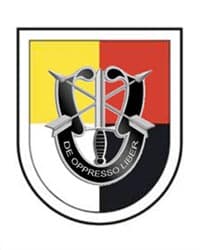
3RD SPECIAL FORCES GROUP
U.S. Army
Unit with 48 member associations.
3rd USArmy Logistics Support Gp
U.S. Army
The 3rd US Army Logistics Support Group was established to provide comprehensive logistical support to the United States Army’s 3rd Army, particularly during major operations and deployments. Activated during the Cold War era, the unit played a critical role in ensuring the rapid movement of supplies, maintenance, and transportation for frontline forces in both training exercises and contingency operations. Throughout its history, the 3rd US Army Logistics Support Group contributed significantly to the success of numerous missions by coordinating supply chains and sustaining combat readiness. Its legacy highlights the vital importance of logistics in modern military operations and the overall effectiveness of the 3rd Army.
4:502 IN
U.S. Army
The 4th Battalion, 502nd Infantry Regiment (4/502 IN) is a distinguished unit within the U.S. Army, tracing its lineage to the original 502nd Parachute Infantry Regiment activated in 1942. The regiment, as part of the famed 101st Airborne Division, played a pivotal role in major World War II operations, including D-Day, Operation Market Garden, and the Battle of the Bulge. Reactivated and reorganized over the decades, the 4/502 IN continued its legacy with deployments during the Cold War in Europe as part of NATO forces, and later participated in peacekeeping and combat operations in the Balkans and Middle East. Renowned for its airborne heritage and combat effectiveness, the battalion embodies the "Strike" ethos of the 502nd Infantry Regiment.
4:502nd
U.S. Army
The 4th Battalion, 502nd Infantry Regiment (4/502nd), known as the "Strike Force," is part of the 101st Airborne Division (Air Assault) of the United States Army. Activated during the Vietnam War era, the battalion participated in major combat operations, including the Tet Offensive and the Battle of Hamburger Hill. After Vietnam, the 4/502nd was inactivated and reactivated several times, serving as a key element in the division's rapid-deployment and air assault capabilities. The unit’s soldiers have continued to serve with distinction in subsequent conflicts, including operations in Iraq and Afghanistan, upholding the proud legacy of the 502nd "Deuce Four" lineage.
4:59th FA
U.S. Army
The 4th Battalion, 59th Field Artillery Regiment (4/59th FA) has its origins in the 59th Field Artillery, which was constituted in 1917 and served with distinction in both World Wars. Reactivated and redesignated several times throughout the 20th century, the 4/59th FA provided critical fire support as part of various artillery brigades, notably during the Cold War period in Europe, where it played a key role in NATO deterrence operations. The battalion was equipped with advanced artillery systems and participated in numerous training exercises to maintain combat readiness. Over its history, the 4/59th FA earned a reputation for precision, reliability, and dedication to mission accomplishment before its eventual inactivation as part of Army force structure changes.
U.S. Army Veteran (2026 - 2026)
U.S. Army Veteran (2026 - 2026)
U.S. Army Other (2026 - 2026)
U.S. Army Spouse (2026 - Present)