

USAF
488,117 members•3,725 units
Opening branch overview
Building the branch home surface
Loading branch highlights, featured unit context, and gallery moments.
Overview
Members
Units
488,117 members•3,725 units
Building the branch home surface
Loading branch highlights, featured unit context, and gallery moments.
Building the branch units surface
Loading unit filters, rankings, and the branch unit grid.
3207 AMTS
U.S. Air Force
The 3207 Air Maintenance and Technical Squadron (AMTS) was established in the early 1970s as part of a broader modernization initiative within the air force. Tasked primarily with the maintenance, repair, and technical support of frontline aircraft, the unit quickly developed a reputation for its high standards and operational efficiency. Over the decades, 3207 AMTS has supported several key military operations, ensuring aircraft readiness during both peacetime exercises and active deployments. The squadron continues to play a vital role in upholding the operational capabilities of the air force through its technical expertise and dedicated service.
323rd Supply Squadron, Mather AFB, CA
U.S. Air Force
Imported from legacy system. Member count: 1
325 CRD
U.S. Air Force
The 325th Chemical Reconnaissance Detachment (325 CRD) is a specialized unit within the U.S. Army Reserve, focused on chemical, biological, radiological, and nuclear (CBRN) reconnaissance and surveillance operations. Established during the Cold War era, the 325 CRD has played a vital role in supporting both domestic and overseas missions, often deploying in support of larger formations to assess and monitor hazardous environments. The unit’s expertise has been utilized in various training exercises and real-world contingencies, enhancing the Army’s ability to respond to CBRN threats. Over the years, the 325 CRD has maintained a reputation for technical proficiency and rapid response within the Army’s CBRN defense structure.
327th fighter squadrom
U.S. Air Force
The 327th Fighter Squadron was first activated during World War II, in 1942, as part of the 328th Fighter Group. It was initially equipped with P-39 Airacobras and later transitioned to P-51 Mustangs, serving primarily in the Mediterranean Theater. The unit participated in escort and ground attack missions, contributing significantly to Allied air superiority. After the war, the squadron was inactivated in 1945, but its legacy is remembered for its valor and operational effectiveness during critical air campaigns.
3282nd Police K9 Explosive Detection
U.S. Air Force
The 3282nd Police K9 Explosive Detection unit was established in 2005, responding to the growing need for specialized explosive detection capabilities in military operations. The unit quickly distinguished itself by deploying highly trained military working dog teams to support base security, route clearance, and VIP protection in both domestic and overseas assignments. Throughout its history, the 3282nd has participated in key operations, including deployments to Iraq and Afghanistan, where its teams successfully detected and neutralized numerous explosive threats. Renowned for their expertise and dedication, the 3282nd continues to play a vital role in safeguarding personnel and assets against explosive hazards.
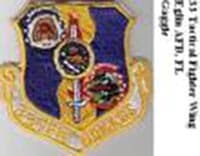
33 TFW
U.S. Air Force
Unit with 159 member associations.
3310th TTGp
U.S. Air Force
The **3310th Technical Training Group (TTGp)** was a United States Air Force unit based at Scott Air Force Base, Illinois. Established in the early 1950s, its primary mission was to provide specialized technical training, particularly in communications and electronics, to Air Force personnel during the Cold War era. The group played a crucial role in preparing airmen for assignments involving advanced airborne and ground-based communication systems, which were vital for strategic and tactical operations. The 3310th TTGp continued its training mission until the Air Force consolidated and reorganized its technical training functions, eventually leading to the unit’s inactivation or redesignation in later years.
3320th ABGrp
U.S. Air Force
The 3320th Air Base Group (ABGrp) was a unit of the United States Air Force, primarily active during the mid-20th century. Stationed at Amarillo Air Force Base, Texas, the group was responsible for providing base support services, including logistics, security, and administration, for training operations at the installation. The 3320th ABGrp played a crucial role in supporting technical training for Air Force personnel, especially during the Cold War era. The unit was eventually inactivated as part of the broader drawdown and closure of Amarillo AFB in 1968.
3334th BMTS
U.S. Air Force
The **3334th Basic Military Training Squadron (BMTS)** was part of the United States Air Force’s basic training structure, primarily based at Lackland Air Force Base, Texas. Activated during the Cold War era, the 3334th BMTS was responsible for the initial training and indoctrination of Air Force recruits, instilling core values, discipline, and essential military skills. The squadron played a key role in preparing thousands of airmen for service during periods of high enlistment, particularly in the 1970s and 1980s. The 3334th was eventually inactivated as part of a consolidation and reorganization of Air Force training units, with its mission and lineage absorbed by other Basic Military Training squadrons at Lackland.
3345th ABGp
U.S. Air Force
The 3345th Air Base Group (ABGp) was a United States Air Force unit active primarily during the Cold War era. Stationed at Chanute Air Force Base, Illinois, it was responsible for base operations and support, including administration, security, logistics, and facility maintenance for tenant organizations. The group played a crucial role in supporting the Air Force's technical training mission at Chanute, which specialized in training airmen in aircraft maintenance and other technical skills. The 3345th ABGp remained active until the base’s closure in 1993 as part of the post-Cold War drawdown and realignment of U.S. military forces.
3380th CME
U.S. Air Force
The 3380th Crew Maintenance Squadron (CME) was an integral unit of the United States Air Force, primarily stationed at Keesler Air Force Base, Mississippi. Established in the mid-20th century, its primary mission was to provide technical training and maintenance support for various USAF aircraft and systems. The unit played a crucial role in training airmen in electronics and avionics specialties, especially during the Cold War era. Over time, the 3380th CME contributed significantly to the readiness and effectiveness of the Air Force’s maintenance personnel before being inactivated or reorganized during later force structure changes.
3389 PTS
U.S. Air Force
3389 PTS (Parachute Training School) is a specialized military unit responsible for providing airborne training to personnel within its armed forces. Established in the mid-20th century, 3389 PTS has played a crucial role in preparing paratroopers for a variety of operational roles, including rapid deployment and special operations missions. Over the decades, the unit has continually updated its training methods and equipment to reflect the latest advancements in airborne tactics and technology. Its graduates have participated in numerous national and international exercises, earning a reputation for excellence and high operational readiness.
3392nd Student Squadron
U.S. Air Force
The 3392nd Student Squadron was a United States Air Force unit primarily tasked with the training and development of airmen at Keesler Air Force Base in Mississippi. Established during the post-World War II era, the squadron played a crucial role in technical training, especially in electronics and communications, supporting the Air Force's expanding technological needs during the Cold War. As part of the Air Training Command, the 3392nd Student Squadron contributed to preparing thousands of airmen for specialized roles vital to national defense. Over time, its mission and personnel were absorbed into reorganized training structures as the Air Force modernized its education programs.
33rd Statistical Control Unit
U.S. Air Force
The 33rd Statistical Control Unit was activated during World War II as a component of the United States Army Air Forces. Its primary mission was to collect, analyze, and manage vast quantities of operational and logistical data, supporting decision-making processes for air combat operations in the European Theater. The unit played a key role in optimizing resource allocation, mission planning, and the evaluation of bombing effectiveness. After the war, the 33rd Statistical Control Unit contributed to the development of modern military statistical and analytical practices before being inactivated during the postwar reorganization.
33rd twf
U.S. Air Force
The 33rd Tactical Fighter Wing (33rd TFW) was originally activated in 1948 and has a distinguished heritage within the United States Air Force. During the Vietnam War, the wing played a pivotal role, flying numerous combat sorties in support of U.S. operations in Southeast Asia. In the Cold War era, the 33rd TFW was stationed at Eglin Air Force Base, Florida, where it operated a variety of fighter aircraft, including the F-4 Phantom II and later the F-15 Eagle. The unit became renowned for its air superiority missions and continued to adapt over the years, eventually transitioning into a vital training wing for the next generation of fighter pilots.
3400 UPT Columbus AFB MS
U.S. Air Force
The 3400th Undergraduate Pilot Training (UPT) Group at Columbus Air Force Base, Mississippi, played a pivotal role in the United States Air Force’s pilot training mission during the mid-20th century. Established in the early 1950s, the unit was responsible for providing initial flight instruction and advanced pilot training to Air Force cadets and officers. Utilizing aircraft such as the T-37 Tweet and T-38 Talon, the 3400th UPT Group helped produce thousands of skilled pilots who went on to serve in various operational and combat roles. The group's legacy contributed significantly to the Air Force’s readiness and operational capabilities during the Cold War era.
3416 Technical Training Center, Nuclear Weapons School
U.S. Air Force
The 3416th Technical Training Center, Nuclear Weapons School, was a key United States Air Force training unit established during the early years of the Cold War. Formed at Lowry Air Force Base, Colorado, the center was responsible for training Air Force personnel in the maintenance, handling, and assembly of nuclear weapons and associated delivery systems. The 3416th played a critical role in preparing technicians and specialists to safely manage one of the most sensitive and technologically advanced aspects of national defense. Its rigorous curriculum and high standards contributed significantly to the operational readiness and nuclear surety of the U.S. Air Force throughout its period of activity.
3427th Air Training Squadron
U.S. Air Force
The 3427th Air Training Squadron was a unit of the United States Air Force established during the early years of the Cold War. Activated in the 1950s, the squadron was assigned to support the expanding pilot and aircrew training programs, particularly at Lackland Air Force Base, Texas. The 3427th focused on providing basic and advanced technical instruction to new airmen, contributing significantly to building the Air Force’s personnel strength during a period of heightened global tensions. The unit was eventually inactivated as training structures were reorganized and consolidated, reflecting evolving Air Force needs and strategies.
3443rd Aerial Recon
U.S. Air Force
The 3443rd Aerial Reconnaissance Squadron was established in the early 1950s as part of the United States Air Force's effort to strengthen its intelligence-gathering capabilities during the Cold War. Equipped primarily with RB-26 Invader and later RB-57 Canberra aircraft, the unit specialized in photographic and electronic surveillance missions over critical regions. Its operations contributed significantly to the early warning systems and strategic planning throughout the 1950s and 1960s. The squadron was eventually reorganized and its assets reassigned as technology and reconnaissance methods evolved in the latter half of the 20th century.
34th Water Transport Squadron
U.S. Air Force
The 34th Water Transport Squadron was established in 1942 to provide vital maritime logistics support during World War II. Operating primarily in the Pacific Theater, the squadron transported troops, equipment, and supplies between island bases under challenging combat conditions. Post-war, the unit continued its service, supporting occupation forces in Japan and later participating in Korean War logistics operations. Renowned for its versatility and reliability, the 34th Water Transport Squadron played a crucial role in sustaining Allied operations across multiple conflicts before its deactivation in the late 1950s.
3514 fm sq (atc)
U.S. Air Force
The 3514th Flying Training Squadron (Air Training Command), often abbreviated as 3514 FM SQ (ATC), was a United States Air Force unit primarily responsible for flight training operations. Activated at Randolph Air Force Base, Texas, during the Cold War era, the squadron played a key role in training new pilots and refining advanced flying techniques. As part of Air Training Command, the 3514th contributed to the readiness and professionalism of Air Force aviators, supporting both basic and instructor pilot training programs. The squadron’s legacy is marked by its commitment to excellence in aviation training before its eventual inactivation as the Air Force restructured its training operations.
351st Missile Security Squadron
U.S. Air Force
The 351st Missile Security Squadron was an integral unit of the United States Air Force, assigned to Whiteman Air Force Base, Missouri. Activated during the Cold War era, the squadron provided security for the 351st Strategic Missile Wing’s Minuteman Intercontinental Ballistic Missile (ICBM) sites. Its personnel were responsible for safeguarding missile silos, launch control facilities, and support assets against potential threats. The squadron remained operational until the 351st Missile Wing was inactivated in the 1990s due to arms reduction treaties and the deactivation of Minuteman II missiles at Whiteman AFB.
351st MSS
U.S. Air Force
The 351st Missile Security Squadron (351st MSS) was an integral unit of the United States Air Force, activated to provide security for nuclear missile operations. Stationed at Whiteman Air Force Base, Missouri, the squadron protected Minuteman II intercontinental ballistic missile (ICBM) sites under the 351st Strategic Missile Wing during the Cold War. The 351st MSS ensured the physical security of missile silos, launch control facilities, and personnel, playing a crucial role in the nation’s strategic deterrence posture. Following the end of the Cold War and the subsequent deactivation of the 351st Strategic Missile Wing in the 1990s, the squadron was inactivated as part of the broader realignment of U.S. nuclear forces.
3531st Periodic Maintenance Squadron
U.S. Air Force
The 3531st Periodic Maintenance Squadron was established in the early 1950s as part of the United States Air Force’s strategic effort to enhance aircraft readiness during the Cold War. Based at Amarillo Air Force Base, Texas, the squadron specialized in scheduled, in-depth maintenance and overhaul of bomber and tanker aircraft assigned to Strategic Air Command. Its highly trained personnel ensured the operational reliability of key assets such as the B-47 Stratojet and KC-97 Stratofreighter. The unit played a vital role until the base's closure and subsequent squadron inactivation in the late 1960s, leaving a legacy of technical excellence and mission support.