


USAF
488,583 members•3,725 units
Opening branch overview
Building the branch home surface
Loading branch highlights, featured unit context, and gallery moments.
Overview
Members
Units
488,583 members•3,725 units
Building the branch home surface
Loading branch highlights, featured unit context, and gallery moments.
Building the branch members surface
Loading branch members, era browse tools, and directory controls.
21st Recon Aircraft Company
U.S. Air Force
The 21st Reconnaissance Aircraft Company was a U.S. Army aviation unit activated in the late 1950s, with its primary mission focused on aerial reconnaissance, intelligence gathering, and support of ground operations. The unit was most notably deployed to Vietnam, where it operated fixed-wing aircraft such as the O-1 Bird Dog and later the O-2 Skymaster, providing vital visual reconnaissance and artillery spotting for American and allied forces. The 21st played a key role in counterinsurgency operations, often flying low and slow over hostile territory to identify enemy positions and coordinate close air support. After several years of distinguished service, the company was eventually inactivated as part of post-war force reductions and the transition to newer reconnaissance platforms.
21st USAFAD Corlu, Turkey
U.S. Air Force
The 21st United States Army Field Artillery Detachment (USAFAD) was a NATO nuclear weapons support unit stationed in Çorlu, Turkey during the Cold War. Activated in the 1960s, the unit was responsible for the custody, maintenance, and security of U.S. nuclear warheads assigned to Turkish artillery units under NATO's nuclear sharing arrangements. The 21st USAFAD worked closely with the Turkish Army’s 105th Artillery Regiment, supporting the deployment of nuclear-capable Honest John and later Lance missiles. The detachment remained active until the early 1990s, when the end of the Cold War led to the withdrawal of U.S. nuclear weapons from Turkey and the unit’s inactivation.
22 TAC Recon Squadron - MUO
U.S. Air Force
The 22nd Tactical Reconnaissance Squadron (22 TAC Recon Squadron - MUO) was activated during World War II as part of the United States Army Air Forces, specializing in photographic and visual reconnaissance missions. Initially equipped with modified fighter and bomber aircraft, the squadron provided critical intelligence for Allied operations in both the European and Pacific Theaters. After the war, the unit continued its reconnaissance role during the early Cold War period, adapting to new technologies and missions. The squadron’s legacy is marked by its contributions to operational planning and battlefield awareness through timely and accurate aerial reconnaissance.
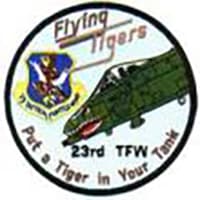
23 TFW
U.S. Air Force
Unit with 152 member associations.
23rd Strat Recon Sqd SAC Travis AFB
U.S. Air Force
The 23rd Strategic Reconnaissance Squadron (SAC) was a key unit of the Strategic Air Command, stationed at Travis Air Force Base, California. Activated during the early years of the Cold War, the squadron was tasked with conducting long-range reconnaissance missions, often utilizing aircraft such as the RB-29 and later the RB-36, to gather vital intelligence on potential adversaries. The 23rd played a significant role in strategic surveillance and deterrence, supporting national security objectives by providing early warning and monitoring capabilities. Its operations contributed to SAC’s global reach before the unit was eventually inactivated as reconnaissance technology and organizational needs evolved.
25 FTS
U.S. Air Force
The 25th Flying Training Squadron (25 FTS) is a United States Air Force unit with a distinguished history dating back to World War II. Originally activated in 1942 as the 25th Pursuit Squadron, it served in the China-Burma-India Theater, flying missions in support of Allied forces. Over the decades, the squadron underwent several redesignations and played various roles, including tactical fighter operations during the Cold War era. Today, the 25 FTS is assigned to the 71st Flying Training Wing at Vance Air Force Base, Oklahoma, where it is responsible for training the next generation of Air Force pilots.
25th Central Compost Squadron
U.S. Air Force
The 25th Central Compost Squadron was established in 1982 as part of an innovative logistics initiative to improve sustainability within military bases. Initially tasked with processing organic waste from mess halls and field kitchens, the squadron quickly developed advanced composting techniques that reduced environmental impact and improved soil quality on training grounds. During major training exercises and deployments, the unit provided vital support by managing biodegradable waste, setting an example for eco-friendly operations across the armed forces. Over the years, the 25th Central Compost Squadron has become renowned for its contributions to military environmental stewardship and operational efficiency.
26004
U.S. Air Force
Military Unit 26004 is associated with the Russian Armed Forces, specifically within the Main Directorate of the General Staff of the Armed Forces of the Russian Federation (commonly known as the GRU). This unit has been identified in open sources as being involved in signals intelligence and electronic surveillance operations. Historically, Military Unit 26004 has played a role in supporting Russian military intelligence activities, both domestically and abroad, contributing to the collection and analysis of electronic communications. The unit's operations remain highly classified, with limited public information available regarding its detailed missions or organizational structure.
26062
U.S. Air Force
Military Unit 26062, more widely recognized as Russia’s 16th Center for Scientific Research (16-й Центр Научных Исследований Министерства Обороны РФ), has played a pivotal role in the development of military electronics and communications for the Russian Armed Forces since its establishment in the Soviet era. Based in Moscow, the unit has focused on research and testing of advanced radio-electronic warfare, cryptography, and secure communications systems. Over the decades, Military Unit 26062 has contributed significantly to the modernization and resilience of Russian command, control, and information security infrastructure. Its expertise remains integral to Russia’s efforts to maintain technological advantages in the fields of electronic warfare and military communications.
U.S. Air Force Active Duty (2026 - Present)
U.S. Air Force Military Retiree (2026 - 2026)
U.S. Air Force Veteran (2025 - Present)
U.S. Air Force Active Duty (2025 - Present)