U.S. Navy Veteran
Branch
U.S. Navy
Service Years
1979 - 1988
NAS Lemoore
U.S. Navy
Naval Air Station (NAS) Lemoore, located in California’s San Joaquin Valley, was commissioned in 1961 to serve as the U.S. Navy’s premier West Coast master jet base. Designed to support advanced jet operations, it quickly became the primary home for Pacific Fleet strike fighter squadrons. Over the decades, NAS Lemoore has hosted various aircraft, transitioning from the F-4 Phantom II, to the F-14 Tomcat, and currently the F/A-18 Hornet and F-35C Lightning II. The base continues to play a critical role in naval aviation training, operations, and power projection in the Pacific region.
NAS Moffett Field
U.S. Navy
Naval Air Station (NAS) Moffett Field, located in Sunnyvale, California, was commissioned in 1933 as a key base for the U.S. Navy's airship program, famously housing the USS Macon in its massive Hangar One. During World War II, the station shifted focus to supporting anti-submarine patrols, training, and operations for Navy blimps and fixed-wing aircraft. After the war, NAS Moffett Field became home to various patrol squadrons flying P-3 Orion aircraft, playing a critical role in maritime surveillance during the Cold War. In 1994, the base was closed as an active naval installation and transferred to NASA, though elements of the Navy and other federal agencies continue to operate there today.
NAS CECIL FIELD, Jacksonville, Fla
U.S. Navy
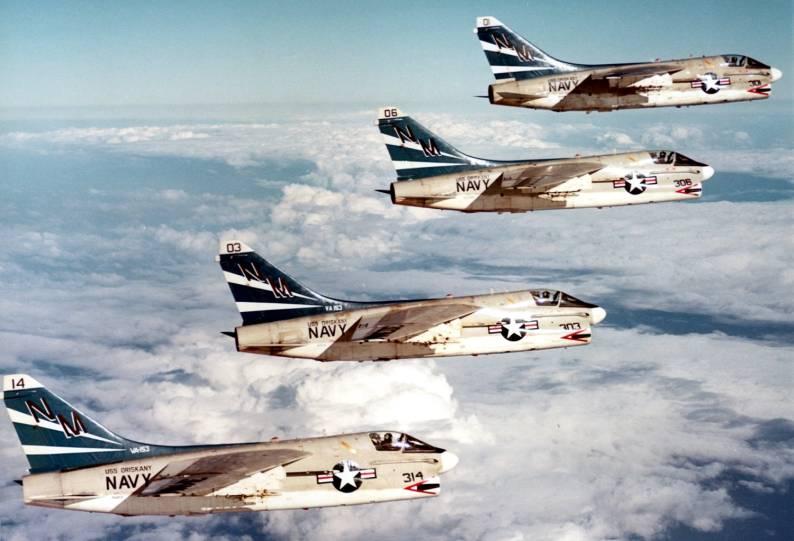
Naval Air Station (NAS) Cecil Field, located in Jacksonville, Florida, was commissioned in 1941 as a training base for pilots during World War II. Throughout the Cold War, it became a major hub for carrier-based attack and reconnaissance squadrons, often deploying aircraft and personnel for operations around the globe. NAS Cecil Field played a crucial role in supporting U.S. Navy operations during conflicts such as the Korean and Vietnam Wars, as well as in the Gulf War. The base was officially closed as an active naval air station in 1999, transitioning to civilian use, but its legacy remains integral to naval aviation history.

USS CARL VINSON
U.S. Navy
USS Carl Vinson (CVN-70) is a Nimitz-class nuclear-powered aircraft carrier commissioned into the United States Navy on March 13, 1982. Named after Congressman Carl Vinson, a key supporter of American naval power, the ship has played a significant role in major operations, including Operation Desert Strike, Operation Iraqi Freedom, and Operation Enduring Freedom. The Vinson made global headlines in May 2011 as the vessel from which Osama bin Laden’s body was buried at sea after his death in a U.S. special operations raid. Throughout its service, the USS Carl Vinson has projected American naval air power worldwide, supporting both combat missions and humanitarian assistance.