

ABOUT VAW-115
- Origins in Vietnam: VAW-115, known as the "Liberty Bells," was established on April 20, 1967 and quickly deployed to support U.S. operations during the Vietnam War, providing airborne early warning and control.
- First Combat Cruise: The squadron’s first combat cruise was aboard USS Ranger (CV-61) in 1967, where they helped direct air strikes and provided radar surveillance.
- Longstanding Forward Deployment: In 1973, VAW-115 became one of the first U.S. Navy squadrons to be permanently forward-deployed to Naval Air Facility Atsugi, Japan, as part of Carrier Air Wing 5.
- Gulf War Participation: VAW-115 played a critical role in Operation Desert Storm in 1991, providing command and control and contributing to the coalition’s air superiority.
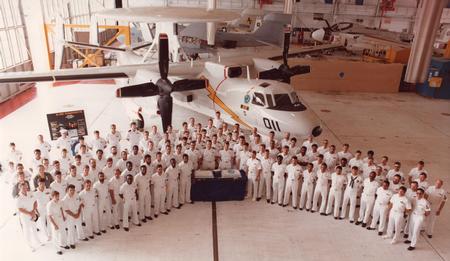
- Modern Aircraft: The squadron operated the E-2C Hawkeye for decades, a key platform for airborne early warning, before transitioning to newer variants.
- Humanitarian Assistance: VAW-115 participated in several humanitarian missions, including Operation Tomodachi in 2011, following the Tōhoku earthquake and tsunami in Japan.
- Longest Continual Forward-Deployed AEW Squadron: For over 44 years, VAW-115 was the longest continually forward-deployed airborne early warning squadron in U.S. Navy history.
- Nickname Origin: The squadron’s nickname, "Liberty Bells," is a nod to American heritage and echoes their callsign "Liberty."
- Global Deployments: VAW-115 has operated in numerous global hotspots, including the Persian Gulf, the Indian Ocean, and off the Korean Peninsula, supporting both combat and peacekeeping operations.
- Relocation to the U.S.: In 2017, VAW-115 relocated from Japan to Naval Air Station Point Mugu, California, ending its historic forward-deployed presence and transitioning leadership to VAW-125 in Japan.